Collapsed glacier likely caused devastating Nepal-Tibet floods, scientists say
Source: BBC World ↗ (cross-verified by 4 outlets — full list below)
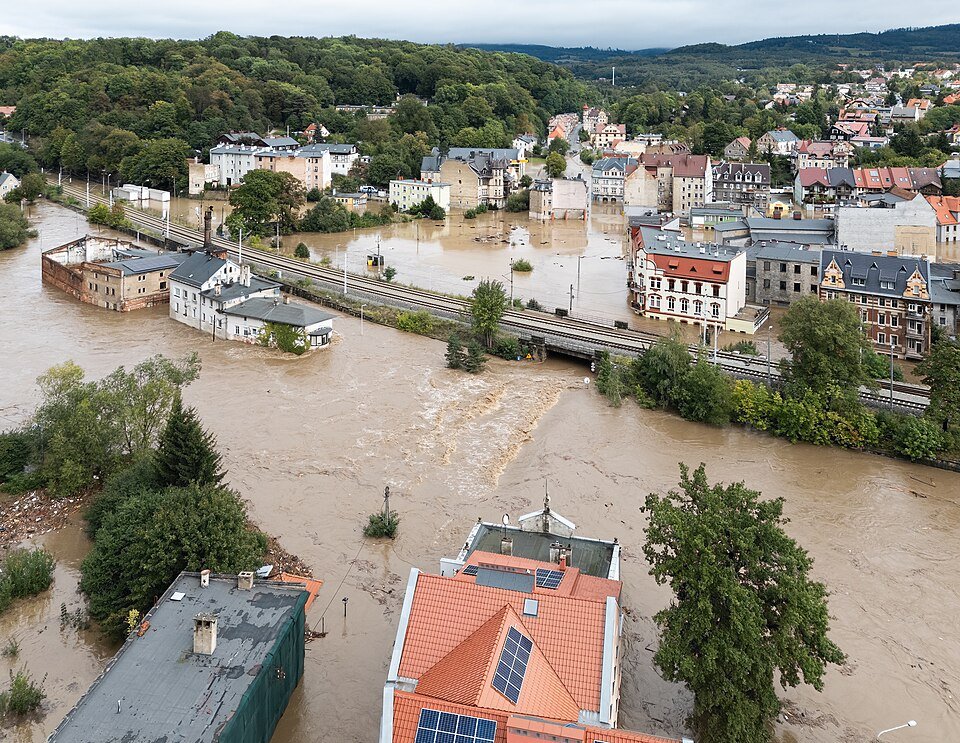
Scientists investigating the flash flood that struck the Nepal‑Tibet border this week have determined that a collapsing glacier, not an earthquake, triggered the disaster that has killed at least 177 people. The United States Geological Survey identified the event as a “glacial collapse,” a sudden disintegration of a glacier or part of it, which generated a seismic signal equivalent to a magnitude 5.2 tremor. Dr. Simon Cook of the University of Dundee’s glacier team located the failure in the lower reaches of a glacier near Langtang Lirung, about 15 km west of the flood zone, and traced its movement northwestward into the Lende Khola tributary of the Bhote Koshi river. The resulting avalanche of ice, rock and debris surged downstream, raising river levels by seven to nine metres within half an hour and sweeping away monitoring stations.
The cascade of debris created a massive surge of water, sediment and boulders that overwhelmed the valley, a process described by the International Centre for Integrated Mountain Development (ICIMOD) as an ice‑rock avalanche that flooded the river. Experts say the steep Himalayan topography amplified the flood’s speed, while the combination of tectonic uplift—continually raising the Himalayas—and rising temperatures from climate change made the glacier increasingly unstable. Professor Mike Searle of Oxford University noted that such a wholesale collapse of a glacier is highly unusual; normally only smaller fragments break off and are quickly flushed out. The event reflects a broader trend of accelerating ice loss in the Hindu Kush Himalaya, which ICIMOD reports is now occurring at twice the rate seen in 2000, heightening the risk of similar catastrophic floods.
The Nepal‑Tibet flood joins a growing list of high‑altitude disasters linked to glacier failures, including the 2021 Chamoli landslide in northern India that killed 200 people and a glacial‑lake burst in the same Nepali region last year. Researchers caution that while any single incident cannot be definitively attributed to climate change, the increasing frequency and scale of such events suggest a strong connection to a warming planet, which thaws permafrost and destabilizes mountain slopes. The tragedy underscores the urgent need for monitoring and mitigation strategies in the Himalayas, where vulnerable communities face heightened exposure to flash floods, debris flows and other cryospheric hazards as glaciers continue to retreat.
⚡ Effects Interpreter
🌍World Economymedium impact
What this means for you
- ▶International capital can shift direction faster than headlines suggest.
- ▶Multinational firms usually adjust their playbooks when stories like this break.
🏙️Local Economymedium impact
What this means for you
- ▶The cost of a weekly food shop can creep up in the background.
- ▶The pinch, if any, tends to show up first at the till.
🏦Rates & Bankslow impact
What this means for you
- ▶Central bankers rarely rush; they prefer to see how the dust settles.
- ▶A modest drift in borrowing costs is more plausible than a sharp jump.
❤️Healthmedium impact
What this means for you
- ▶Taking a break from the headlines can do more good than scrolling on.
- ▶Talking things through with family or friends can ease the load.
💷Wealthmedium impact
What this means for you
- ▶Your household's overall financial health matters more than any one day's numbers.
- ▶Time in the market usually matters more than timing the market around news like this.
🏠Housinglow impact
What this means for you
- ▶Regional differences mean this may be felt unevenly across the property market.
- ▶Housing chains involving multiple buyers can be sensitive to any wider wobble.
🌍 Effects for your country
The U.S.'s central bank rate currently stands at 3.75%, so a global rates move like this could feed through to local borrowing costs. The U.S.'s economy is growing at 2.3% with inflation at 3.2%, the backdrop this story's effects play out against locally. Housing-market effects like this are usually felt most where mortgage rates track the U.S.'s own central bank rate closely. With the U.S.'s unemployment at 4.4%, personal-finance effects like this land on a labour market that is currently fairly stable. Health-system effects are harder to localise from economic indicators alone — the real impact in the U.S. depends more on local healthcare capacity than the figures above.
The UK's central bank rate currently stands at 3.75%, so a global rates move like this could feed through to local borrowing costs. The UK's economy is growing at 0.8% with inflation at 3.2%, the backdrop this story's effects play out against locally. Housing-market effects like this are usually felt most where mortgage rates track the UK's own central bank rate closely. With the UK's unemployment at 5.6%, personal-finance effects like this land on a labour market that is currently fairly stable. Health-system effects are harder to localise from economic indicators alone — the real impact in the UK depends more on local healthcare capacity than the figures above.
France's central bank rate currently stands at 2%, so a global rates move like this could feed through to local borrowing costs. France's economy is growing at 0.9% with inflation at 1.8%, the backdrop this story's effects play out against locally. Housing-market effects like this are usually felt most where mortgage rates track France's own central bank rate closely. With France's unemployment at 7.9%, personal-finance effects like this land on a labour market that is already under strain. Health-system effects are harder to localise from economic indicators alone — the real impact in France depends more on local healthcare capacity than the figures above.
Romania's central bank rate currently stands at 6.5%, so a global rates move like this could feed through to local borrowing costs. Romania's economy is growing at 0.7% with inflation at 7.8%, the backdrop this story's effects play out against locally. Housing-market effects like this are usually felt most where mortgage rates track Romania's own central bank rate closely. With Romania's unemployment at 6%, personal-finance effects like this land on a labour market that is currently fairly stable. Health-system effects are harder to localise from economic indicators alone — the real impact in Romania depends more on local healthcare capacity than the figures above.
The UAE's central bank rate currently stands at 3.65%, so a global rates move like this could feed through to local borrowing costs. The UAE's economy is growing at 3.1% with inflation at 2.5%, the backdrop this story's effects play out against locally. Housing-market effects like this are usually felt most where mortgage rates track the UAE's own central bank rate closely. Health-system effects are harder to localise from economic indicators alone — the real impact in the UAE depends more on local healthcare capacity than the figures above.