Hundreds of foreign nationals among the missing following deadly Nepal floods
Source: Euronews ↗ (cross-verified by 6 outlets — full list below)
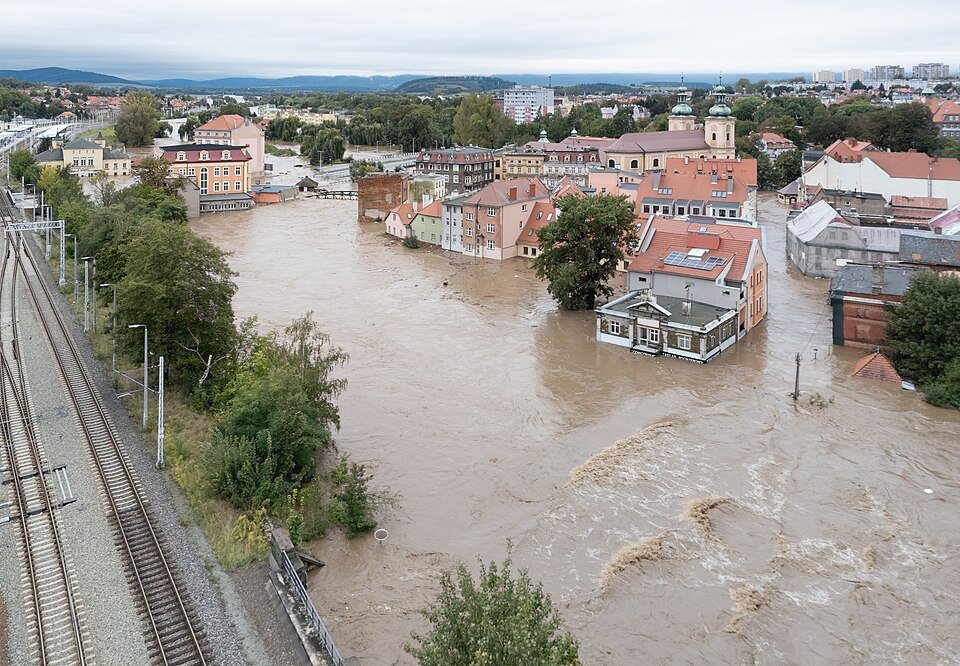
Hundreds of foreign nationals are among the nearly 3,000 people still missing after a devastating flash‑flood event struck the border region between Nepal and Tibet on Wednesday. A sudden wall of water and debris swept through the Himalayan area, killing at least 682 people and prompting a massive rescue operation. Nepal’s tourism board reported that 622 tourists remain “out of communication,” of whom 471 are foreigners, while the disaster agency listed 517 foreign nationals as missing. Chinese officials said 260 foreigners are still unaccounted for, and the U.S. State Department confirmed 90 American citizens are among the missing; Australia later announced 41 of its nationals remain missing.
The flood’s impact on the international community is evident in the detailed breakdown of nationalities provided by the tourism board. The list includes 98 Indians, 61 Ukrainians, 51 Malaysians, 33 Britons, 29 Latvians, 25 Canadians, nine South Koreans, nine Singaporeans, nine Russians, eight Germans, six South Africans, five Japanese, five New Zealanders, four French, and citizens from Belgium, Hungary, the Netherlands, Ireland, Kazakhstan, Portugal, Italy, Belarus, Finland, Israel, Lithuania, the Philippines, Serbia, Switzerland, Sweden and Vietnam. Spain reported that two of its three missing tourists have been located, though the Spanish foreign ministry has not issued a comment. China has not disclosed the specific nationalities of the foreigners it counts among the missing, underscoring the difficulty of obtaining precise data amid the chaos.
In response to the disaster, the European Union has mobilised support, activating its Copernicus Earth‑observation satellite system to monitor the aftermath and pledging €2 million in humanitarian aid to deliver life‑saving assistance to the hardest‑hit families and communities. The aid package, announced by European Commission President Ursula von der Leyen, aims to bolster relief efforts alongside the ongoing rescue operations. The scale of the missing, particularly the large number of tourists, highlights the broader implications for Nepal’s tourism sector and international travel safety, while the coordinated international response reflects the global concern for the victims and the need for sustained assistance in the region.
⚡ Effects Interpreter
🌍World Economymedium impact
What this means for you
- ▶Investors abroad usually reprice their bets when this kind of news lands.
- ▶Global boardrooms tend to take notice when this kind of news surfaces.
🏙️Local Economylow impact
What this means for you
- ▶Travel agents might field more questions than usual after news like this.
- ▶The cost of getting away might drift with the headlines.
🏦Rates & Bankslow impact
What this means for you
- ▶Mortgage offers may firm up or soften as the picture becomes clearer.
- ▶A modest drift in borrowing costs is more plausible than a sharp jump.
❤️Healthmedium impact
What this means for you
- ▶Jet lag, food safety and local risks are worth checking before you fly.
- ▶Being informed beats being anxious when travelling somewhere new.
💷Wealthmedium impact
What this means for you
- ▶Portfolios built for the long haul rarely need a rethink over one headline.
- ▶Any hit to your money is more likely a ripple than a wave.
🏠Housingmedium impact
What this means for you
- ▶The property market tends to move slowly, so expect any change to take time.
- ▶Home costs usually respond later, once the bigger picture settles.
🌍 Effects for your country
The U.S.'s central bank rate currently stands at 3.75%, so a global rates move like this could feed through to local borrowing costs. The U.S.'s economy is growing at 2.3% with inflation at 3.2%, the backdrop this story's effects play out against locally. Housing-market effects like this are usually felt most where mortgage rates track the U.S.'s own central bank rate closely. With the U.S.'s unemployment at 4.4%, personal-finance effects like this land on a labour market that is currently fairly stable. Health-system effects are harder to localise from economic indicators alone — the real impact in the U.S. depends more on local healthcare capacity than the figures above.
The UK's central bank rate currently stands at 3.75%, so a global rates move like this could feed through to local borrowing costs. The UK's economy is growing at 0.8% with inflation at 3.2%, the backdrop this story's effects play out against locally. Housing-market effects like this are usually felt most where mortgage rates track the UK's own central bank rate closely. With the UK's unemployment at 5.6%, personal-finance effects like this land on a labour market that is currently fairly stable. Health-system effects are harder to localise from economic indicators alone — the real impact in the UK depends more on local healthcare capacity than the figures above.
France's central bank rate currently stands at 2%, so a global rates move like this could feed through to local borrowing costs. France's economy is growing at 0.9% with inflation at 1.8%, the backdrop this story's effects play out against locally. Housing-market effects like this are usually felt most where mortgage rates track France's own central bank rate closely. With France's unemployment at 7.9%, personal-finance effects like this land on a labour market that is already under strain. Health-system effects are harder to localise from economic indicators alone — the real impact in France depends more on local healthcare capacity than the figures above.
Romania's central bank rate currently stands at 6.5%, so a global rates move like this could feed through to local borrowing costs. Romania's economy is growing at 0.7% with inflation at 7.8%, the backdrop this story's effects play out against locally. Housing-market effects like this are usually felt most where mortgage rates track Romania's own central bank rate closely. With Romania's unemployment at 6%, personal-finance effects like this land on a labour market that is currently fairly stable. Health-system effects are harder to localise from economic indicators alone — the real impact in Romania depends more on local healthcare capacity than the figures above.
The UAE's central bank rate currently stands at 3.65%, so a global rates move like this could feed through to local borrowing costs. The UAE's economy is growing at 3.1% with inflation at 2.5%, the backdrop this story's effects play out against locally. Housing-market effects like this are usually felt most where mortgage rates track the UAE's own central bank rate closely. Health-system effects are harder to localise from economic indicators alone — the real impact in the UAE depends more on local healthcare capacity than the figures above.