Why Did Dollar Tree Stock Drop Today?
Source: Motley Fool ↗ (cross-verified by 3 outlets — full list below)
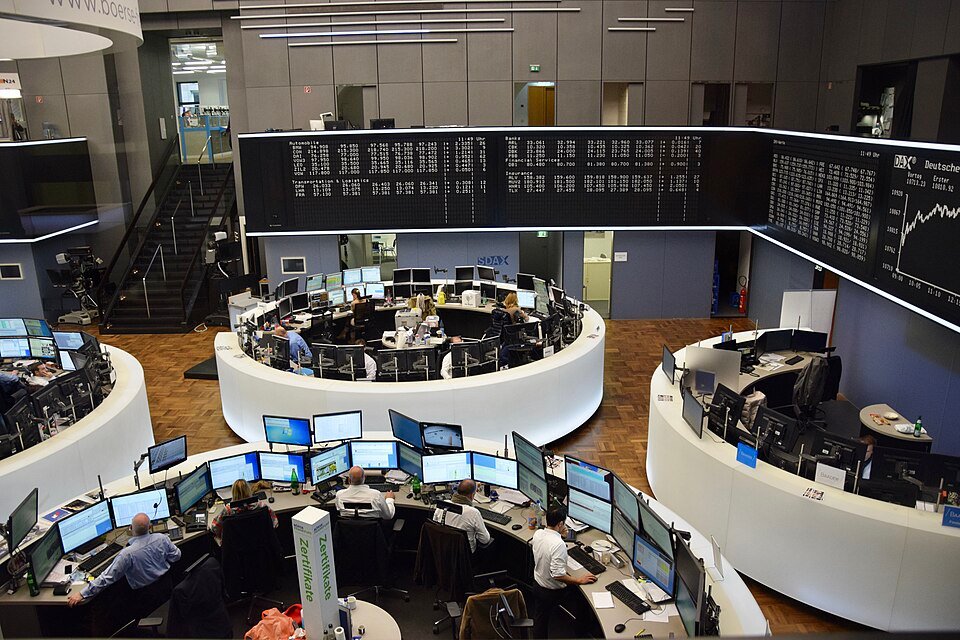
Dollar Tree’s shares fell 3.7% by early afternoon on Thursday despite the retailer delivering results that far exceeded Wall Street expectations. Analysts had forecast Q2 earnings of $1.11 per share on $4.85 billion in sales, yet the company posted $4.9 billion in revenue and a profit of $2.70 per share, more than double the consensus estimate. The earnings boost included a $1.31 per‑share gain from refunds of tariffs imposed during the Trump administration, and even without that item the adjusted profit would have been $1.39 per share—still 25% above forecasts. CEO Mike Creedon attributed the strong performance to higher foot traffic and increased spending per customer, noting that operational improvements are attracting more freely spending shoppers.
The surprising market reaction occurred even as Dollar Tree raised its outlook for the coming quarters. The retailer now expects same‑store sales to grow another 3% to 4% in Q3 and to sustain that pace through the year, projecting sales above $5 billion for the next quarter and between $20.5 billion and $20.7 billion for the full year. Profit guidance was also lifted, with Q3 earnings anticipated at $0.80‑$0.95 per share and annual earnings forecast at $7.70‑$8.05 per share, implying a forward price‑to‑earnings multiple near 16×. These figures suggest the company is positioned for continued growth despite the recent share price dip.
Analysts and investors are left to reconcile the disconnect between the robust financial results and the stock’s decline. The market’s sell‑off may reflect lingering concerns about broader retail trends, valuation levels, or short‑term profit volatility, even as Dollar Tree’s fundamentals appear solid. If the company maintains its sales momentum and hits the raised guidance, the upside potential could benefit shareholders and reinforce the retailer’s standing in the discount‑store segment.
⚡ Effects Interpreter
🌍World Economymedium impact
What this means for you
- ▶A single headline like this can move several markets within minutes.
- ▶Algorithms typically react to this kind of news before a human even reads it.
🏙️Local Economylow impact
What this means for you
- ▶Everyday essentials might nudge in price as suppliers adjust.
- ▶Corner shops and cafes rarely feel this straight away, but they do feel it.
🏦Rates & Bankslow impact
What this means for you
- ▶Your bank is unlikely to act on this alone, but it will be watching.
- ▶The cost of borrowing tends to shift gradually rather than in one leap.
❤️Healthmedium impact
What this means for you
- ▶Public health messaging can go a long way toward easing collective worry.
- ▶Talking things through with family or friends can ease the load.
💷Wealthmedium impact
What this means for you
- ▶Staying invested through moments like this is usually the steadier bet.
- ▶A quick portfolio check can settle the nerves, even if nothing needs changing.
🏠Housingmedium impact
What this means for you
- ▶Local surveyors typically note that sentiment shifts before prices actually do.
- ▶Landlords and tenants alike rarely feel sudden shifts from this kind of news.
🌍 Effects for your country
The U.S.'s central bank rate currently stands at 3.75%, so a global rates move like this could feed through to local borrowing costs. The U.S.'s economy is growing at 2.3% with inflation at 3.2%, the backdrop this story's effects play out against locally. Housing-market effects like this are usually felt most where mortgage rates track the U.S.'s own central bank rate closely. With the U.S.'s unemployment at 4.4%, personal-finance effects like this land on a labour market that is currently fairly stable. Health-system effects are harder to localise from economic indicators alone — the real impact in the U.S. depends more on local healthcare capacity than the figures above.
The UK's central bank rate currently stands at 3.75%, so a global rates move like this could feed through to local borrowing costs. The UK's economy is growing at 0.8% with inflation at 3.2%, the backdrop this story's effects play out against locally. Housing-market effects like this are usually felt most where mortgage rates track the UK's own central bank rate closely. With the UK's unemployment at 5.6%, personal-finance effects like this land on a labour market that is currently fairly stable. Health-system effects are harder to localise from economic indicators alone — the real impact in the UK depends more on local healthcare capacity than the figures above.
France's central bank rate currently stands at 2%, so a global rates move like this could feed through to local borrowing costs. France's economy is growing at 0.9% with inflation at 1.8%, the backdrop this story's effects play out against locally. Housing-market effects like this are usually felt most where mortgage rates track France's own central bank rate closely. With France's unemployment at 7.9%, personal-finance effects like this land on a labour market that is already under strain. Health-system effects are harder to localise from economic indicators alone — the real impact in France depends more on local healthcare capacity than the figures above.
Romania's central bank rate currently stands at 6.5%, so a global rates move like this could feed through to local borrowing costs. Romania's economy is growing at 0.7% with inflation at 7.8%, the backdrop this story's effects play out against locally. Housing-market effects like this are usually felt most where mortgage rates track Romania's own central bank rate closely. With Romania's unemployment at 6%, personal-finance effects like this land on a labour market that is currently fairly stable. Health-system effects are harder to localise from economic indicators alone — the real impact in Romania depends more on local healthcare capacity than the figures above.
The UAE's central bank rate currently stands at 3.65%, so a global rates move like this could feed through to local borrowing costs. The UAE's economy is growing at 3.1% with inflation at 2.5%, the backdrop this story's effects play out against locally. Housing-market effects like this are usually felt most where mortgage rates track the UAE's own central bank rate closely. Health-system effects are harder to localise from economic indicators alone — the real impact in the UAE depends more on local healthcare capacity than the figures above.