Foie gras, live dolphins and toasters: China and US cut reciprocal tariffs on $30bn each of goods
Source: Guardian Econ ↗ (cross-verified by 3 outlets — full list below)
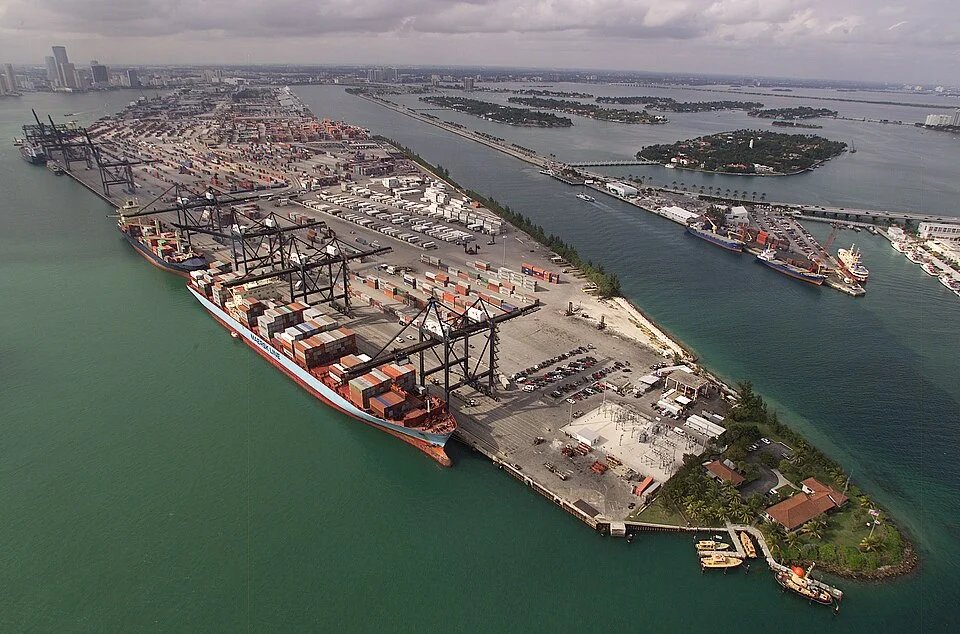
The United States and China have each announced reciprocal tariff reductions on roughly $30 billion worth of goods, marking the latest de‑escalation step in the two nations’ protracted trade dispute. The U.S. list comprises 77 product categories ranging from mundane items such as bed linen, garden umbrellas, toasters, fish hooks and billiard balls, while China’s list is far broader, covering 1,619 types of American exports that include a wide array of foodstuffs— butter, offal, lobster and foie gras— as well as coal, scientific equipment like MRI systems, rabbit hair and a surprising assortment of live animals for breeding, notably donkeys, mules, horses, whales, dolphins and dugongs. The move follows a high‑profile summit in Washington between President Xi Jinping and former President Donald Trump, and was brokered through the US‑China Board of Trade created during Trump’s May visit to Beijing. U.S. Trade Representative Katherine Tai (identified in the release as Jamieson Greer) said each side had proposed $30 billion of “non‑sensitive” trade for more favourable tariff treatment, a step that would improve market access for about 30 % of U.S. exports to China.
The tariff cuts focus exclusively on non‑strategic goods, deliberately leaving out high‑technology and other sensitive sectors such as semiconductors, batteries and electric vehicles, which continue to face elevated duties. Analysts note that the selected products represent only a modest slice of overall bilateral trade, with the Chinese commerce ministry indicating that more than 90 % of the items will be moved to “most‑favoured‑nation” tariff levels, but the core strategic tensions remain unresolved. Zhu Tian, vice‑president and co‑dean at CEIBS, described the development as a “positive step, but not a major breakthrough,” emphasizing that the reductions cover a relatively small share of total trade and that key tariffs, including those on U.S. whole soybeans—still subject to a 10 % levy—are untouched. The move therefore signals a cautious, incremental approach rather than a sweeping reset of the trade relationship.
Commentators view the granular nature of the tariff lists as evidence of how detailed customs codes can be used to carve out limited cooperation zones amid broader rivalry. Han Lin of The Asia Group highlighted the eye‑catching inclusion of exotic animal species, suggesting it reflects the precision of tariff classifications more than a genuine push for live‑animal trade. The agreement, while limited, demonstrates a shift from merely avoiding further escalation to actively reducing some barriers, a stance described by Han as “managed stabilisation.” The broader trade truce, initially forged at a 2023 summit in Busan, was only extended by two months, underscoring the provisional nature of the détente. As both sides continue to navigate a complex mix of economic interdependence and strategic competition, the modest tariff cuts may pave the way for future negotiations but are unlikely to reshape the fundamental contours of the U.S.–China trade relationship in the near term.
⚡ Effects Interpreter
🌍World Economylow impact
What this means for you
- ▶The global growth story might get a small rewrite after this.
- ▶The world's biggest economies tend to watch each other's data closely.
🏙️Local Economymedium impact
What this means for you
- ▶Your council tax and utility bills can indirectly track big economic swings.
- ▶The corner shop's prices are usually the last to move, but they do move.
🏦Rates & Bankslow impact
What this means for you
- ▶Savers might glance at their account rate — lenders adjust after big events.
- ▶Fixed and variable borrowers alike might want to keep half an eye on this.
❤️Healthmedium impact
What this means for you
- ▶A little perspective usually helps once the initial shock fades.
- ▶Worry has a way of spreading faster than the facts sometimes.
💷Wealthmedium impact
What this means for you
- ▶Investors often reshuffle their holdings when stories like this break.
- ▶Savers with a clear plan tend to feel less rattled by news like this.
🏠Housingmedium impact
What this means for you
- ▶A slow-moving market like housing rarely reacts overnight.
- ▶The housing market has a habit of lagging behind the headlines.
🌍 Effects for your country
The U.S.'s central bank rate currently stands at 3.75%, so a global rates move like this could feed through to local borrowing costs. The U.S.'s economy is growing at 2.3% with inflation at 3.2%, the backdrop this story's effects play out against locally. Housing-market effects like this are usually felt most where mortgage rates track the U.S.'s own central bank rate closely. With the U.S.'s unemployment at 4.4%, personal-finance effects like this land on a labour market that is currently fairly stable. Health-system effects are harder to localise from economic indicators alone — the real impact in the U.S. depends more on local healthcare capacity than the figures above.
The UK's central bank rate currently stands at 3.75%, so a global rates move like this could feed through to local borrowing costs. The UK's economy is growing at 0.8% with inflation at 3.2%, the backdrop this story's effects play out against locally. Housing-market effects like this are usually felt most where mortgage rates track the UK's own central bank rate closely. With the UK's unemployment at 5.6%, personal-finance effects like this land on a labour market that is currently fairly stable. Health-system effects are harder to localise from economic indicators alone — the real impact in the UK depends more on local healthcare capacity than the figures above.
France's central bank rate currently stands at 2%, so a global rates move like this could feed through to local borrowing costs. France's economy is growing at 0.9% with inflation at 1.8%, the backdrop this story's effects play out against locally. Housing-market effects like this are usually felt most where mortgage rates track France's own central bank rate closely. With France's unemployment at 7.9%, personal-finance effects like this land on a labour market that is already under strain. Health-system effects are harder to localise from economic indicators alone — the real impact in France depends more on local healthcare capacity than the figures above.
Romania's central bank rate currently stands at 6.5%, so a global rates move like this could feed through to local borrowing costs. Romania's economy is growing at 0.7% with inflation at 7.8%, the backdrop this story's effects play out against locally. Housing-market effects like this are usually felt most where mortgage rates track Romania's own central bank rate closely. With Romania's unemployment at 6%, personal-finance effects like this land on a labour market that is currently fairly stable. Health-system effects are harder to localise from economic indicators alone — the real impact in Romania depends more on local healthcare capacity than the figures above.
The UAE's central bank rate currently stands at 3.65%, so a global rates move like this could feed through to local borrowing costs. The UAE's economy is growing at 3.1% with inflation at 2.5%, the backdrop this story's effects play out against locally. Housing-market effects like this are usually felt most where mortgage rates track the UAE's own central bank rate closely. Health-system effects are harder to localise from economic indicators alone — the real impact in the UAE depends more on local healthcare capacity than the figures above.