Is a Stock Market Crash Imminent Under President Donald Trump? Here's What History Says Could Come Next.
Source: Motley Fool ↗ (cross-verified by 2 outlets — full list below)
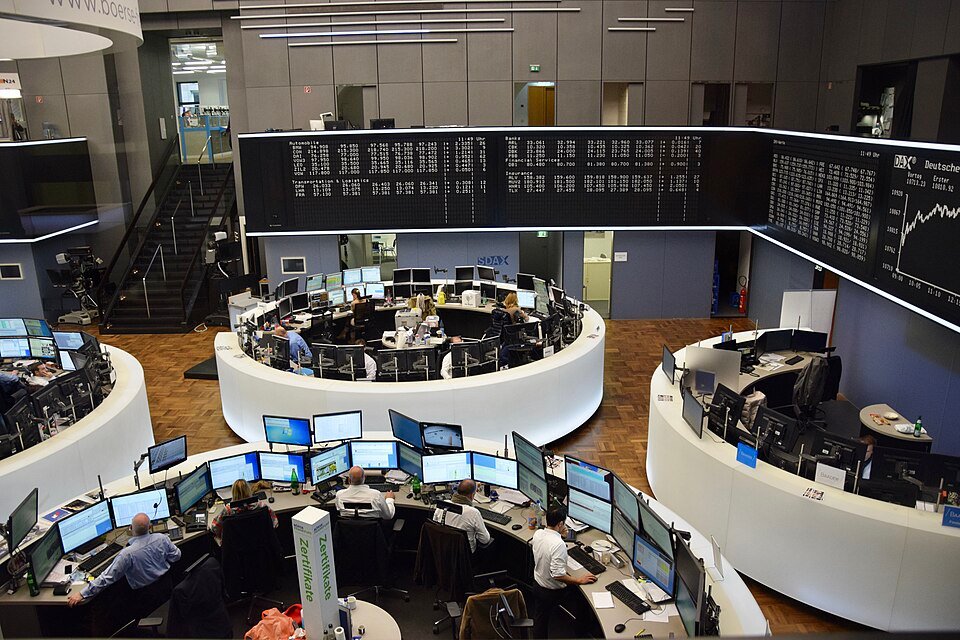
President Donald Trump’s second term has been marked by a series of aggressive policy moves that analysts fear could trigger a stock market crash. Within two years, the administration has launched a trade war against most U.S. allies, escalated a kinetic conflict in the Middle East, and repeatedly pressured Federal Reserve chairmen to cut interest rates despite rising inflation. Meanwhile, the S&P 500 has risen 33% since Trump’s November 5, 2024 election victory, buoyed by growth in artificial‑intelligence sectors, but the combination of high inflation—now 3.4% year‑over‑year in July—and a looming threat to halt trade with surplus‑bearing nations unless rates fall has raised concerns about a sudden market reversal.
The most pressing risk stems from the divergence between Trump’s stated economic goals and the reality of policy outcomes. Inflation remains above the Fed’s 2% target, limiting the central bank’s ability to lower rates without further price pressures. A comparable episode in Turkey, where rate cuts amid high inflation deepened a cost‑of‑living crisis, serves as a cautionary example. Adding to the strain, the 10‑year Treasury yield has climbed to roughly 4.80%, raising borrowing costs just as technology firms pour billions into AI data‑center construction. Coupled with a historically elevated cyclically adjusted price‑to‑earnings ratio of 41.4—well above its long‑term average and near the pre‑dot‑com bubble peak—the market appears increasingly vulnerable to a correction.
Investors are advised to brace for potential turbulence by diversifying into well‑valued companies with limited downside and maintaining cash reserves to capitalize on lower prices should a downturn materialize. While timing a crash remains impossible, the growing disconnect between Trump’s policy instincts and economic fundamentals suggests that a sharp correction could arrive within the next few months, affecting both corporate earnings and broader market sentiment.
⚡ Effects Interpreter
🌍World Economylow impact
What this means for you
- ▶Economists will chew this over, and growth forecasts might be nudged.
- ▶The global growth story might get a modest rewrite after this.
🏙️Local Economylow impact
What this means for you
- ▶Prices at the pump and the supermarket typically trail moves like this.
- ▶Your cost of living might feel a soft nudge either way.
🏦Rates & Banksmedium impact
What this means for you
- ▶Any move in rates would probably come later, not overnight.
- ▶Borrowing plans are usually safe from sudden shocks over something like this.
❤️Healthmedium impact
What this means for you
- ▶Taking a break from the headlines can do more good than scrolling on.
- ▶Community spirit typically steadies nerves when headlines feel unsettling.
💷Wealthlow impact
What this means for you
- ▶A modest, well-diversified nest egg tends to absorb shocks like this subtly.
- ▶It might be worth a quick look at your ISA or pension in the coming days.
🏠Housinglow impact
What this means for you
- ▶Bricks and mortar tend to hold steady while other markets swing about.
- ▶Buyers and renters may notice only a soft drift, if anything at all.
🌍 Effects for your country
The U.S.'s central bank rate currently stands at 3.75%, so a global rates move like this could feed through to local borrowing costs. The U.S.'s economy is growing at 2.3% with inflation at 3.2%, the backdrop this story's effects play out against locally. Housing-market effects like this are usually felt most where mortgage rates track the U.S.'s own central bank rate closely. With the U.S.'s unemployment at 4.4%, personal-finance effects like this land on a labour market that is currently fairly stable. Health-system effects are harder to localise from economic indicators alone — the real impact in the U.S. depends more on local healthcare capacity than the figures above.
The UK's central bank rate currently stands at 3.75%, so a global rates move like this could feed through to local borrowing costs. The UK's economy is growing at 0.8% with inflation at 3.2%, the backdrop this story's effects play out against locally. Housing-market effects like this are usually felt most where mortgage rates track the UK's own central bank rate closely. With the UK's unemployment at 5.6%, personal-finance effects like this land on a labour market that is currently fairly stable. Health-system effects are harder to localise from economic indicators alone — the real impact in the UK depends more on local healthcare capacity than the figures above.
France's central bank rate currently stands at 2%, so a global rates move like this could feed through to local borrowing costs. France's economy is growing at 0.9% with inflation at 1.8%, the backdrop this story's effects play out against locally. Housing-market effects like this are usually felt most where mortgage rates track France's own central bank rate closely. With France's unemployment at 7.9%, personal-finance effects like this land on a labour market that is already under strain. Health-system effects are harder to localise from economic indicators alone — the real impact in France depends more on local healthcare capacity than the figures above.
Romania's central bank rate currently stands at 6.5%, so a global rates move like this could feed through to local borrowing costs. Romania's economy is growing at 0.7% with inflation at 7.8%, the backdrop this story's effects play out against locally. Housing-market effects like this are usually felt most where mortgage rates track Romania's own central bank rate closely. With Romania's unemployment at 6%, personal-finance effects like this land on a labour market that is currently fairly stable. Health-system effects are harder to localise from economic indicators alone — the real impact in Romania depends more on local healthcare capacity than the figures above.
The UAE's central bank rate currently stands at 3.65%, so a global rates move like this could feed through to local borrowing costs. The UAE's economy is growing at 3.1% with inflation at 2.5%, the backdrop this story's effects play out against locally. Housing-market effects like this are usually felt most where mortgage rates track the UAE's own central bank rate closely. Health-system effects are harder to localise from economic indicators alone — the real impact in the UAE depends more on local healthcare capacity than the figures above.