Researchers hope powerful new microscope will reveal ‘root cause’ of incurable bowel disease
Source: Guardian Health ↗
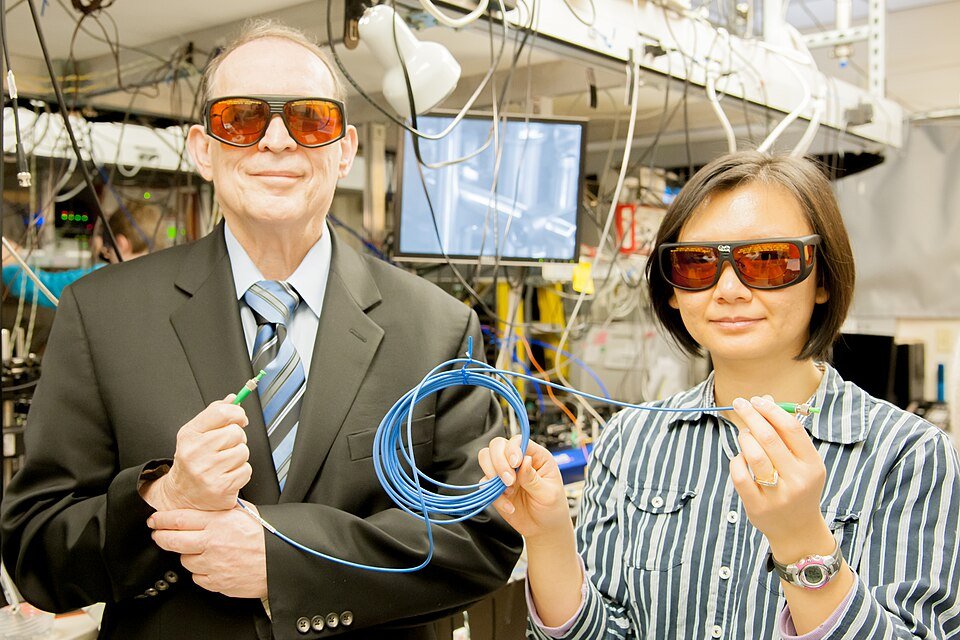
A cutting‑edge microscope nicknamed “Curie” has been unveiled at the Rosalind Franklin Institute in Oxfordshire, offering ten‑times the resolution of conventional light microscopes and the ability to image structures as small as 20 nanometres. The device employs a two‑laser stimulated emission depletion (STED) technique, for which its inventors received the 2014 Nobel Prize in Chemistry, and incorporates deformable mirrors and a temperature‑controlled stage that together enable clear imaging of deep, thick tissue samples and living mini‑organs at near‑body temperature. Dr Karina Pombo‑Garcia, group leader at the institute, highlighted that this unprecedented clarity will allow researchers to visualise protein complexes and cellular structures far beyond the limits of standard fluorescence microscopy, a capability she believes is essential for uncovering the mechanisms behind inflammatory bowel disease (IBD) and other conditions.
IBD, which includes Crohn’s disease and ulcerative colitis, affects more than half a million people in the United Kingdom alone, with diagnoses most common between ages 15 and 40, disrupting education, work and relationships. Current treatments are limited because the fundamental biology of the disease remains poorly understood. By comparing the ultrastructure of healthy tissue with that of diseased samples, scientists hope to identify the precise alterations in protein complexes that drive pathology, potentially revealing the “root cause” of IBD. Researchers such as Ioannidis stress that mapping these differences could lead to more targeted therapies, moving beyond the broad‑spectrum approaches that dominate current clinical practice.
The launch of Curie coincided with a major funding announcement by science minister Chris McDonald, who disclosed £67 million for the Rosalind Franklin Institute and £95 million for the Henry Royce Institute over the next five years, sourced from UKRI’s Engineering and Physical Sciences Research Council. This investment arrives amid broader financial pressures on UK science facilities, with the Science and Technology Facilities Council needing to cut £162 million by 2030 and several national user facilities facing reduced budgets. Despite these challenges, McDonald affirmed continued strong support for key infrastructure, underscoring the strategic importance of advanced tools like Curie for maintaining the UK’s position at the forefront of biomedical research.
⚡ Effects Interpreter
🌍World Economymedium impact
What this means for you
- ▶Foreign direct investment decisions can hinge on how this plays out.
- ▶A story like this rarely stays local for long in a connected economy.
🏙️Local Economylow impact
What this means for you
- ▶Jobs and trade close to home might feel a soft knock-on effect.
- ▶Community shops may gradually reprice stock as costs shift upstream.
🏦Rates & Banksmedium impact
What this means for you
- ▶Rate-setters usually take their time digesting this kind of news.
- ▶Base rate decisions are usually made on data trends, not single headlines.
❤️Healthlow impact
What this means for you
- ▶Community health workers may see extra questions in the days ahead.
- ▶Everyday routines rarely need to change much once the facts are clear.
💷Wealthmedium impact
What this means for you
- ▶Time off work for health reasons can add up faster than people expect.
- ▶Care costs can ripple into family finances over time.
🏠Housinglow impact
What this means for you
- ▶The property market tends to move slowly, so expect any change to take time.
- ▶Asking prices in the area may firm up or soften only gradually.
🌍 Effects for your country
The U.S.'s central bank rate currently stands at 3.75%, so a global rates move like this could feed through to local borrowing costs. The U.S.'s economy is growing at 2.3% with inflation at 3.2%, the backdrop this story's effects play out against locally. Housing-market effects like this are usually felt most where mortgage rates track the U.S.'s own central bank rate closely. With the U.S.'s unemployment at 4.4%, personal-finance effects like this land on a labour market that is currently fairly stable. Health-system effects are harder to localise from economic indicators alone — the real impact in the U.S. depends more on local healthcare capacity than the figures above.
The UK's central bank rate currently stands at 3.75%, so a global rates move like this could feed through to local borrowing costs. The UK's economy is growing at 0.8% with inflation at 3.2%, the backdrop this story's effects play out against locally. Housing-market effects like this are usually felt most where mortgage rates track the UK's own central bank rate closely. With the UK's unemployment at 5.6%, personal-finance effects like this land on a labour market that is currently fairly stable. Health-system effects are harder to localise from economic indicators alone — the real impact in the UK depends more on local healthcare capacity than the figures above.
France's central bank rate currently stands at 2%, so a global rates move like this could feed through to local borrowing costs. France's economy is growing at 0.9% with inflation at 1.8%, the backdrop this story's effects play out against locally. Housing-market effects like this are usually felt most where mortgage rates track France's own central bank rate closely. With France's unemployment at 7.9%, personal-finance effects like this land on a labour market that is already under strain. Health-system effects are harder to localise from economic indicators alone — the real impact in France depends more on local healthcare capacity than the figures above.
Romania's central bank rate currently stands at 6.5%, so a global rates move like this could feed through to local borrowing costs. Romania's economy is growing at 0.7% with inflation at 7.8%, the backdrop this story's effects play out against locally. Housing-market effects like this are usually felt most where mortgage rates track Romania's own central bank rate closely. With Romania's unemployment at 6%, personal-finance effects like this land on a labour market that is currently fairly stable. Health-system effects are harder to localise from economic indicators alone — the real impact in Romania depends more on local healthcare capacity than the figures above.
The UAE's central bank rate currently stands at 3.65%, so a global rates move like this could feed through to local borrowing costs. The UAE's economy is growing at 3.1% with inflation at 2.5%, the backdrop this story's effects play out against locally. Housing-market effects like this are usually felt most where mortgage rates track the UAE's own central bank rate closely. Health-system effects are harder to localise from economic indicators alone — the real impact in the UAE depends more on local healthcare capacity than the figures above.