The engineering behind the US Strategic Petroleum Reserve
Source: Hacker News ↗
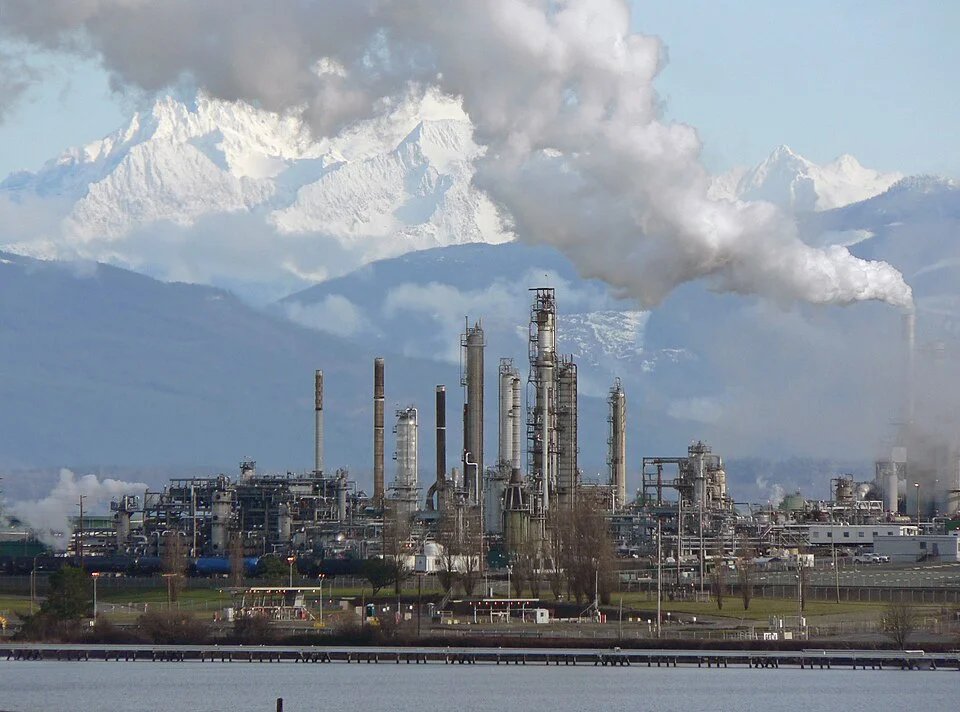
The United States Strategic Petroleum Reserve (SPR) stores roughly 714 million barrels of crude oil in a network of underground caverns carved into salt domes at four Gulf‑coast sites in Texas and Louisiana. Each cavern holds about 10 million barrels, and the Department of Energy lists 60 such caverns that together provide the full authorized capacity. The storage method relies on drilling into the salt formations, injecting fresh water that dissolves the salt, and then pumping out the resulting brine to leave a large, stable void. Because the surrounding rock salt is virtually impermeable, non‑reactive with petroleum and capable of self‑healing under pressure, the caverns require no steel or concrete liners; oil simply floats atop the water and is displaced upward when fresh water is pumped in, allowing efficient loading and withdrawal.
Unlike conventional above‑ground external floating‑roof tanks, which would need more than a thousand units and tens of thousands of acres—roughly the size of Washington, D.C.—the salt‑dome solution avoids the massive land acquisition, construction, and vulnerability to attack inherent in surface storage. Surface tanks are limited to about 50 feet in height and 300 feet in diameter, and their seals are prone to lightning‑induced fires and sabotage. Underground storage also sidesteps the high costs and environmental risks demonstrated by the Navy’s Red Hill facility in Hawaii, where steel‑lined concrete tanks in volcanic rock leaked thousands of gallons of fuel, contaminating drinking water and prompting a costly shutdown. The SPR’s caverns, by contrast, are far cheaper—historical capital costs average about $3.50 per barrel versus $15‑$18 for tank farms—and benefit from the natural protective qualities of the salt formation.
The cavern system not only provides a secure, low‑cost repository but also positions the oil close to Gulf Coast refineries, pipelines and marine terminals, facilitating rapid delivery during supply disruptions. However, the method does require a reliable fresh‑water source and a means to manage the extracted brine, as each withdrawal introduces additional water that dissolves more salt. Despite this logistical need, the SPR’s design remains the most economical and resilient large‑scale petroleum storage solution in the United States, offering a strategic buffer against market shocks while minimizing exposure to sabotage, environmental contamination, and the prohibitive expense of scaling up surface tank infrastructure.
⚡ Effects Interpreter
🌍World Economylow impact
What this means for you
- ▶Share prices around the world may swing as traders weigh this up.
- ▶Overnight markets abroad usually set the tone for the next trading day.
🏙️Local Economylow impact
What this means for you
- ▶Local wages and hours worked might bend slightly with the wider trend.
- ▶Local suppliers who import goods might pass on any change in costs.
🏦Rates & Bankslow impact
What this means for you
- ▶Your monthly repayments are far more likely to hold steady than to spike.
- ▶Fixed and variable borrowers alike may want to keep half an eye on this.
❤️Healthlow impact
What this means for you
- ▶Local wellbeing services are there precisely for moments when news feels overwhelming.
- ▶Neighbours and families might feel more anxious until the dust settles.
💷Wealthmedium impact
What this means for you
- ▶The bigger the market move, the faster it usually reverses.
- ▶Short-term swings are normal — long-term savers usually stay the course.
🏠Housinglow impact
What this means for you
- ▶Property values usually need more than one headline to really move.
- ▶Anyone selling soon might want a fresh valuation once the dust settles.
🌍 Effects for your country
The U.S.'s central bank rate currently stands at 3.75%, so a global rates move like this could feed through to local borrowing costs. The U.S.'s economy is growing at 2.3% with inflation at 3.2%, the backdrop this story's effects play out against locally. Housing-market effects like this are usually felt most where mortgage rates track the U.S.'s own central bank rate closely. With the U.S.'s unemployment at 4.4%, personal-finance effects like this land on a labour market that is currently fairly stable. Health-system effects are harder to localise from economic indicators alone — the real impact in the U.S. depends more on local healthcare capacity than the figures above.
The UK's central bank rate currently stands at 3.75%, so a global rates move like this could feed through to local borrowing costs. The UK's economy is growing at 0.8% with inflation at 3.2%, the backdrop this story's effects play out against locally. Housing-market effects like this are usually felt most where mortgage rates track the UK's own central bank rate closely. With the UK's unemployment at 5.6%, personal-finance effects like this land on a labour market that is currently fairly stable. Health-system effects are harder to localise from economic indicators alone — the real impact in the UK depends more on local healthcare capacity than the figures above.
France's central bank rate currently stands at 2%, so a global rates move like this could feed through to local borrowing costs. France's economy is growing at 0.9% with inflation at 1.8%, the backdrop this story's effects play out against locally. Housing-market effects like this are usually felt most where mortgage rates track France's own central bank rate closely. With France's unemployment at 7.9%, personal-finance effects like this land on a labour market that is already under strain. Health-system effects are harder to localise from economic indicators alone — the real impact in France depends more on local healthcare capacity than the figures above.
Romania's central bank rate currently stands at 6.5%, so a global rates move like this could feed through to local borrowing costs. Romania's economy is growing at 0.7% with inflation at 7.8%, the backdrop this story's effects play out against locally. Housing-market effects like this are usually felt most where mortgage rates track Romania's own central bank rate closely. With Romania's unemployment at 6%, personal-finance effects like this land on a labour market that is currently fairly stable. Health-system effects are harder to localise from economic indicators alone — the real impact in Romania depends more on local healthcare capacity than the figures above.
The UAE's central bank rate currently stands at 3.65%, so a global rates move like this could feed through to local borrowing costs. The UAE's economy is growing at 3.1% with inflation at 2.5%, the backdrop this story's effects play out against locally. Housing-market effects like this are usually felt most where mortgage rates track the UAE's own central bank rate closely. Health-system effects are harder to localise from economic indicators alone — the real impact in the UAE depends more on local healthcare capacity than the figures above.