The least free place on earth: Occupied Ukraine
Source: Politico EU ↗ (cross-verified by 2 outlets — full list below)
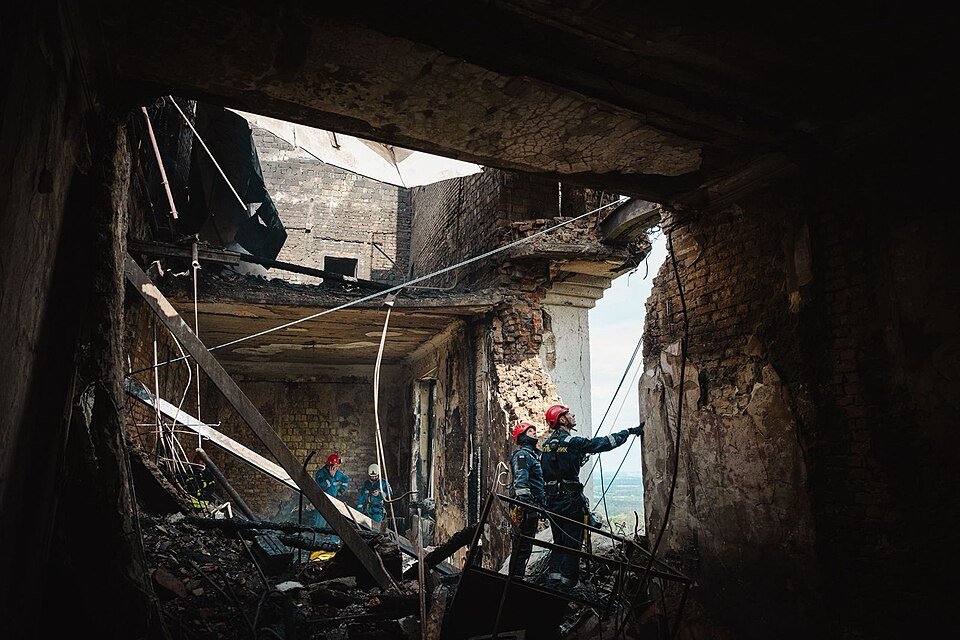
Russian‑imposed repression has driven the occupied eastern and southern regions of Ukraine to the top of Freedom House’s 2024 “Freedom in the World” rankings, labeling them the world’s least free places—surpassing even North Korea and the Gaza Strip. The designation reflects a systematic denial of political rights, freedom of expression and basic legal protections for residents, who are subjected to secret detentions without access to family, lawyers or doctors, and face the constant threat of deportation. Moscow’s legal framework forces “passportization,” compelling locals to acquire Russian citizenship in order to obtain essential services, while simultaneously criminalising any expression of Ukrainian identity as “extremist.” The United Nations Human Rights Monitoring Mission to Ukraine (HRMMU) has recorded at least sixteen Russian statutes that curtail Ukrainian citizens’ rights, and the U.N. mission’s head, Danielle Bell, describes the situation as “one of the most well‑documented systems of repression, oppression and human rights violations.”
The core consequence of these policies is a deliberate effort to alter the demographic and cultural fabric of the annexed territories. Freedom House notes that Russia is “deliberately changing the ethnic composition so as to destroy a culture or tip the political balance in favor of another group,” a practice prohibited under international humanitarian law, which bars occupying powers from imposing permanent demographic, social or economic changes. Schools now teach a Russian‑centric version of history, and Ukrainian language or nationalist sentiment is punished as extremist activity. Resettlement programs encourage Russian citizens to move into the occupied zones, further cementing Moscow’s aim of Russification. Journalists such as Andrii Dikhtiarenko describe the process as bearing all the hallmarks of cultural genocide, underscoring the systematic nature of the demographic engineering.
Individual stories illustrate the human toll of this policy. In Melitopol, shop employee Liudmila Chub was forced to obtain a Russian passport or face fines for her employer; her refusal led to an eight‑month detention on dubious curfew violations, after which she was deported to Russia’s border with Georgia, narrowly escaping a later treason charge that befell many who complied. HRMMU has documented over 400 similar detentions on treason or espionage grounds, though many cases remain untraceable due to incommunicado confinement. One such case is that of 59‑year‑old IT specialist Serhii Gryshchenkov from Sevastopol, who was abducted in May 2025, allegedly tortured for a year, and only charged with treason in June 2026, with his family still unaware of the specifics. These accounts highlight a broader pattern of intimidation, forced assimilation and legal persecution that not only reshapes the occupied regions’ identity but also signals a stark warning to any dissenting voices within the annexed territories.
⚡ Effects Interpreter
🌍World Economylow impact
What this means for you
- ▶Currency traders elsewhere may start pricing in the fallout within hours.
- ▶Overseas suppliers could quietly rethink their pricing after news like this.
🏙️Local Economylow impact
What this means for you
- ▶Slight firms on your street may pass costs on cautiously, bit by bit.
- ▶The knock-on for local trade is usually gradual rather than sudden.
🏦Rates & Bankslow impact
What this means for you
- ▶Banks tend to wait and see before nudging the rates they offer.
- ▶Your bank is unlikely to act on this alone, but it will be watching.
❤️Healthmedium impact
What this means for you
- ▶Taking a break from the headlines can do more good than scrolling on.
- ▶A story like this can linger in the back of people's minds for a while.
💷Wealthmedium impact
What this means for you
- ▶Markets have a habit of overreacting first and settling down further down the line.
- ▶Short-term wobbles like this tend to even out given enough time.
🏠Housinglow impact
What this means for you
- ▶First-time buyers might keep half an eye on mortgage rates after this.
- ▶Anyone mid-purchase might want to keep an eye on how this unfolds.
🌍 Effects for your country
The U.S.'s central bank rate currently stands at 3.75%, so a global rates move like this could feed through to local borrowing costs. The U.S.'s economy is growing at 2.3% with inflation at 3.2%, the backdrop this story's effects play out against locally. Housing-market effects like this are usually felt most where mortgage rates track the U.S.'s own central bank rate closely. With the U.S.'s unemployment at 4.4%, personal-finance effects like this land on a labour market that is currently fairly stable. Health-system effects are harder to localise from economic indicators alone — the real impact in the U.S. depends more on local healthcare capacity than the figures above.
The UK's central bank rate currently stands at 3.75%, so a global rates move like this could feed through to local borrowing costs. The UK's economy is growing at 0.8% with inflation at 3.2%, the backdrop this story's effects play out against locally. Housing-market effects like this are usually felt most where mortgage rates track the UK's own central bank rate closely. With the UK's unemployment at 5.6%, personal-finance effects like this land on a labour market that is currently fairly stable. Health-system effects are harder to localise from economic indicators alone — the real impact in the UK depends more on local healthcare capacity than the figures above.
France's central bank rate currently stands at 2%, so a global rates move like this could feed through to local borrowing costs. France's economy is growing at 0.9% with inflation at 1.8%, the backdrop this story's effects play out against locally. Housing-market effects like this are usually felt most where mortgage rates track France's own central bank rate closely. With France's unemployment at 7.9%, personal-finance effects like this land on a labour market that is already under strain. Health-system effects are harder to localise from economic indicators alone — the real impact in France depends more on local healthcare capacity than the figures above.
Romania's central bank rate currently stands at 6.5%, so a global rates move like this could feed through to local borrowing costs. Romania's economy is growing at 0.7% with inflation at 7.8%, the backdrop this story's effects play out against locally. Housing-market effects like this are usually felt most where mortgage rates track Romania's own central bank rate closely. With Romania's unemployment at 6%, personal-finance effects like this land on a labour market that is currently fairly stable. Health-system effects are harder to localise from economic indicators alone — the real impact in Romania depends more on local healthcare capacity than the figures above.
The UAE's central bank rate currently stands at 3.65%, so a global rates move like this could feed through to local borrowing costs. The UAE's economy is growing at 3.1% with inflation at 2.5%, the backdrop this story's effects play out against locally. Housing-market effects like this are usually felt most where mortgage rates track the UAE's own central bank rate closely. Health-system effects are harder to localise from economic indicators alone — the real impact in the UAE depends more on local healthcare capacity than the figures above.