Trump blasts Supreme Court over mail-in ballot ruling
Source: Euronews ↗ (cross-verified by 2 outlets — full list below)
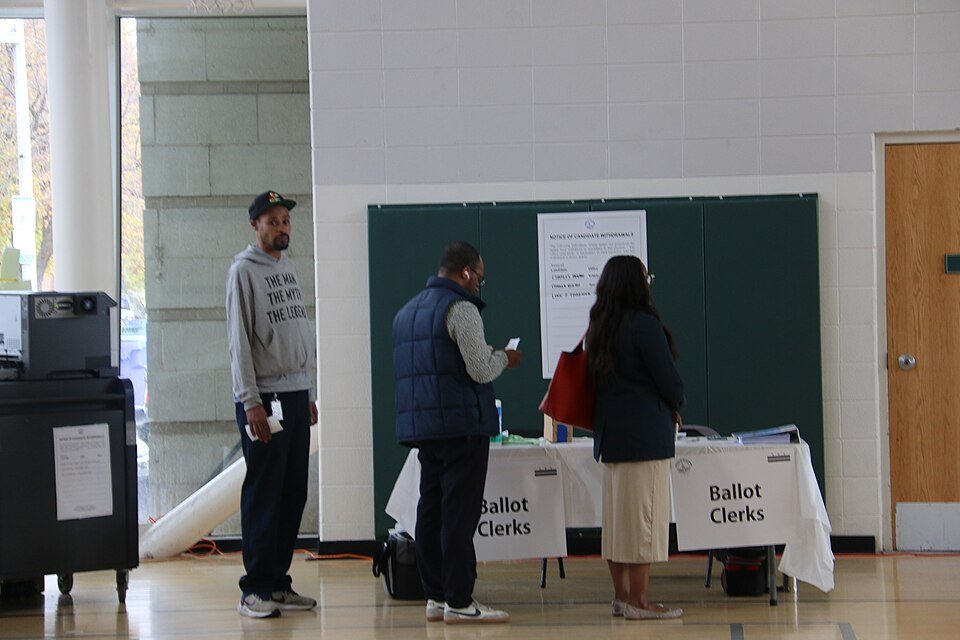
President Donald Trump publicly condemned the Supreme Court on Tuesday after the justices refused to lift an order that blocks his administration’s plan to restrict mail‑in voting ahead of the November midterm elections. In a lengthy Truth Social post, Trump labeled the ruling “horrible, highly political,” accusing certain justices of being “petrified of these crazed and depraved Democrats” and lacking the courage to “save our America.” The request he sought to overturn stemmed from an executive order issued in March that directed the United States Postal Service to create new rules preventing the delivery of mail‑in or absentee ballots unless voters appeared on state‑specific lists, a measure Trump argued—without evidence—was necessary to curb alleged fraud.
The Supreme Court’s denial of Trump’s petition came amid a lawsuit filed by 23 states that challenged the executive order as both unprecedented and unconstitutional. Justice Brett Kavanaugh, writing a concurring opinion, acknowledged that the Postal Service might have statutory authority to issue the rule but emphasized that state and local election officials would not have sufficient time to implement it before the elections. Civil‑rights organizations, including the NAACP, praised the decision as a “big win for voters,” asserting that the country functions best when every eligible voter can cast a ballot. The ruling therefore preserves the existing mail‑in voting framework for the upcoming midterms, maintaining the status quo that many states rely on to ensure broad voter participation.
Despite his opposition to mail‑in voting, Trump himself used a postal ballot in a Florida election earlier this year, explaining to reporters that his position as president required him to vote by mail because he could not be present in person. This personal contradiction underscores the broader debate over the role of absentee voting in American elections, a dispute that will continue to shape campaign strategies and legal battles as candidates and parties prepare for the 2026 midterm contests. The Supreme Court’s stance reinforces the timeline for states to finalize their voting procedures, while the administration’s push for stricter mail‑in rules remains stalled pending further judicial review.
⚡ Effects Interpreter
🌍World Economymedium impact
What this means for you
- ▶Political risk is something markets price in almost instantly these days.
- ▶Foreign investors usually pause to reassess after political headlines like this.
🏙️Local Economylow impact
What this means for you
- ▶Your weekly shop may get a touch dearer, or cheaper, down the line.
- ▶Corner shops and cafes rarely feel this straight away, but they do feel it.
🏦Rates & Banksmedium impact
What this means for you
- ▶The cost of borrowing rarely moves on politics alone, but it can add pressure.
- ▶The market for money often twitches first when politics shifts.
❤️Healthmedium impact
What this means for you
- ▶Unsettling news can weigh on sleep and mood, so peace of mind matters.
- ▶Talking things through with family or friends can ease the load.
💷Wealthmedium impact
What this means for you
- ▶Any hit to your money is more likely a ripple than a wave.
- ▶Savings and portfolios can see short-lived ups and downs after this kind of news.
🏠Housinglow impact
What this means for you
- ▶Bricks and mortar tend to hold steady while other markets swing about.
- ▶Buyers and renters might notice only a soft drift, if anything at all.
🌍 Effects for your country
The U.S.'s central bank rate currently stands at 3.75%, so a global rates move like this could feed through to local borrowing costs. The U.S.'s economy is growing at 2.3% with inflation at 3.2%, the backdrop this story's effects play out against locally. Housing-market effects like this are usually felt most where mortgage rates track the U.S.'s own central bank rate closely. With the U.S.'s unemployment at 4.4%, personal-finance effects like this land on a labour market that is currently fairly stable. Health-system effects are harder to localise from economic indicators alone — the real impact in the U.S. depends more on local healthcare capacity than the figures above.
The UK's central bank rate currently stands at 3.75%, so a global rates move like this could feed through to local borrowing costs. The UK's economy is growing at 0.8% with inflation at 3.2%, the backdrop this story's effects play out against locally. Housing-market effects like this are usually felt most where mortgage rates track the UK's own central bank rate closely. With the UK's unemployment at 5.6%, personal-finance effects like this land on a labour market that is currently fairly stable. Health-system effects are harder to localise from economic indicators alone — the real impact in the UK depends more on local healthcare capacity than the figures above.
France's central bank rate currently stands at 2%, so a global rates move like this could feed through to local borrowing costs. France's economy is growing at 0.9% with inflation at 1.8%, the backdrop this story's effects play out against locally. Housing-market effects like this are usually felt most where mortgage rates track France's own central bank rate closely. With France's unemployment at 7.9%, personal-finance effects like this land on a labour market that is already under strain. Health-system effects are harder to localise from economic indicators alone — the real impact in France depends more on local healthcare capacity than the figures above.
Romania's central bank rate currently stands at 6.5%, so a global rates move like this could feed through to local borrowing costs. Romania's economy is growing at 0.7% with inflation at 7.8%, the backdrop this story's effects play out against locally. Housing-market effects like this are usually felt most where mortgage rates track Romania's own central bank rate closely. With Romania's unemployment at 6%, personal-finance effects like this land on a labour market that is currently fairly stable. Health-system effects are harder to localise from economic indicators alone — the real impact in Romania depends more on local healthcare capacity than the figures above.
The UAE's central bank rate currently stands at 3.65%, so a global rates move like this could feed through to local borrowing costs. The UAE's economy is growing at 3.1% with inflation at 2.5%, the backdrop this story's effects play out against locally. Housing-market effects like this are usually felt most where mortgage rates track the UAE's own central bank rate closely. Health-system effects are harder to localise from economic indicators alone — the real impact in the UAE depends more on local healthcare capacity than the figures above.