UK support for Falkland Islands 'unwavering' after Argentina restates claims, No 10 says
Source: BBC World ↗ (cross-verified by 4 outlets — full list below)
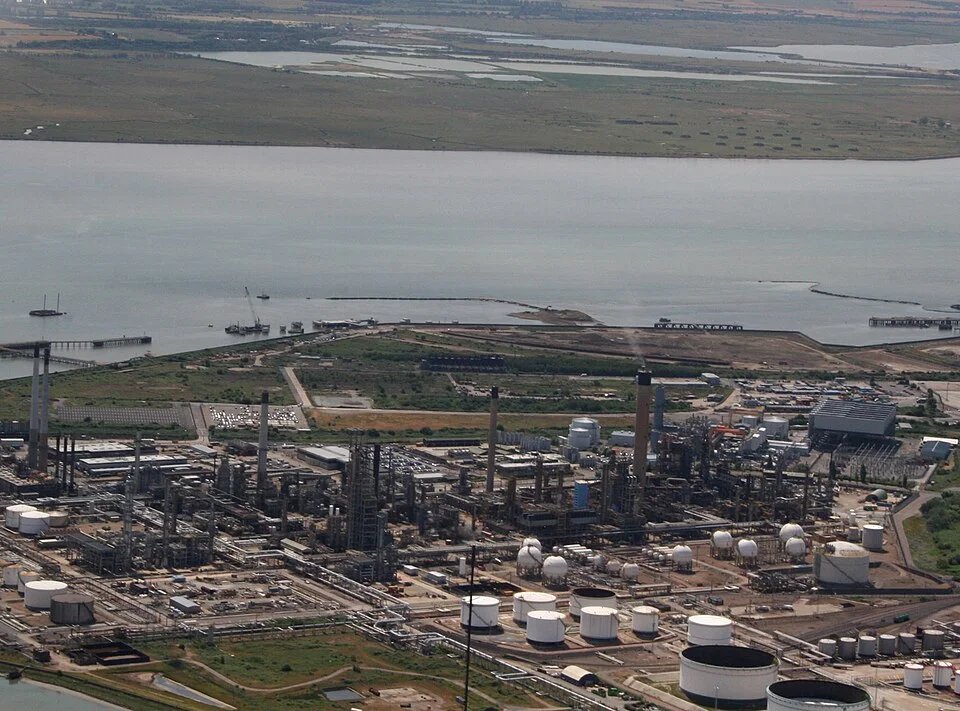
Argentina’s newly elected president, Javier Milei, reiterated his country’s claim over the Falkland Islands – which Buenos Aires calls “Las Malvinas” – describing the territory as “historically and legally” Argentine and vowing to sanction firms that seek to exploit oil near the archipelago. Milei’s remarks, delivered in a national address, framed the “winds of change” as favouring Argentina’s sovereignty claim and announced plans for a naval base in Tierra del Fuego. He warned that the Sea Lion oilfield, located about 130 miles from the islands and estimated to hold 1.7 billion barrels of “highly marketable crude,” represented a “clear and present danger” and that Argentina would act swiftly to prevent foreign extraction. In response, Downing Street affirmed the United Kingdom’s “unwavering” support for the Falklands, with officials such as Andy Burnham, Foreign Secretary Ed Miliband, and Defence Secretary Wes Streeting emphasizing the islanders’ right to self‑determination and the UK’s readiness to defend the territory.
The dispute resurfaces against a backdrop of longstanding tension dating back to the 1982 war, yet the islands’ residents have repeatedly rejected Argentine claims. In a 2013 referendum, 99.8 percent voted to remain a British overseas territory, a result the UK cites to justify its stance that the islanders’ wishes are paramount. Milei’s threat to impose sanctions targets two companies – Britain’s Rockhopper Exploration and Israel’s Navitas Petroleum – which hold licences from the Falkland Islands government to develop the Sea Lion field, with production slated for 2028. Argentine law already permits restrictions on oil activities deemed unauthorised, but the firms maintain that their licences are valid and that the project’s timetable will not be affected by recent political rhetoric.
British officials underscored that the United Kingdom’s armed forces remain on standby 24 hours a day to protect its interests, while also noting that the US, though formally neutral, has historically backed Britain in the conflict. Milei’s comments were met with criticism from UK politicians, including Conservative leader Kemi Badenoch, who dismissed the threats as bullying, and from Downing Street, which reiterated that the islanders’ right to exploit their own resources is integral to self‑determination. The episode highlights how the Falklands continue to serve as a geopolitical flashpoint, intertwining energy ambitions, domestic politics in Argentina, and the broader strategic calculations of Britain and its allies.
⚡ Effects Interpreter
🌍World Economylow impact
What this means for you
- ▶Futures markets sometimes move on this before the regular session opens.
- ▶Bond markets might quietly reprice risk once this news circulates.
🏙️Local Economylow impact
What this means for you
- ▶Small firms on your street may pass costs on cautiously, bit by bit.
- ▶Local suppliers who import goods may pass on any change in costs.
🏦Rates & Banksmedium impact
What this means for you
- ▶Your loan or mortgage rate is more likely to drift than to lurch here.
- ▶Your monthly repayments are far more likely to hold steady than to spike.
❤️Healthmedium impact
What this means for you
- ▶Worry has a way of spreading faster than the facts sometimes.
- ▶Talking things through with family or friends can ease the load.
💷Wealthmedium impact
What this means for you
- ▶Long-term goals rarely need rewriting over a single day's trading.
- ▶It's tempting to watch the ticker, but patience often pays off more.
🏠Housinglow impact
What this means for you
- ▶Mortgage shoppers may find deals shift only slightly in the short term.
- ▶House prices and rents are unlikely to shift the moment this news breaks.
🌍 Effects for your country
The U.S.'s central bank rate currently stands at 3.75%, so a global rates move like this could feed through to local borrowing costs. The U.S.'s economy is growing at 2.3% with inflation at 3.2%, the backdrop this story's effects play out against locally. Housing-market effects like this are usually felt most where mortgage rates track the U.S.'s own central bank rate closely. With the U.S.'s unemployment at 4.4%, personal-finance effects like this land on a labour market that is currently fairly stable. Health-system effects are harder to localise from economic indicators alone — the real impact in the U.S. depends more on local healthcare capacity than the figures above.
The UK's central bank rate currently stands at 3.75%, so a global rates move like this could feed through to local borrowing costs. The UK's economy is growing at 0.8% with inflation at 3.2%, the backdrop this story's effects play out against locally. Housing-market effects like this are usually felt most where mortgage rates track the UK's own central bank rate closely. With the UK's unemployment at 5.6%, personal-finance effects like this land on a labour market that is currently fairly stable. Health-system effects are harder to localise from economic indicators alone — the real impact in the UK depends more on local healthcare capacity than the figures above.
France's central bank rate currently stands at 2%, so a global rates move like this could feed through to local borrowing costs. France's economy is growing at 0.9% with inflation at 1.8%, the backdrop this story's effects play out against locally. Housing-market effects like this are usually felt most where mortgage rates track France's own central bank rate closely. With France's unemployment at 7.9%, personal-finance effects like this land on a labour market that is already under strain. Health-system effects are harder to localise from economic indicators alone — the real impact in France depends more on local healthcare capacity than the figures above.
Romania's central bank rate currently stands at 6.5%, so a global rates move like this could feed through to local borrowing costs. Romania's economy is growing at 0.7% with inflation at 7.8%, the backdrop this story's effects play out against locally. Housing-market effects like this are usually felt most where mortgage rates track Romania's own central bank rate closely. With Romania's unemployment at 6%, personal-finance effects like this land on a labour market that is currently fairly stable. Health-system effects are harder to localise from economic indicators alone — the real impact in Romania depends more on local healthcare capacity than the figures above.
The UAE's central bank rate currently stands at 3.65%, so a global rates move like this could feed through to local borrowing costs. The UAE's economy is growing at 3.1% with inflation at 2.5%, the backdrop this story's effects play out against locally. Housing-market effects like this are usually felt most where mortgage rates track the UAE's own central bank rate closely. Health-system effects are harder to localise from economic indicators alone — the real impact in the UAE depends more on local healthcare capacity than the figures above.