Why Oracle Stock Jumped 6% Today on OpenAI Funding Buzz
Source: Motley Fool ↗ (cross-verified by 2 outlets — full list below)
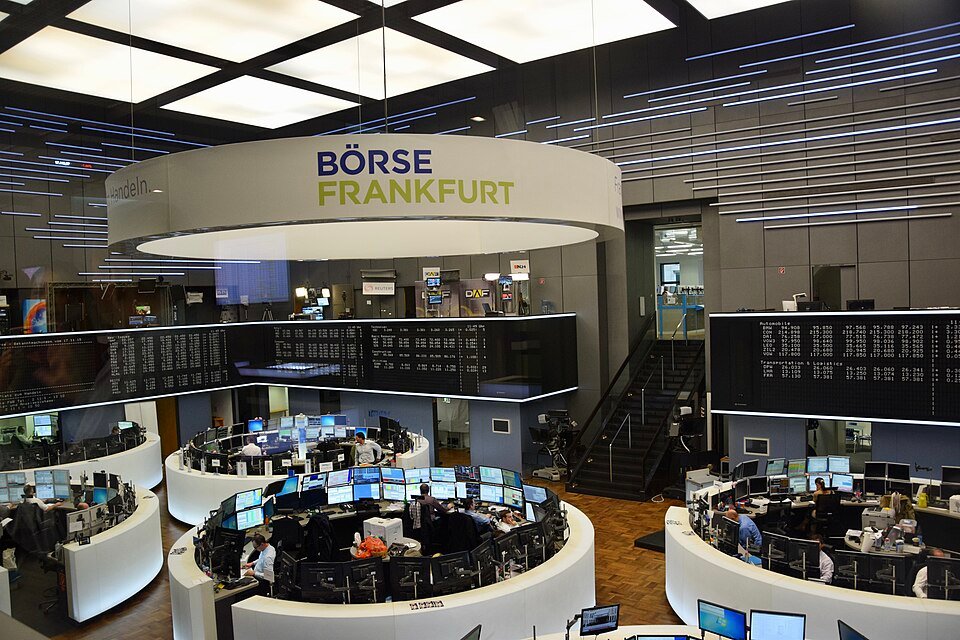
Oracle’s shares surged 6% by midday, climbing to a 4.64% gain after market opening, as investors reacted to fresh optimism surrounding its AI‑partner OpenAI. The rally follows the tech giant’s September agreement to supply $300 billion in computing power to OpenAI, a deal that positioned Oracle as a major hyperscaler but also sparked worries about the company’s exposure to a partner whose growth and funding outlook appeared uncertain. Recent reports that OpenAI is now in talks to raise capital at a valuation of roughly $1.2 trillion have revived confidence, suggesting the partnership could become far more lucrative and mitigate earlier concerns about Oracle’s debt‑related risk.
The core issue driving the stock movement has been the market’s perception of Oracle’s debt risk, reflected in widening credit default swap spreads after doubts emerged over OpenAI’s ability to meet its ambitious expansion targets. Those doubts were amplified when OpenAI announced it would postpone its planned initial public offering from 2026 to at least 2027, a decision that initially left investors unimpressed and heightened anxiety about Oracle’s sizable infrastructure investment. However, the prospect of a massive new funding round for OpenAI, potentially valuing the startup at $1.2 trillion, offers a countervailing narrative: if the capital raise materialises, it would provide the cash needed for OpenAI’s growth and, by extension, validate Oracle’s $300 billion commitment, reducing the perceived overextension of its AI infrastructure build‑out.
Looking ahead, the speculation around OpenAI’s trillion‑dollar valuation could shape Oracle’s stock trajectory for the remainder of the trading day and beyond, as analysts weigh the likelihood of the funding round against lingering debt concerns. A successful capital raise would not only de‑risk Oracle’s exposure but also reinforce its status as a leading AI hyperscaler, potentially attracting further enterprise customers seeking robust cloud compute capabilities. Conversely, if OpenAI’s financing stalls, the market may revisit the earlier skepticism, keeping Oracle’s credit spreads under pressure and tempering the enthusiasm that sparked today’s 6% rally.
⚡ Effects Interpreter
🌍World Economylow impact
What this means for you
- ▶Global supply chains might feel a small tremor as businesses adjust.
- ▶Global boardrooms tend to take notice when a story like this surfaces.
🏙️Local Economylow impact
What this means for you
- ▶Household budgets may notice a small ripple before long.
- ▶Prices at your local shops may feel a mild, indirect squeeze from this.
🏦Rates & Bankslow impact
What this means for you
- ▶Lenders usually reserve big rate moves for clearer economic signals.
- ▶Savings accounts might see their rates nudged only after a broader trend emerges.
❤️Healthlow impact
What this means for you
- ▶Local health services could get busier depending on how things develop.
- ▶The strain, if any, tends to show up subtly in everyday life.
💷Wealthmedium impact
What this means for you
- ▶Long-term savers usually ride out these slight bumps just fine.
- ▶It's rarely wise to make big financial decisions purely on breaking news.
🏠Housinglow impact
What this means for you
- ▶Bricks and mortar tend to hold steady while other markets swing about.
- ▶Asking prices in the area might firm up or soften only gradually.
🌍 Effects for your country
The U.S.'s central bank rate currently stands at 3.75%, so a global rates move like this could feed through to local borrowing costs. The U.S.'s economy is growing at 2.3% with inflation at 3.2%, the backdrop this story's effects play out against locally. Housing-market effects like this are usually felt most where mortgage rates track the U.S.'s own central bank rate closely. With the U.S.'s unemployment at 4.4%, personal-finance effects like this land on a labour market that is currently fairly stable. Health-system effects are harder to localise from economic indicators alone — the real impact in the U.S. depends more on local healthcare capacity than the figures above.
The UK's central bank rate currently stands at 3.75%, so a global rates move like this could feed through to local borrowing costs. The UK's economy is growing at 0.8% with inflation at 3.2%, the backdrop this story's effects play out against locally. Housing-market effects like this are usually felt most where mortgage rates track the UK's own central bank rate closely. With the UK's unemployment at 5.6%, personal-finance effects like this land on a labour market that is currently fairly stable. Health-system effects are harder to localise from economic indicators alone — the real impact in the UK depends more on local healthcare capacity than the figures above.
France's central bank rate currently stands at 2%, so a global rates move like this could feed through to local borrowing costs. France's economy is growing at 0.9% with inflation at 1.8%, the backdrop this story's effects play out against locally. Housing-market effects like this are usually felt most where mortgage rates track France's own central bank rate closely. With France's unemployment at 7.9%, personal-finance effects like this land on a labour market that is already under strain. Health-system effects are harder to localise from economic indicators alone — the real impact in France depends more on local healthcare capacity than the figures above.
Romania's central bank rate currently stands at 6.5%, so a global rates move like this could feed through to local borrowing costs. Romania's economy is growing at 0.7% with inflation at 7.8%, the backdrop this story's effects play out against locally. Housing-market effects like this are usually felt most where mortgage rates track Romania's own central bank rate closely. With Romania's unemployment at 6%, personal-finance effects like this land on a labour market that is currently fairly stable. Health-system effects are harder to localise from economic indicators alone — the real impact in Romania depends more on local healthcare capacity than the figures above.
The UAE's central bank rate currently stands at 3.65%, so a global rates move like this could feed through to local borrowing costs. The UAE's economy is growing at 3.1% with inflation at 2.5%, the backdrop this story's effects play out against locally. Housing-market effects like this are usually felt most where mortgage rates track the UAE's own central bank rate closely. Health-system effects are harder to localise from economic indicators alone — the real impact in the UAE depends more on local healthcare capacity than the figures above.