With US measles deaths on the rise, local officials are stepping in where RFK Jr won’t
Source: Guardian Health ↗
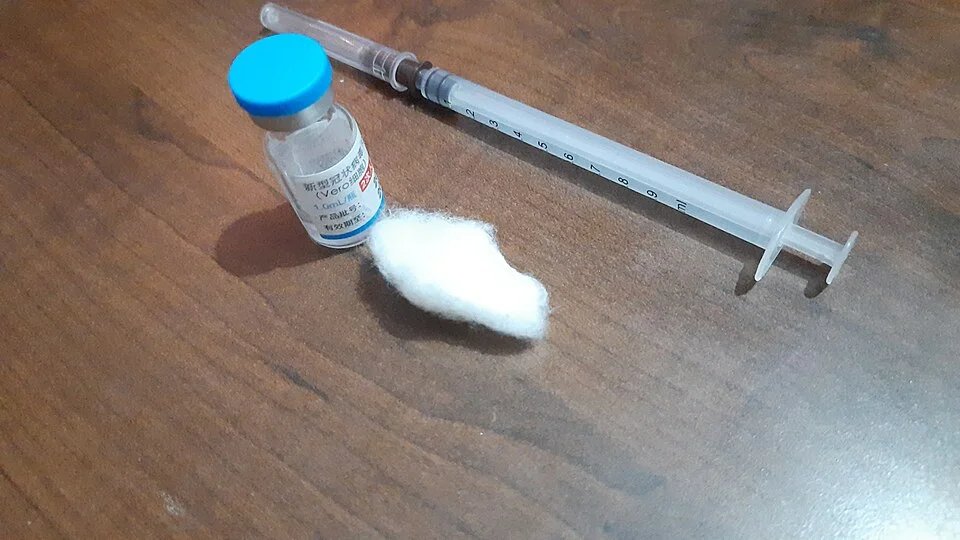
Dozens of families gathered early on a September morning outside a Yeadon, Pennsylvania clinic for the district’s “exclusion day,” the deadline after which students lacking required immunizations cannot return to class. Rather than turn children away, school officials teamed with the Delaware County health department to vaccinate them on the spot, administering shots for tetanus, pertussis, meningitis and other diseases to 42 middle‑ and high‑school students so they could re‑enter the classroom. The effort is part of a broader back‑to‑school campaign that includes a 33‑foot mobile vaccine RV, partnerships with other districts and a push for transparent immunization data, all aimed at halting a surge in measles cases that has risen to 693 in Pennsylvania and claimed four lives this year.
The local initiative is a direct response to a national climate in which the nation’s top public health official, Robert F. Kennedy Jr., has used his office to question vaccine efficacy and, together with a recent Trump administration executive order, seeks to split the combined measles‑mumps‑rubella (MMR) vaccine and cut the list of recommended childhood shots from 17 to 11. Health experts warn that the order lacks scientific justification, could increase missed appointments, and would cost lives, as highlighted by the American Academy of Pediatrics’ president Andrew Racine, who called measles a “canary in the coal mine” and stressed the need for state‑level, evidence‑based vaccine schedules. Vaccine‑education leaders such as Paul Offit of the Children’s Hospital of Philadelphia reiterated that the MMR vaccine has been safely used for six decades and that manufacturers have no plans to fragment it, noting that the executive order would add unnecessary doctor visits without improving safety.
With federal guidance now viewed as unreliable, responsibility for vaccine confidence has shifted to governors, state health departments, professional societies and frontline clinicians. Over thirty states have already turned to sources like the American Academy of Pediatrics and the American Academy of Family Physicians instead of the CDC, and fifteen states have sued the administration over the altered schedule and the dismantling of the CDC’s advisory panel. Local doctors and advocacy groups, including non‑profit 3.14 Action, are intensifying outreach to reassure parents and counter misinformation, emphasizing that the current vaccine schedule remains the safest path for children and that the recent federal actions threaten to reverse hard‑won public‑health gains.
⚡ Effects Interpreter
🌍World Economylow impact
What this means for you
- ▶Currency traders elsewhere may start pricing in the fallout within hours.
- ▶Growth projections drawn up in distant capitals might need a rethink.
🏙️Local Economylow impact
What this means for you
- ▶Corner shops and cafes rarely feel this straight away, but they do feel it.
- ▶Household budgets may notice a small ripple in due course.
🏦Rates & Bankslow impact
What this means for you
- ▶Mortgage offers may firm up or soften as the picture becomes clearer.
- ▶A sudden leap in mortgage costs from this alone would be out of character for lenders.
❤️Healthmedium impact
What this means for you
- ▶Good information, shared kindly, can settle a lot of nerves.
- ▶Peace of mind usually starts with reliable information.
💷Wealthlow impact
What this means for you
- ▶Employers may see a knock-on cost if sick leave rises locally.
- ▶Time off work for health reasons can add up faster than people expect.
🏠Housinglow impact
What this means for you
- ▶Mortgage deals could edge around if lenders read the wider mood.
- ▶Home costs usually respond further down the line, once the bigger picture settles.
🌍 Effects for your country
The U.S.'s central bank rate currently stands at 3.75%, so a global rates move like this could feed through to local borrowing costs. The U.S.'s economy is growing at 2.3% with inflation at 3.2%, the backdrop this story's effects play out against locally. Housing-market effects like this are usually felt most where mortgage rates track the U.S.'s own central bank rate closely. With the U.S.'s unemployment at 4.4%, personal-finance effects like this land on a labour market that is currently fairly stable. Health-system effects are harder to localise from economic indicators alone — the real impact in the U.S. depends more on local healthcare capacity than the figures above.
The UK's central bank rate currently stands at 3.75%, so a global rates move like this could feed through to local borrowing costs. The UK's economy is growing at 0.8% with inflation at 3.2%, the backdrop this story's effects play out against locally. Housing-market effects like this are usually felt most where mortgage rates track the UK's own central bank rate closely. With the UK's unemployment at 5.6%, personal-finance effects like this land on a labour market that is currently fairly stable. Health-system effects are harder to localise from economic indicators alone — the real impact in the UK depends more on local healthcare capacity than the figures above.
France's central bank rate currently stands at 2%, so a global rates move like this could feed through to local borrowing costs. France's economy is growing at 0.9% with inflation at 1.8%, the backdrop this story's effects play out against locally. Housing-market effects like this are usually felt most where mortgage rates track France's own central bank rate closely. With France's unemployment at 7.9%, personal-finance effects like this land on a labour market that is already under strain. Health-system effects are harder to localise from economic indicators alone — the real impact in France depends more on local healthcare capacity than the figures above.
Romania's central bank rate currently stands at 6.5%, so a global rates move like this could feed through to local borrowing costs. Romania's economy is growing at 0.7% with inflation at 7.8%, the backdrop this story's effects play out against locally. Housing-market effects like this are usually felt most where mortgage rates track Romania's own central bank rate closely. With Romania's unemployment at 6%, personal-finance effects like this land on a labour market that is currently fairly stable. Health-system effects are harder to localise from economic indicators alone — the real impact in Romania depends more on local healthcare capacity than the figures above.
The UAE's central bank rate currently stands at 3.65%, so a global rates move like this could feed through to local borrowing costs. The UAE's economy is growing at 3.1% with inflation at 2.5%, the backdrop this story's effects play out against locally. Housing-market effects like this are usually felt most where mortgage rates track the UAE's own central bank rate closely. Health-system effects are harder to localise from economic indicators alone — the real impact in the UAE depends more on local healthcare capacity than the figures above.