‘I want to do everything I can to head off dementia’: why demand for the shingles vaccine is soaring
Source: Guardian Health ↗
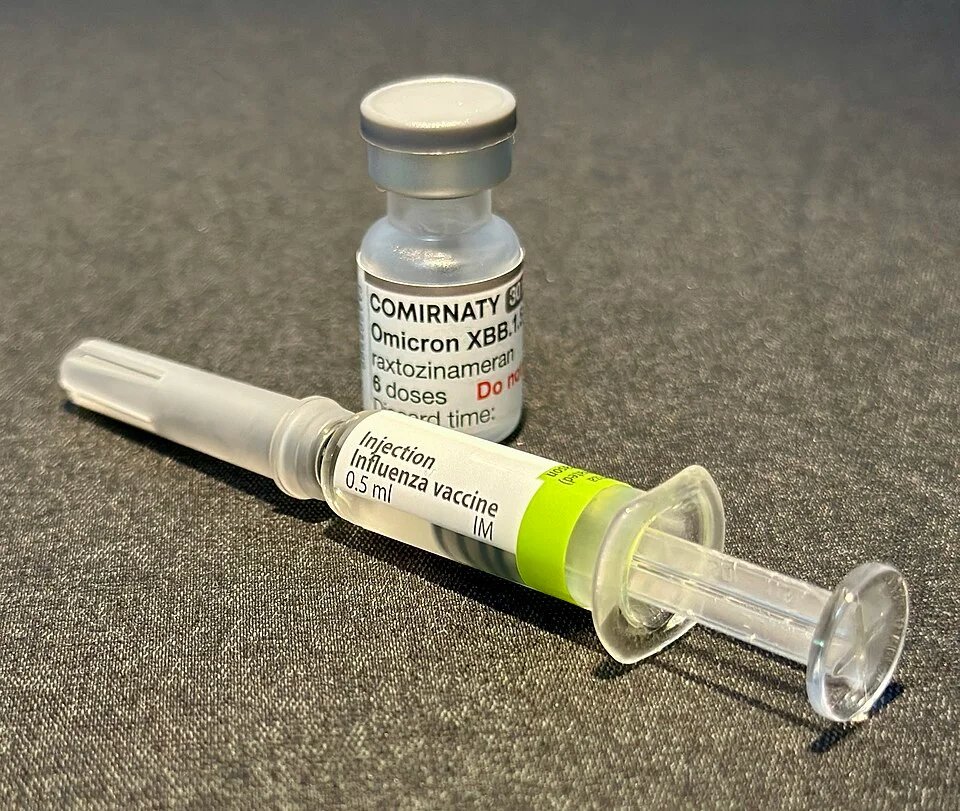
A surge in demand for the shingles vaccine across Britain is being driven by people hoping it might also protect against dementia, a disease with no cure that is projected to affect over 100 million people worldwide by 2040. The trend is exemplified by Jenny, a 50‑year‑old marketing professional from Cambridge, who chose to be vaccinated after seeing three of her four grandparents develop dementia and now hopes the jab will reduce her own risk. While the vaccine remains free only for certain NHS‑eligible groups, most adults under 65 must pay roughly £450 for the two‑dose course, yet bookings at major chemists have more than doubled in the past year—Boots reporting a 100 % increase and Superdrug a 41 % rise—partly because of the perceived brain‑health benefits. The vaccine is officially approved solely to prevent shingles, a painful rash caused by reactivation of the dormant chickenpox virus, but emerging research suggests it may also lower dementia incidence.
Scientists have been investigating whether the varicella‑zoster virus (VZV) that causes shingles contributes to neurodegeneration, noting that reactivation can trigger inflammation, neuronal stress and the buildup of amyloid and tau proteins linked to dementia. A 2023 Nature paper by Stanford researchers exploited a natural experiment in Wales, where the live‑attenuated vaccine Zostavax became available to people aged 80 or younger on 1 September 2013, creating a clear eligibility cutoff. Comparing thousands of individuals on either side of the age line, they observed an 8.5 % reduction in dementia rates over seven years among women who were eligible, translating to an estimated 20 % risk reduction when accounting for the fact that only about half received the shot. Similar protective signals have been reported in studies from Australia and Ontario, and a 2024 University of Oxford analysis of the newer, protein‑based Shingrix vaccine found comparable effects, bolstering confidence that the association reflects causality rather than mere correlation.
If the link between shingles vaccination and reduced dementia risk holds up, the public health implications could be profound, especially given the projected £90 billion annual cost of dementia care in England and Wales by 2040. The growing public interest, fueled by personal stories like Jenny’s and the promise of a preventive measure against a devastating condition, may accelerate uptake of the vaccine despite its cost for most adults. Health officials and researchers are likely to monitor the emerging data closely, and further large‑scale trials could determine whether shingles vaccines might be formally recommended as a dementia‑prevention strategy, potentially reshaping preventive health policies for ageing populations.
⚡ Effects Interpreter
🌍World Economylow impact
What this means for you
- ▶Foreign direct investment decisions can hinge on how this plays out.
- ▶Global supply chains might feel a slight tremor as businesses adjust.
🏙️Local Economylow impact
What this means for you
- ▶Corner shops and cafes rarely feel this straight away, but they do feel it.
- ▶Local wages and hours worked might bend slightly with the wider trend.
🏦Rates & Bankslow impact
What this means for you
- ▶Banks tend to wait and see before nudging the rates they offer.
- ▶A modest drift in borrowing costs is more plausible than a sharp jump.
❤️Healthlow impact
What this means for you
- ▶Vulnerable groups may want extra reassurance from a trusted source.
- ▶Local health services might steer resources towards this issue.
💷Wealthlow impact
What this means for you
- ▶Your budget may feel a slight health-related nudge over time.
- ▶Staying well is its own kind of saving.
🏠Housinglow impact
What this means for you
- ▶Buyers and renters may notice only a gentle drift, if anything at all.
- ▶First-time buyers might keep half an eye on mortgage rates after this.
🌍 Effects for your country
The U.S.'s central bank rate currently stands at 3.75%, so a global rates move like this could feed through to local borrowing costs. The U.S.'s economy is growing at 2.3% with inflation at 3.2%, the backdrop this story's effects play out against locally. Housing-market effects like this are usually felt most where mortgage rates track the U.S.'s own central bank rate closely. With the U.S.'s unemployment at 4.4%, personal-finance effects like this land on a labour market that is currently fairly stable. Health-system effects are harder to localise from economic indicators alone — the real impact in the U.S. depends more on local healthcare capacity than the figures above.
The UK's central bank rate currently stands at 3.75%, so a global rates move like this could feed through to local borrowing costs. The UK's economy is growing at 0.8% with inflation at 3.2%, the backdrop this story's effects play out against locally. Housing-market effects like this are usually felt most where mortgage rates track the UK's own central bank rate closely. With the UK's unemployment at 5.6%, personal-finance effects like this land on a labour market that is currently fairly stable. Health-system effects are harder to localise from economic indicators alone — the real impact in the UK depends more on local healthcare capacity than the figures above.
France's central bank rate currently stands at 2%, so a global rates move like this could feed through to local borrowing costs. France's economy is growing at 0.9% with inflation at 1.8%, the backdrop this story's effects play out against locally. Housing-market effects like this are usually felt most where mortgage rates track France's own central bank rate closely. With France's unemployment at 7.9%, personal-finance effects like this land on a labour market that is already under strain. Health-system effects are harder to localise from economic indicators alone — the real impact in France depends more on local healthcare capacity than the figures above.
Romania's central bank rate currently stands at 6.5%, so a global rates move like this could feed through to local borrowing costs. Romania's economy is growing at 0.7% with inflation at 7.8%, the backdrop this story's effects play out against locally. Housing-market effects like this are usually felt most where mortgage rates track Romania's own central bank rate closely. With Romania's unemployment at 6%, personal-finance effects like this land on a labour market that is currently fairly stable. Health-system effects are harder to localise from economic indicators alone — the real impact in Romania depends more on local healthcare capacity than the figures above.
The UAE's central bank rate currently stands at 3.65%, so a global rates move like this could feed through to local borrowing costs. The UAE's economy is growing at 3.1% with inflation at 2.5%, the backdrop this story's effects play out against locally. Housing-market effects like this are usually felt most where mortgage rates track the UAE's own central bank rate closely. Health-system effects are harder to localise from economic indicators alone — the real impact in the UAE depends more on local healthcare capacity than the figures above.