Kenya confirms its first Ebola death as outbreak spreads
Source: BBC World ↗ (cross-verified by 3 outlets — full list below)
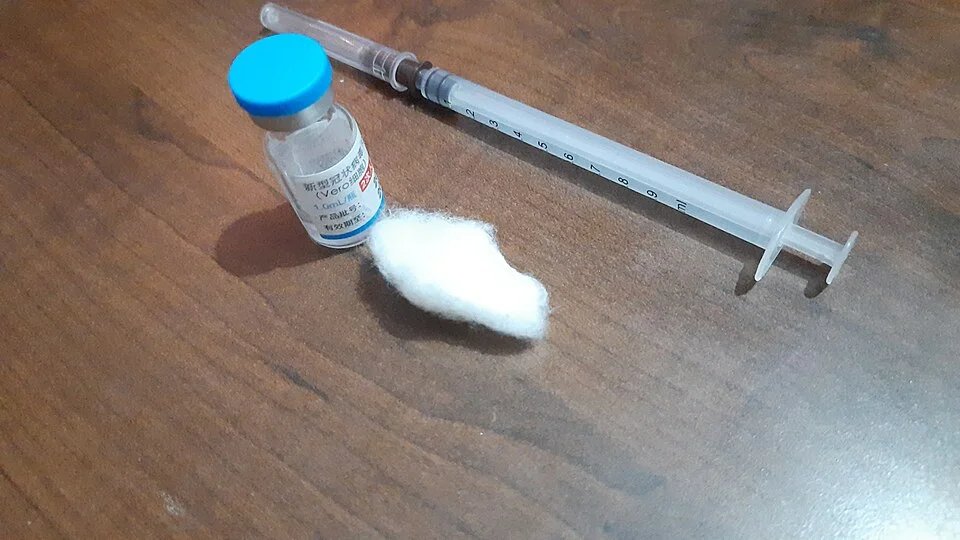
Kenya has recorded its first Ebola death after a Kenyan national who had lived in the Democratic Republic of Congo (DR Congo) for seven years fell ill, was treated in several Congolese hospitals and died shortly after arriving in Nairobi. The patient boarded a flight from Kampala, Uganda, on Saturday, passed through normal public screening at Nairobi’s main airport and was taken by a relative to Nairobi Hospital, then transferred to a COVID‑19‑era isolation facility where he exhibited fever, chills, intense fatigue, painful swallowing, muscle pain and sub‑cutaneous bleeding. Samples collected from him tested positive for the Bundibugyo species of Ebola, and he died at 23:30 (20:30 GMT) on Monday; his burial on Tuesday followed public‑health safety protocols. Health Minister Aden Duale confirmed the case, noted that at least 28 contacts—including family members and health‑care workers—have been identified, and said tracing is ongoing for 23 passengers and four crew members who were on the same flight.
The death underscores the broader threat posed by the ongoing DR Congo outbreak, the second‑most lethal Ebola episode on record, which has claimed more than 4,000 lives this year out of 8,544 confirmed cases, according to the World Health Organization. The outbreak, caused by the relatively rare Bundibugyo strain for which no approved vaccine or treatment exists, has intensified in North Kivu province, now accounting for nearly 40 % of new cases nationwide, according to Médecins Sans Frontières (MSF). MSF warns that the actual toll may be higher because of surveillance gaps in the war‑torn region, where decades of conflict, rebel activity and displacement have crippled health‑care infrastructure and hampered effective response.
In response, Kenya’s health ministry has tightened surveillance at airports and border crossings and urged health workers to maintain heightened infection‑prevention measures regardless of the condition being treated. The minister cautioned the public not to panic, emphasizing that systems are in place to contain any spread. Ongoing contact tracing and monitoring of the identified contacts aim to prevent further transmission, while the broader regional context sees neighboring Uganda declared Ebola‑free in August after earlier cases, and international efforts continue to develop vaccines, with four candidates in development and one entering human trials in July.
⚡ Effects Interpreter
🌍World Economylow impact
What this means for you
- ▶Global supply chains might feel a modest tremor as businesses adjust.
- ▶Currency traders elsewhere may start pricing in the fallout within hours.
🏙️Local Economylow impact
What this means for you
- ▶Your town's economy tends to catch up with big headlines eventually.
- ▶Everyday costs in your town may drift as the wider economy reacts.
🏦Rates & Bankslow impact
What this means for you
- ▶Fixed and variable borrowers alike may want to keep half an eye on this.
- ▶Banks generally prefer a wait-and-see approach before touching their rates.
❤️Healthlow impact
What this means for you
- ▶A measured response usually serves communities better than alarm.
- ▶Local health services may get busier depending on how things develop.
💷Wealthlow impact
What this means for you
- ▶It might be worth a brief look at your ISA or pension in the coming days.
- ▶Financial plans built on solid ground rarely need urgent revisiting here.
🏠Housingmedium impact
What this means for you
- ▶The property ladder rarely wobbles much from a single piece of news.
- ▶The housing market has a habit of lagging behind the headlines.
🌍 Effects for your country
The U.S.'s central bank rate currently stands at 3.75%, so a global rates move like this could feed through to local borrowing costs. The U.S.'s economy is growing at 2.3% with inflation at 3.2%, the backdrop this story's effects play out against locally. Housing-market effects like this are usually felt most where mortgage rates track the U.S.'s own central bank rate closely. With the U.S.'s unemployment at 4.4%, personal-finance effects like this land on a labour market that is currently fairly stable. Health-system effects are harder to localise from economic indicators alone — the real impact in the U.S. depends more on local healthcare capacity than the figures above.
The UK's central bank rate currently stands at 3.75%, so a global rates move like this could feed through to local borrowing costs. The UK's economy is growing at 0.8% with inflation at 3.2%, the backdrop this story's effects play out against locally. Housing-market effects like this are usually felt most where mortgage rates track the UK's own central bank rate closely. With the UK's unemployment at 5.6%, personal-finance effects like this land on a labour market that is currently fairly stable. Health-system effects are harder to localise from economic indicators alone — the real impact in the UK depends more on local healthcare capacity than the figures above.
France's central bank rate currently stands at 2%, so a global rates move like this could feed through to local borrowing costs. France's economy is growing at 0.9% with inflation at 1.8%, the backdrop this story's effects play out against locally. Housing-market effects like this are usually felt most where mortgage rates track France's own central bank rate closely. With France's unemployment at 7.9%, personal-finance effects like this land on a labour market that is already under strain. Health-system effects are harder to localise from economic indicators alone — the real impact in France depends more on local healthcare capacity than the figures above.
Romania's central bank rate currently stands at 6.5%, so a global rates move like this could feed through to local borrowing costs. Romania's economy is growing at 0.7% with inflation at 7.8%, the backdrop this story's effects play out against locally. Housing-market effects like this are usually felt most where mortgage rates track Romania's own central bank rate closely. With Romania's unemployment at 6%, personal-finance effects like this land on a labour market that is currently fairly stable. Health-system effects are harder to localise from economic indicators alone — the real impact in Romania depends more on local healthcare capacity than the figures above.
The UAE's central bank rate currently stands at 3.65%, so a global rates move like this could feed through to local borrowing costs. The UAE's economy is growing at 3.1% with inflation at 2.5%, the backdrop this story's effects play out against locally. Housing-market effects like this are usually felt most where mortgage rates track the UAE's own central bank rate closely. Health-system effects are harder to localise from economic indicators alone — the real impact in the UAE depends more on local healthcare capacity than the figures above.