Kyiv bridge hit in further Russian drone attack as German chancellor makes surprise visit
Source: BBC World ↗ (cross-verified by 2 outlets — full list below)
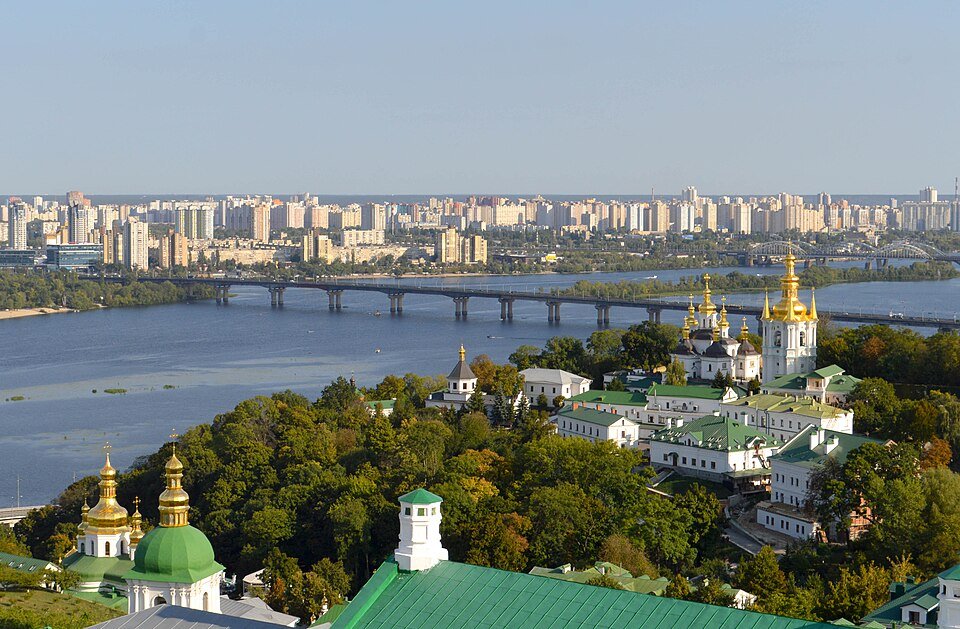
A Russian drone struck Kyiv’s Pivnichyi (Northern) Bridge on Sunday morning, igniting a large fireball as vehicles crossed the structure and injuring two people. The attack, captured on video verified by the BBC, showed the drone colliding with the bridge, exploding, and sending a plume of black smoke upward, while social‑media footage revealed a gaping hole in a traffic lane. The strike follows a series of drone assaults on Kyiv’s major crossings, with the Pivdennyi (Southern) Bridge hit multiple times earlier in the week, marking the fourth consecutive day that Russian drones have targeted the capital’s critical infrastructure. The incident coincided with German Chancellor Friedrich Merz’s surprise visit to Kyiv, where he met President Volodymyr Zelensky, laid wreaths for fallen Ukrainian soldiers, and announced a new German aid package exceeding €1.3 billion for weapons and energy support.
The bridge attacks have deepened Kyiv’s transport bottlenecks, as the city’s eight Dnipro River bridges are vital for the daily movement of an estimated three million residents, many of whom rely on metro lines and trains to traverse the river. Damage to the Pivnichyi Bridge’s roadway and a separate strike on a heating main have forced authorities to impose traffic restrictions, prompting commuters to describe crossing the river as “hell.” Repair crews are working to mend the damage while officials consider temporary solutions such as pontoon bridges, ferry services, and even an under‑river tunnel to maintain connectivity. The broader pattern of strikes reflects Russia’s intensified campaign against Ukrainian infrastructure, with the Russian defence ministry pledging further attacks on Kyiv and other regions in response to Ukrainian statements about targeting Russian oil refineries.
In the wake of the drone attacks, Ukraine’s air defence reported intercepting 125 of 135 drones launched overnight, including 52 jet‑powered models, while emergency services responded to related incidents in other cities, such as a communications facility hit in Dnipro that injured six people and a warehouse strike in Sumy that killed one. Chancellor Merz used his visit to underscore Germany’s continued commitment, stating that European security depends on Ukraine’s ability to resist Russia and that Germany would keep providing support “out of our own self‑interest.” Zelensky highlighted forthcoming agreements with Germany and reiterated calls for additional Western military aid, particularly advanced interceptors to counter the new Russian drone threat. Despite a Russian foreign‑ministry warning for foreign nationals to leave Kyiv, EU and German diplomats affirmed their presence, emphasizing that intimidation will not diminish European support for Ukraine.
⚡ Effects Interpreter
🌍World Economylow impact
What this means for you
- ▶Global supply chains might feel a slight tremor as businesses adjust.
- ▶Economies far from the headline can still catch the aftershocks.
🏙️Local Economylow impact
What this means for you
- ▶Your town's economy tends to catch up with big headlines eventually.
- ▶The knock-on for local trade is usually gradual rather than sudden.
🏦Rates & Bankslow impact
What this means for you
- ▶Interest rates and mortgage bills are unlikely to jump straight away from this alone.
- ▶Central banks watch moments like this closely, so keep an eye on savings rates.
❤️Healthmedium impact
What this means for you
- ▶News like this can nibble at everyday calm more than people expect.
- ▶Day-to-day stress can creep up if this starts touching familiar routines.
💷Wealthlow impact
What this means for you
- ▶A modest, well-diversified nest egg tends to absorb shocks like this quietly.
- ▶Savers with a clear plan tend to feel less rattled by a story like this.
🏠Housinglow impact
What this means for you
- ▶Mortgage deals may edge around if lenders read the wider mood.
- ▶The property market tends to move slowly, so expect any change to take time.
🌍 Effects for your country
The U.S.'s central bank rate currently stands at 3.75%, so a global rates move like this could feed through to local borrowing costs. The U.S.'s economy is growing at 2.3% with inflation at 3.2%, the backdrop this story's effects play out against locally. Housing-market effects like this are usually felt most where mortgage rates track the U.S.'s own central bank rate closely. With the U.S.'s unemployment at 4.4%, personal-finance effects like this land on a labour market that is currently fairly stable. Health-system effects are harder to localise from economic indicators alone — the real impact in the U.S. depends more on local healthcare capacity than the figures above.
The UK's central bank rate currently stands at 3.75%, so a global rates move like this could feed through to local borrowing costs. The UK's economy is growing at 0.8% with inflation at 3.2%, the backdrop this story's effects play out against locally. Housing-market effects like this are usually felt most where mortgage rates track the UK's own central bank rate closely. With the UK's unemployment at 5.6%, personal-finance effects like this land on a labour market that is currently fairly stable. Health-system effects are harder to localise from economic indicators alone — the real impact in the UK depends more on local healthcare capacity than the figures above.
France's central bank rate currently stands at 2%, so a global rates move like this could feed through to local borrowing costs. France's economy is growing at 0.9% with inflation at 1.8%, the backdrop this story's effects play out against locally. Housing-market effects like this are usually felt most where mortgage rates track France's own central bank rate closely. With France's unemployment at 7.9%, personal-finance effects like this land on a labour market that is already under strain. Health-system effects are harder to localise from economic indicators alone — the real impact in France depends more on local healthcare capacity than the figures above.
Romania's central bank rate currently stands at 6.5%, so a global rates move like this could feed through to local borrowing costs. Romania's economy is growing at 0.7% with inflation at 7.8%, the backdrop this story's effects play out against locally. Housing-market effects like this are usually felt most where mortgage rates track Romania's own central bank rate closely. With Romania's unemployment at 6%, personal-finance effects like this land on a labour market that is currently fairly stable. Health-system effects are harder to localise from economic indicators alone — the real impact in Romania depends more on local healthcare capacity than the figures above.
The UAE's central bank rate currently stands at 3.65%, so a global rates move like this could feed through to local borrowing costs. The UAE's economy is growing at 3.1% with inflation at 2.5%, the backdrop this story's effects play out against locally. Housing-market effects like this are usually felt most where mortgage rates track the UAE's own central bank rate closely. Health-system effects are harder to localise from economic indicators alone — the real impact in the UAE depends more on local healthcare capacity than the figures above.