UN health agency wants more details from Russia on suspected pneumonic plague case
Source: France 24 ↗ (cross-verified by 3 outlets — full list below)
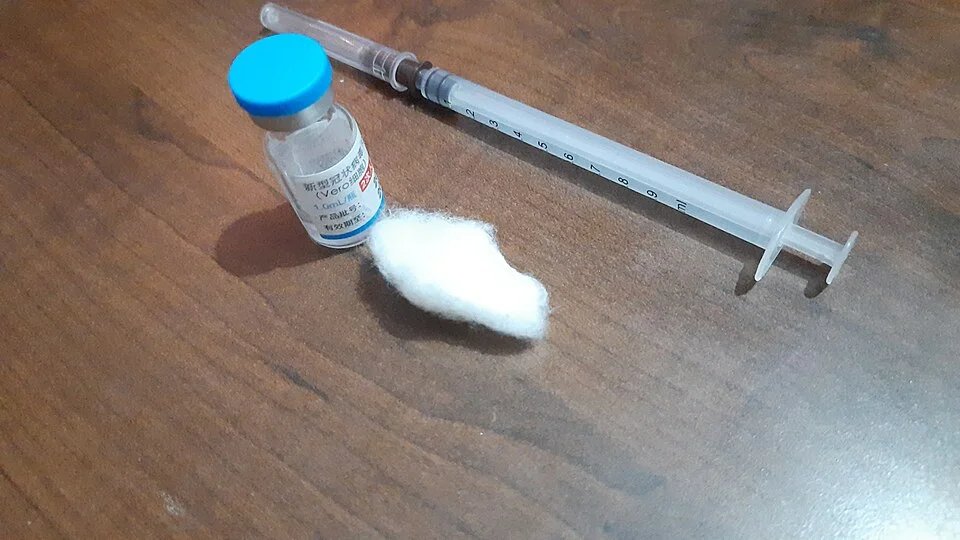
A senior World Health Organization official announced on Wednesday that the agency still lacks clarity on the death of a laboratory employee in Siberia, a case that sparked worldwide alarm over a possible outbreak of pneumonic plague. The WHO representative called on Russian authorities to supply comprehensive details about the incident, emphasizing the need for transparent information to assess any public health threat. The unidentified lab worker’s demise remains unexplained, and the situation has drawn attention from international health monitors and political figures alike.
The Russian government has responded by asserting that the “situation is under control,” attempting to reassure both domestic and foreign audiences that no wider transmission is occurring. Amid these assurances, former U.S. President Donald Trump weighed in, stating that “we don’t think” the Siberian case represents a bioweapon, a comment that reflects broader speculation about the origins of the suspected plague. The juxtaposition of official Russian statements and external political commentary underscores the uncertainty surrounding the event and the difficulty in distinguishing between a natural laboratory accident and a deliberate threat.
The lack of concrete information continues to hinder global health preparedness, as the WHO’s request for data remains unanswered. Without a clear account of how the lab worker contracted the disease, health authorities cannot determine the necessity of broader surveillance or containment measures. The episode highlights the challenges of managing emerging infectious disease alerts when transparency is limited, and it may influence future protocols for reporting and investigating suspected plague cases worldwide.
⚡ Effects Interpreter
🌍World Economymedium impact
What this means for you
- ▶Economies far from the headline can still catch the aftershocks.
- ▶Global boardrooms tend to take notice when a story like this surfaces.
🏙️Local Economylow impact
What this means for you
- ▶Slight firms on your street may pass costs on carefully, bit by bit.
- ▶Your town's economy tends to catch up with big headlines eventually.
🏦Rates & Bankslow impact
What this means for you
- ▶Fixed and variable borrowers alike may want to keep half an eye on this.
- ▶Your loan or mortgage rate is more likely to drift than to lurch here.
❤️Healthmedium impact
What this means for you
- ▶Local wellbeing services are there precisely for moments when news feels overwhelming.
- ▶Checking in on vulnerable neighbours matters when news feels heavy.
💷Wealthmedium impact
What this means for you
- ▶Investors often reshuffle their holdings when stories like this break.
- ▶A brief dip in value is not the same as a permanent loss.
🏠Housinglow impact
What this means for you
- ▶The housing market has a habit of lagging behind the headlines.
- ▶Anyone selling soon might want a fresh valuation once the dust settles.
🌍 Effects for your country
The U.S.'s central bank rate currently stands at 3.75%, so a global rates move like this could feed through to local borrowing costs. The U.S.'s economy is growing at 2.3% with inflation at 3.2%, the backdrop this story's effects play out against locally. Housing-market effects like this are usually felt most where mortgage rates track the U.S.'s own central bank rate closely. With the U.S.'s unemployment at 4.4%, personal-finance effects like this land on a labour market that is currently fairly stable. Health-system effects are harder to localise from economic indicators alone — the real impact in the U.S. depends more on local healthcare capacity than the figures above.
The UK's central bank rate currently stands at 3.75%, so a global rates move like this could feed through to local borrowing costs. The UK's economy is growing at 0.8% with inflation at 3.2%, the backdrop this story's effects play out against locally. Housing-market effects like this are usually felt most where mortgage rates track the UK's own central bank rate closely. With the UK's unemployment at 5.6%, personal-finance effects like this land on a labour market that is currently fairly stable. Health-system effects are harder to localise from economic indicators alone — the real impact in the UK depends more on local healthcare capacity than the figures above.
France's central bank rate currently stands at 2%, so a global rates move like this could feed through to local borrowing costs. France's economy is growing at 0.9% with inflation at 1.8%, the backdrop this story's effects play out against locally. Housing-market effects like this are usually felt most where mortgage rates track France's own central bank rate closely. With France's unemployment at 7.9%, personal-finance effects like this land on a labour market that is already under strain. Health-system effects are harder to localise from economic indicators alone — the real impact in France depends more on local healthcare capacity than the figures above.
Romania's central bank rate currently stands at 6.5%, so a global rates move like this could feed through to local borrowing costs. Romania's economy is growing at 0.7% with inflation at 7.8%, the backdrop this story's effects play out against locally. Housing-market effects like this are usually felt most where mortgage rates track Romania's own central bank rate closely. With Romania's unemployment at 6%, personal-finance effects like this land on a labour market that is currently fairly stable. Health-system effects are harder to localise from economic indicators alone — the real impact in Romania depends more on local healthcare capacity than the figures above.
The UAE's central bank rate currently stands at 3.65%, so a global rates move like this could feed through to local borrowing costs. The UAE's economy is growing at 3.1% with inflation at 2.5%, the backdrop this story's effects play out against locally. Housing-market effects like this are usually felt most where mortgage rates track the UAE's own central bank rate closely. Health-system effects are harder to localise from economic indicators alone — the real impact in the UAE depends more on local healthcare capacity than the figures above.