US kindergarten vaccination rates dip as exemptions hit record high
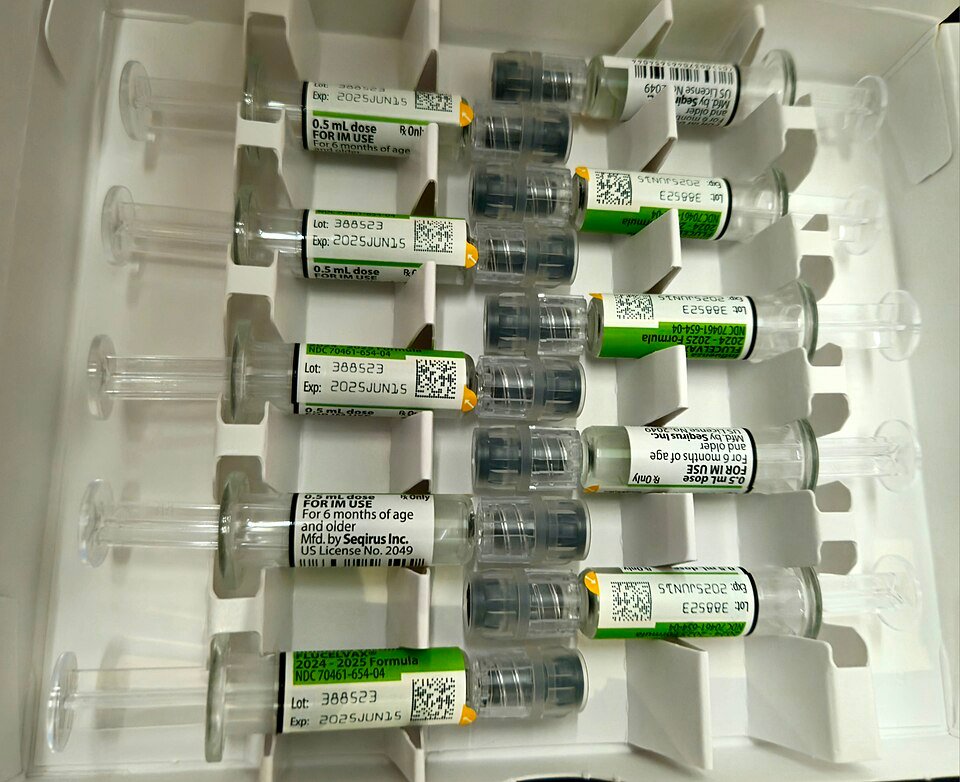
New CDC data shows MMR vaccination among kindergarteners declining slightly as non-medical exemptions climb to 4.2% A week after Donald Trump made a series of misleading claims about vaccines – including that some injections look “like the size of a soda bottle” – the Centers for Disease Control and Prevention (CDC) released the latest data on national kindergarten vaccination rates. CDC communications downplayed the changes – a three-sentence announcement said, “overall vaccination rates among kindergarteners remained high” – but medical experts immediately saw cause for concern in the trends. “There’s been a decrease in immunization rates in all vaccines. There’s a decrease in immunizations in more than half the states, as opposed to the year before. There are at least 280,000 kindergarteners who did not get the [measles, mumps and rubella vaccine],” said Dr Paul Offit, director of the Vaccine Education Center and an attending physician in the division of infectious diseases at Children’s Hospital of Philadelphia (Chop). Additionally, non-medical exemptions for vaccines for kindergarteners grew by 17% over the last school year – the highest single-year increase ever, from 3.6% to 4.2% nationwide. Pediatricians, local health officials and vaccine experts, such as Offit, described the latest vaccine data as evidence of how the administration – through almost too many means to enumerate – has sowed confusion about the safety and benefits of vaccines, leading to depressed vaccination rates and parents’ efforts to opt-out. “If we had a secretary of Health and Human Services (HHS) who was an actual secretary of HHS instead of an anti-vaccine activist and science denialist, he would stand up in front of the American public and say, ‘Vaccinate your children.’ – please, vaccinate your children,” he said. Even so, the picture is not entirely bleak. The overwhelming majority of American parents still vaccinate their children. Data released by the CDC showed that vaccination dropped by only 0.1% between the last two school years, to 92.4% of children vaccinated with the measles, mumps and rubella (MMR) vaccine.
While there is a high overall rate of vaccination, parents who refuse vaccination are not evenly distributed around the United States. Often, low vaccination rates are found in pockets, such as in Idaho or Ohio. The US is currently experiencing the worst year for measles since 1991 , where there have been hundreds of cases in Utah and South Carolina. “In Cleveland, for example, a couple years ago, our percentage of kindergartners being up-to-date on vaccines was 68%,” said Dr David Margolius, director of the Cleveland Department of Public Health. “This past school year, we’re up to 76%. We are doing the work.” However, “the federal government is causing more and more confusion, and that’s washing out the effects and the work that all of us are trying to do,” Margolius added. Vaccines have saved millions of lives globally. Widespread measles vaccination alone is credited with saving 59 million lives between 2000 and 2024, according to the World Health Organization . Prior to widespread US vaccination in the mid-20th century , measles killed roughly 500 people per year. Still, vaccines have been under attack for decades by well-known activists who have linked vaccines to rising rates of autism. Autism has been linked to some infections, parental age and genetics, but because it is a complex spectrum disorder, experts argue there will be more than one single cause, according to Chop .
The height of recent confusion came directly from the White House. On 10 August, the US president sat and signed an executive order calling for fewer vaccines, flanked by Robert F Kennedy Jr and his new nominee for the Food and Drug Administration (FDA), Dr Heidi Overton. He then proceeded to link vaccines to autism (without evidence) and soda bottle-sized doses (a wild falsehood), assertions he said were supported by “gold standard” science (they’re not). He then signed an executive order that called for the US to reduce the number of vaccines children routinely receive, from 17 diseases to 11, and critically administer the MMR vaccines as three separate doses. “We have the MMR , which hopefully will be split up. We have the MMR, we want it in three separate vaccinations given at separate times,” said Trump. “Together, there could be a possibility they’re quite lethal, and separately it looks like they are not at all lethal,” he said, without any evidence. Trump clearly stated the potential impact of this: “You should have five separate visits for vaccines, rather than getting them all in the same day.” Aside from the obvious logistical barriers for parents of newborns, who would suddenly be tasked with medically unnecessary doctor’s visits, there are legal and manufacturing barriers. Drug companies have not produced separate measles, mumps and rubella vaccines in decades , and doing so would require companies to reengineer supply lines on some of their least profitable products .
⚡ Effects Interpreter
🌍World Economy
- ▶Investors abroad typically reprice their bets when this kind of news lands.
- ▶Trade and investment between countries may shift a touch if things escalate.
🏙️Local Economy
- ▶Slight firms on your street may pass costs on carefully, bit by bit.
- ▶Everyday essentials may nudge in price as suppliers adjust.
🏦Rates & Banks
- ▶Savings accounts might see their rates nudged only after a broader trend emerges.
- ▶Rate decisions tend to follow data, not headlines, so patience is the norm.
❤️Health
- ▶Slight, sensible precautions can go a long way here.
- ▶Community health workers might see extra questions in the days ahead.
💷Wealth
- ▶Employers could see a knock-on cost if sick leave rises locally.
- ▶A healthy household budget and a healthy body often go hand in hand.
🏠Housing
- ▶Property values usually need more than one headline to really move.
- ▶The property ladder rarely wobbles much from a single piece of news.