US strikes Iranian oil tankers as Tehran targets American base in Jordan
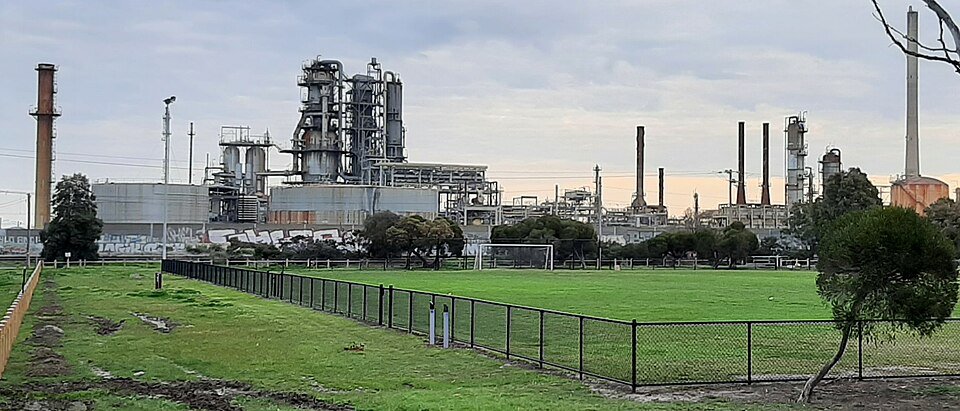
U.S. forces struck five Iranian oil tankers on Tuesday, sinking the M/T Riesco, after Tehran twice targeted an American warship with ballistic missiles that were successfully evaded, according to U.S. Central Command. The attacks hit four tankers linked to Iran’s Revolutionary Guard Corps (IRGC) in the Gulf of Oman and a fifth near Kharg Island, the country’s main oil‑export terminal where roughly 90 % of its crude passes through. In retaliation, Iran launched missiles at a U.S. base in Jordan, of which Jordanian forces shot down 18 of the 20 projectiles, while two fell in unpopulated areas; Iran also claimed to have struck two U.S. vessels and eight oil tankers in the Strait of Hormuz.
The escalation has pushed benchmark Brent crude toward the $100‑a‑barrel mark, with Brent up 1.5 % to $99.35 and U.S.‑traded oil 1.3 % higher at $94.23, reflecting heightened market anxiety over regional instability. Washington justified the strikes by describing the targeted tankers as part of a “multi‑billion‑dollar shadow network” that finances the IRGC and its proxies, while Tehran’s Revolutionary Guard warned of further attacks on “non‑compliant vessels” attempting to transit the Strait of Hormuz. The broader conflict follows a series of tit‑for‑tat actions that began more than six months after the U.S. and Israel struck Iran on 28 February, and coincides with a separate Houthi attack on Saudi energy facilities that injured dozens and temporarily halted production.
U.S. Secretary of State Marco Rubio framed the confrontation as “pretty straightforward,” emphasizing that each Iranian attempt to hit U.S. naval assets will be met with the loss of tankers. Meanwhile, the U.S. clarified that a malfunctioning, unmanned underwater drone—an older model without sensitive equipment—had been operating in the region, underscoring ongoing surveillance efforts. The latest round of strikes deepens the risk of further maritime confrontations, threatens global oil supply chains, and places neighboring states such as Jordan and Saudi Arabia on heightened alert as the Middle East’s security landscape grows increasingly volatile.
⚡ Effects Interpreter
🌍World Economy
- ▶Global supply chains might feel a small tremor as businesses adjust.
- ▶Investors abroad often reprice their bets when news like this lands.
🏙️Local Economy
- ▶Prices at your local shops could feel a gentle, indirect squeeze from this.
- ▶Everyday costs in your town might drift as the wider economy reacts.
🏦Rates & Banks
- ▶Your loan or mortgage rate is more likely to drift than to lurch here.
- ▶Banks tend to wait and see before nudging the rates they offer.
❤️Health
- ▶Community wellbeing might dip a little while people wait for clarity.
- ▶Local health services could get busier depending on how things develop.
💷Wealth
- ▶Savings and portfolios can see short-lived ups and downs after a story like this.
- ▶It may be worth a quick look at your ISA or pension in the coming days.
🏠Housing
- ▶Any effect on bricks and mortar is likely to be slow and modest.
- ▶House prices and rents are unlikely to shift the moment this news breaks.