US Supreme Court allows Trump’s mail voting restrictions to proceed
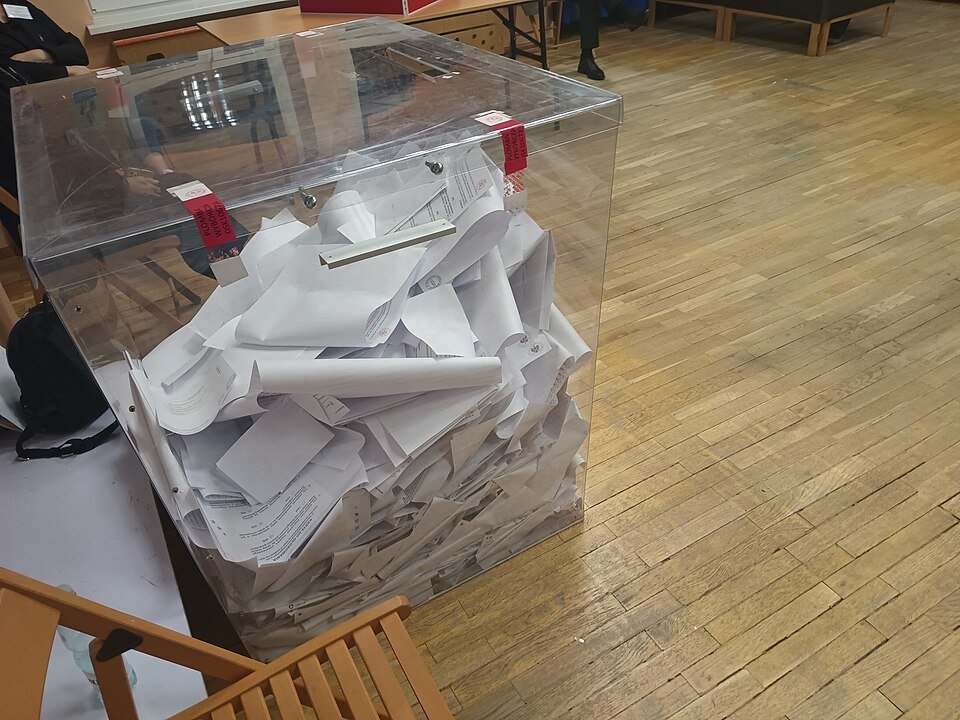
The U.S. Supreme Court on Monday cleared the way for President Donald Trump’s executive order that would restrict mail voting, allowing the administration to move forward with rules that require the Postal Service to deliver ballots only to voters on lists the government creates.
The 6‑3 conservative‑leaning decision, opposed by the three liberal justices, follows an emergency appeal by the Justice Department seeking permission to implement the changes before the November midterm elections. The order, signed in March, directs the Postal Service to limit ballot delivery to those on eligibility lists, a measure championed by Trump despite his own use of mail voting and widespread evidence that the practice is secure. Democratic officials in 23 states and the District of Columbia sued to block the order, arguing that election administration is a constitutional power of the states and Congress and warning that the timing could cause chaos and partisan abuse. The ruling leaves open the possibility of further legal challenges that could delay or halt the order’s rollout, a concern underscored by recent lower‑court actions. A Massachusetts judge blocked the plan for the upcoming midterms, a decision upheld by an appeals court, and later extended to a nationwide injunction.
The Trump administration appealed on procedural grounds, contending that the states sued prematurely and pointing to a separate Washington ruling that permitted the order to proceed. Federal attorneys argued that the Massachusetts injunction “blocks the government’s ability to finalize and implement the President’s proposed policies to promote election integrity for the upcoming federal elections in November.” A dozen Republican‑leaning states backed the federal appeal, asserting that states would have input on the final voter lists. The Supreme Court’s decision arrives amid a broader push by Trump and congressional Republicans for sweeping voting restrictions, including the SAVE America Act and a citizenship‑proof requirement that critics say target noncitizen voters—a group that rarely votes and faces felony penalties for illegal voting. While mail voting has surged, accounting for roughly 30 percent of ballots in the 2024 presidential race, studies such as a 2025 Brookings Institution analysis find fraud rates of only four cases per 10 million mail ballots, reinforcing the security of the method that the court’s order now threatens to curtail.
⚡ Effects Interpreter
🌍World Economy
- ▶Policy turns can send quiet ripples through the wider economy.
- ▶Investors watch politics closely for the signals it sends.
🏙️Local Economy
- ▶Household budgets could notice a modest ripple before long.
- ▶High street footfall and spending can shift subtly after this kind of news.
🏦Rates & Banks
- ▶Borrowers are usually better served waiting out political noise than reacting to it.
- ▶Rate decisions tend to filter out political theatre and focus on data.
❤️Health
- ▶A little perspective usually helps once the initial shock fades.
- ▶Worry has a way of spreading faster than the facts sometimes.
💷Wealth
- ▶Money set aside for the future can afford to sit tight through this.
- ▶Portfolios built for the long haul rarely need a rethink over one headline.
🏠Housing
- ▶Housing chains involving multiple buyers can be sensitive to any wider wobble.
- ▶Anyone mid-purchase might want to keep an eye on how this unfolds.