Will a switch to light speed cut power use at data centres?
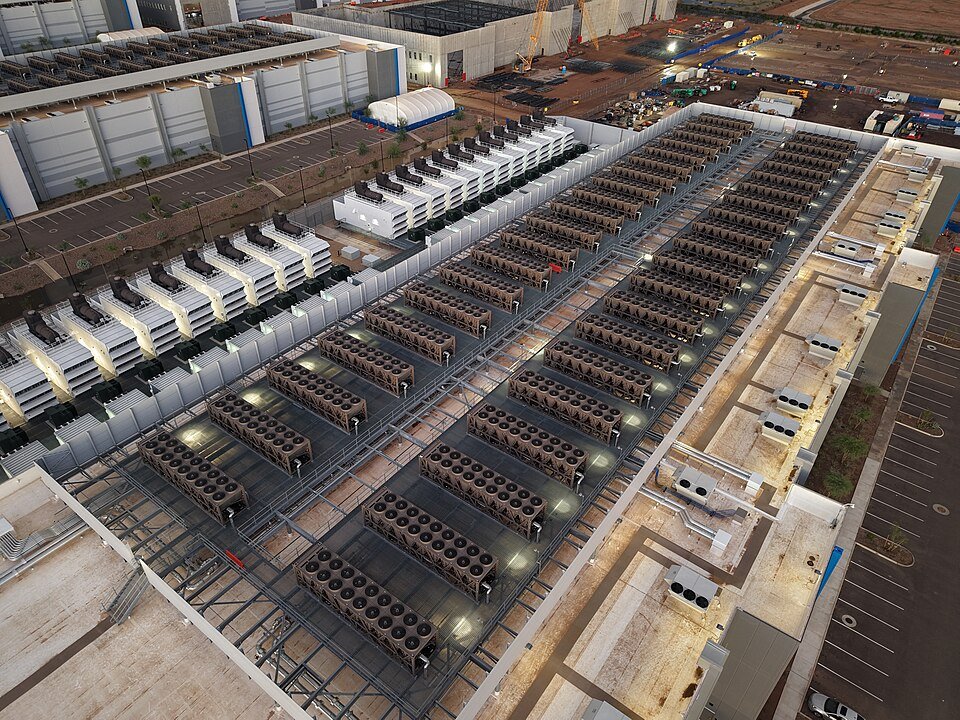
Data centre operators are beginning to replace the massive amounts of copper wiring that power and connect servers with optical technology that transmits information via light. Chris Sharp, chief technology officer at Digital Realty, says the industry is “at the end of copper,” noting that a typical 100‑megawatt facility contains roughly 400 tonnes of copper, with up to 70 tonnes in the servers themselves and another 20 tonnes in network cabling. The copper interconnects that link GPUs, CPUs and other compute components are seen as a bottleneck, prompting a shift toward photonics—integrating optical components directly with electronic chips—to move data as photons instead of electrons. Proponents argue that light generates far less heat than electricity, which could dramatically cut the cooling power required for data centres, a claim echoed by Callum Littlejohns of Cornerstone Labs, who highlights the potential for multiple data streams to share a single optical channel, boosting capacity while lowering energy consumption.
The transition to photonics is gaining momentum because longstanding manufacturing hurdles are finally being overcome. Peter O’Brien of Ireland’s Tyndall Research Institute notes that both academia and industry have been developing the technology for years, and it is now ready for large‑scale deployment, especially after heavyweight AI chip maker Nvidia pledged support. Yet the shift is not a simple swap; it merges distinct engineering traditions and fragmented global supply chains. Andrew Wheeler of Hewlett Packard Labs points out that while the electrical side of data‑centre design has become cost‑effective through mature processes, photonic components still suffer from higher expenses and sensitivity to heat, requiring strict thermal management and new packaging facilities, many of which are concentrated in Taiwan.
Looking ahead, full optical networking could eliminate the repeated conversion between photons and electrons, delivering even greater energy savings. Ofer Shapiro, CEO of Resolight.ai, proposes an all‑optical architecture that would replace conventional electronic switches with optical devices, keeping data in the photonic domain from chip to network. Although such a vision remains future‑focused, current efforts are concentrated on scaling photonic manufacturing to achieve economies of scale, as Littlejohns suggests. The broader implication is a data‑centre ecosystem that, while still reliant on traditional cooling and power infrastructure, may become substantially less power‑hungry and more capable, provided the industry resolves cost, reliability and skill‑training challenges associated with installing and maintaining fiber‑based systems.
⚡ Effects Interpreter
🌍World Economy
- ▶Trade ties might tighten or loosen as the numbers sink in.
- ▶Ripples from this can reach factories and ports far away.
🏙️Local Economy
- ▶Your take-home pay might feel an indirect pull from shifts like this.
- ▶Wages and hiring nearby can bend with the wider economy.
🏦Rates & Banks
- ▶Fixed and variable borrowers alike might want to keep half an eye on this.
- ▶Watching how currency markets react can hint at where rates head next.
❤️Health
- ▶Local health services might get busier depending on how things develop.
- ▶A short walk or a chat with a friend can do wonders when headlines feel heavy.
💷Wealth
- ▶Financial plans built on solid ground rarely need urgent revisiting here.
- ▶It's rarely wise to make big financial decisions purely on breaking news.
🏠Housing
- ▶The property ladder rarely wobbles much from a single piece of news.
- ▶Landlords and tenants alike rarely feel sudden shifts from this kind of news.