Colombia’s new president Abelardo de la Espriella announces immigration crackdown
Source: Guardian World ↗
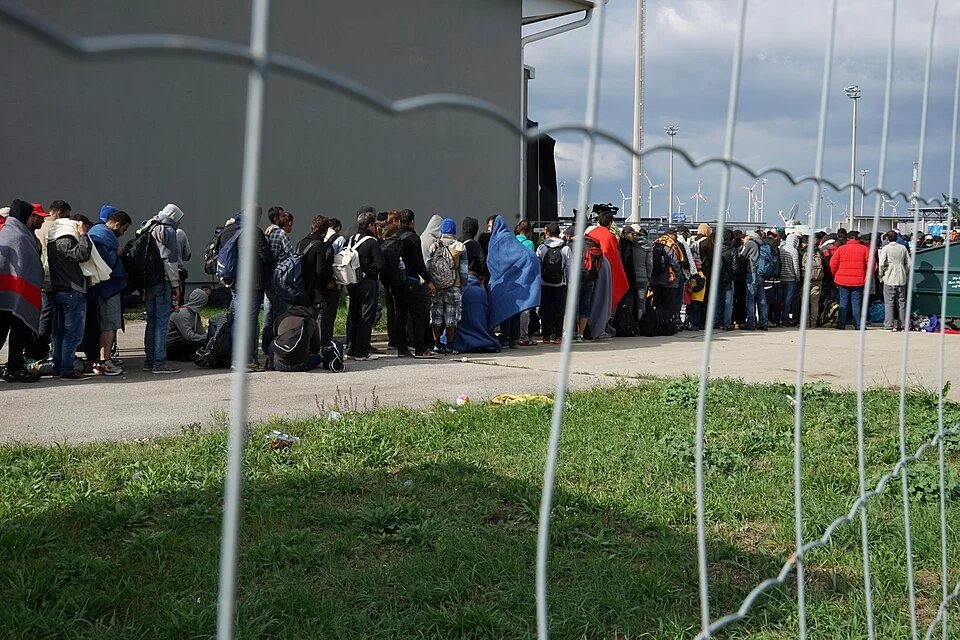
Colombian President Abelardo de la Espriña, a far‑right millionaire former lawyer who has been in office for just over two weeks, announced on Sunday that joint police‑migration operations to detain and deport irregular migrants will begin “this very week.” Speaking at a cabinet meeting in Barranquilla—temporarily serving as an alternative capital after a 7.4‑magnitude earthquake on 10 August killed more than 300 people and destroyed over 30,000 homes—de la Espriña ordered authorities to first target migrants who have committed crimes and then those who have not regularised their status, promising immediate deportations. He framed the policy with a “Colombians first, Colombians second and Colombians third” slogan that mirrors U.S. President Donald Trump’s “America first” rhetoric, aligning himself with other Trump‑aligned leaders in the region such as Argentina’s Javier Milei and Chile’s José Antonio Kast.
The crackdown arrives amid criticism that it would overturn a decade‑long migration policy that accommodated refugees fleeing Venezuela’s humanitarian crisis. Venezuelans make up roughly 90 % of Colombia’s 2.8 million migrants, with about 848 000 in an irregular situation, including 193 000 children and adolescents. Opposition senator María José Pizarro Rodríguez denounced the plan as “pure xenophobia and aporophobia,” questioning whether de la Espriña was proposing a Colombian version of ICE. Human‑rights groups warn that the decree could jeopardise the livelihoods of thousands of migrants who contribute to the economy, and they point out that Colombian law does not recognise an “illegal” immigrant category—only “irregular” status, which is not a criminal offense. The president also used the announcement to label drug‑trafficking, illegal mining, extortion and smuggling gangs as “terrorists,” pledging to defeat them by force.
Implementation faces practical hurdles. El Tiempo reported that sources within the migration department doubt the agency has sufficient personnel to carry out the large‑scale deportations de la Espriña envisions. Analysts note that the legal framework does not support the creation of a criminal classification for migrants, potentially limiting the scope of any enforcement actions. As the nation continues to recover from the earthquake’s devastation, the new administration’s hard‑line stance on migration and organized crime will test its capacity to balance security objectives with humanitarian obligations, while drawing regional attention to Colombia’s shifting political climate.
⚡ Effects Interpreter
🌍World Economymedium impact
What this means for you
- ▶Investors watch politics closely for the signals it sends.
- ▶Global businesses tend to hedge their bets when politics gets unpredictable.
🏙️Local Economymedium impact
What this means for you
- ▶The cost of a weekly food shop can creep up in the background.
- ▶High street footfall and spending can shift subtly after this kind of news.
🏦Rates & Bankslow impact
What this means for you
- ▶Borrowing costs might hold while the political picture clears.
- ▶The cost of borrowing rarely moves on politics alone, but it can add pressure.
❤️Healthmedium impact
What this means for you
- ▶Unsettling news can weigh on sleep and mood, so peace of mind matters.
- ▶Talking things through with family or friends can ease the load.
💷Wealthlow impact
What this means for you
- ▶Your overall wealth picture is unlikely to be defined by a single story like this.
- ▶A calm head usually serves savers better than a quick reaction.
🏠Housingmedium impact
What this means for you
- ▶The property ladder rarely wobbles much from a single piece of news.
- ▶A cooling or warming market usually takes months to fully show up in prices.
🌍 Effects for your country
The U.S.'s central bank rate currently stands at 3.75%, so a global rates move like this could feed through to local borrowing costs. The U.S.'s economy is growing at 2.3% with inflation at 3.2%, the backdrop this story's effects play out against locally. Housing-market effects like this are usually felt most where mortgage rates track the U.S.'s own central bank rate closely. With the U.S.'s unemployment at 4.4%, personal-finance effects like this land on a labour market that is currently fairly stable. Health-system effects are harder to localise from economic indicators alone — the real impact in the U.S. depends more on local healthcare capacity than the figures above.
The UK's central bank rate currently stands at 3.75%, so a global rates move like this could feed through to local borrowing costs. The UK's economy is growing at 0.8% with inflation at 3.2%, the backdrop this story's effects play out against locally. Housing-market effects like this are usually felt most where mortgage rates track the UK's own central bank rate closely. With the UK's unemployment at 5.6%, personal-finance effects like this land on a labour market that is currently fairly stable. Health-system effects are harder to localise from economic indicators alone — the real impact in the UK depends more on local healthcare capacity than the figures above.
France's central bank rate currently stands at 2%, so a global rates move like this could feed through to local borrowing costs. France's economy is growing at 0.9% with inflation at 1.8%, the backdrop this story's effects play out against locally. Housing-market effects like this are usually felt most where mortgage rates track France's own central bank rate closely. With France's unemployment at 7.9%, personal-finance effects like this land on a labour market that is already under strain. Health-system effects are harder to localise from economic indicators alone — the real impact in France depends more on local healthcare capacity than the figures above.
Romania's central bank rate currently stands at 6.5%, so a global rates move like this could feed through to local borrowing costs. Romania's economy is growing at 0.7% with inflation at 7.8%, the backdrop this story's effects play out against locally. Housing-market effects like this are usually felt most where mortgage rates track Romania's own central bank rate closely. With Romania's unemployment at 6%, personal-finance effects like this land on a labour market that is currently fairly stable. Health-system effects are harder to localise from economic indicators alone — the real impact in Romania depends more on local healthcare capacity than the figures above.
The UAE's central bank rate currently stands at 3.65%, so a global rates move like this could feed through to local borrowing costs. The UAE's economy is growing at 3.1% with inflation at 2.5%, the backdrop this story's effects play out against locally. Housing-market effects like this are usually felt most where mortgage rates track the UAE's own central bank rate closely. Health-system effects are harder to localise from economic indicators alone — the real impact in the UAE depends more on local healthcare capacity than the figures above.