Trump hails 'historic' deal for US to control 65bn barrels of Venezuela's oil
Source: BBC World ↗ (cross-verified by 5 outlets — full list below)
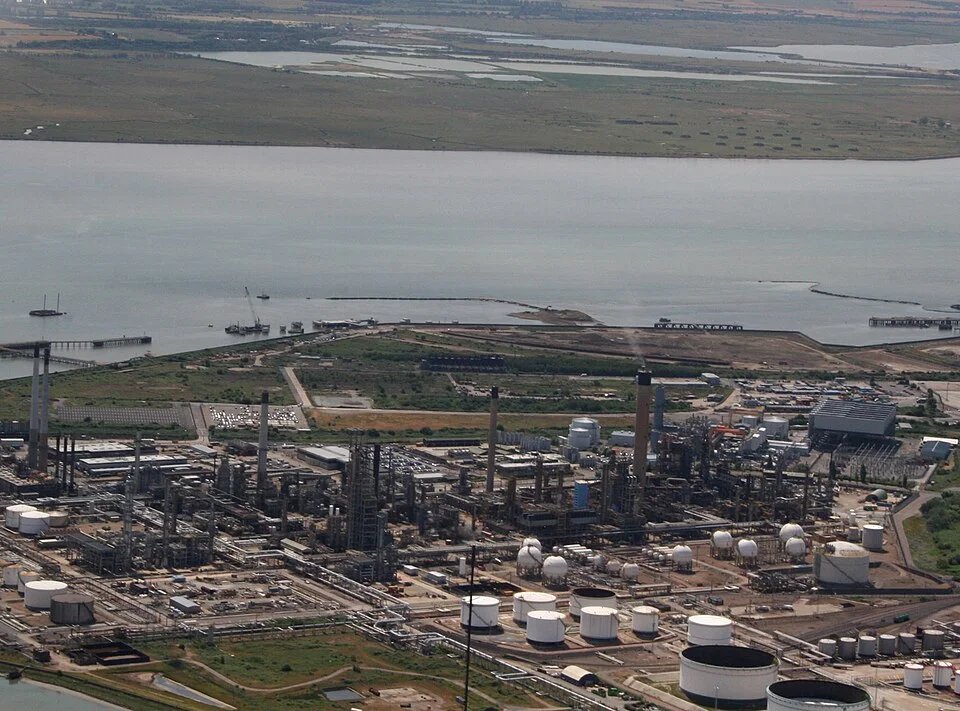
Donald Trump announced that the United States has secured a “historic” agreement giving it control over 65 billion barrels of Venezuela’s oil, a deal he hailed as a major boost to American reserves and a means to lower gasoline prices. The arrangement, reached with Venezuela’s interim president Delcy Rodríguez, grants the U.S. a 55 percent stake in a joint venture to develop 17 strategic oil fields, with an investment pledge of more than $100 billion and an expected $209 billion in taxes for the Venezuelan state. Trump, who earlier this year ordered a U.S. special‑forces raid that captured President Nicolás Maduro and his wife, framed the pact as a partnership with private business that would be funded “at no cost to the American taxpayer,” while Rodríguez described it as a catalyst for her nation’s economic revival.
The deal’s significance lies in its scale and the unprecedented level of U.S. control over a sovereign nation’s natural resources. Venezuela holds the world’s largest proven oil reserves—about 303 billion barrels—but production has collapsed since the late 1990s. By securing a majority share in the joint venture, the United States would more than double its strategic oil reserves, potentially reshaping global energy markets and providing a new source of supply for the Western Hemisphere. Secretary of State Marco Rubio, speaking on social media, emphasized that the agreement would bring nearly $100 billion in private investment, create thousands of high‑paying jobs, and fund the reconstruction of Venezuela’s oil sector, while also enhancing regional energy security and balancing international oil prices.
The specifics of the agreement remain opaque, with no official text released and details about the private operator or the exact terms left undisclosed. Critics note the similarity to the post‑invasion Coalition Provisional Authority’s control over Iraq’s oil revenues, raising questions about the legality and constitutionality of the arrangement under Venezuelan law. The 100‑year concession granted to the joint venture suggests a long‑term U.S. presence in the country’s oil industry, while the broader political context includes Trump’s pressure to curb rising domestic fuel costs amid the Iran conflict and his broader strategy of “making Venezuela great again.” The next steps will involve the rollout of the investment plan, potential legal challenges in Caracas, and the impact on both American gasoline prices and Venezuela’s struggling economy.
⚡ Effects Interpreter
🌍World Economylow impact
What this means for you
- ▶Overnight markets abroad typically set the tone for the next trading day.
- ▶Trading floors from Tokyo to New York might all feel this within a session.
🏙️Local Economylow impact
What this means for you
- ▶Local wages and hours worked may bend slightly with the wider trend.
- ▶Your town's economy tends to catch up with big headlines eventually.
🏦Rates & Banksmedium impact
What this means for you
- ▶Watching how currency markets react can hint at where rates head next.
- ▶Your loan or mortgage rate is more likely to drift than to lurch here.
❤️Healthhigh impact
What this means for you
- ▶Local surgeries and clinics may see a short-lived rise in enquiries.
- ▶Taking a break from the headlines can do more good than scrolling on.
💷Wealthmedium impact
What this means for you
- ▶Market wobbles like this tend to smooth over with time.
- ▶Seasoned investors tend to treat a story like this as noise, not signal.
🏠Housinglow impact
What this means for you
- ▶Rental yields in the area could shift only slightly, if at all, from this.
- ▶Surveyors and valuers tend to factor in wider trends gradually, not overnight.
🌍 Effects for your country
The U.S.'s central bank rate currently stands at 3.75%, so a global rates move like this could feed through to local borrowing costs. The U.S.'s economy is growing at 2.3% with inflation at 3.2%, the backdrop this story's effects play out against locally. Housing-market effects like this are usually felt most where mortgage rates track the U.S.'s own central bank rate closely. With the U.S.'s unemployment at 4.4%, personal-finance effects like this land on a labour market that is currently fairly stable. Health-system effects are harder to localise from economic indicators alone — the real impact in the U.S. depends more on local healthcare capacity than the figures above.
The UK's central bank rate currently stands at 3.75%, so a global rates move like this could feed through to local borrowing costs. The UK's economy is growing at 0.8% with inflation at 3.2%, the backdrop this story's effects play out against locally. Housing-market effects like this are usually felt most where mortgage rates track the UK's own central bank rate closely. With the UK's unemployment at 5.6%, personal-finance effects like this land on a labour market that is currently fairly stable. Health-system effects are harder to localise from economic indicators alone — the real impact in the UK depends more on local healthcare capacity than the figures above.
France's central bank rate currently stands at 2%, so a global rates move like this could feed through to local borrowing costs. France's economy is growing at 0.9% with inflation at 1.8%, the backdrop this story's effects play out against locally. Housing-market effects like this are usually felt most where mortgage rates track France's own central bank rate closely. With France's unemployment at 7.9%, personal-finance effects like this land on a labour market that is already under strain. Health-system effects are harder to localise from economic indicators alone — the real impact in France depends more on local healthcare capacity than the figures above.
Romania's central bank rate currently stands at 6.5%, so a global rates move like this could feed through to local borrowing costs. Romania's economy is growing at 0.7% with inflation at 7.8%, the backdrop this story's effects play out against locally. Housing-market effects like this are usually felt most where mortgage rates track Romania's own central bank rate closely. With Romania's unemployment at 6%, personal-finance effects like this land on a labour market that is currently fairly stable. Health-system effects are harder to localise from economic indicators alone — the real impact in Romania depends more on local healthcare capacity than the figures above.
The UAE's central bank rate currently stands at 3.65%, so a global rates move like this could feed through to local borrowing costs. The UAE's economy is growing at 3.1% with inflation at 2.5%, the backdrop this story's effects play out against locally. Housing-market effects like this are usually felt most where mortgage rates track the UAE's own central bank rate closely. Health-system effects are harder to localise from economic indicators alone — the real impact in the UAE depends more on local healthcare capacity than the figures above.