US Supreme Court rejects Trump bid to restrict mail ballots as voting begins
Source: France 24 ↗ (cross-verified by 5 outlets — full list below)
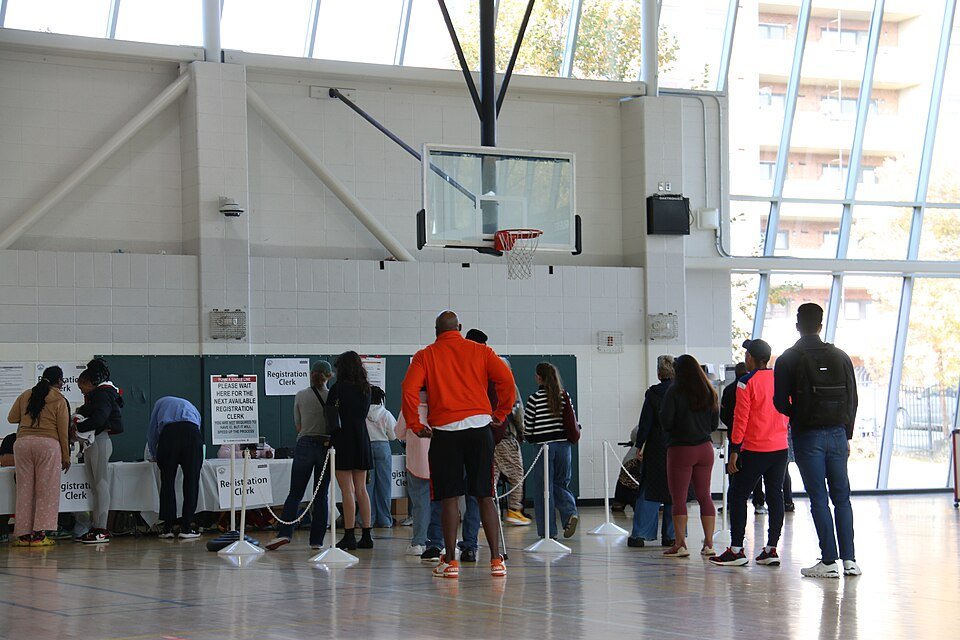
The U.S. Supreme Court on Monday denied President Donald Trump’s request for an emergency order that would have forced states to adopt new, uniform restrictions on mail‑in ballots ahead of the November midterm elections. The brief, unsigned ruling leaves the existing ballot‑mailing procedures in place, allowing states to continue using the systems that have been employed for years and that account for roughly one‑third of all votes. The decision marks a decisive setback for Trump, who has repeatedly framed mail voting as a threat to election integrity despite a lack of evidence of widespread fraud. Justices Samuel Alito and Clarence Thomas dissented, arguing that the Postal Service possesses broad authority to regulate mail and could enforce the administration’s proposed rules, while Justice Brett Kavanaugh, though agreeing the restrictions should not apply to the upcoming election, signaled he might be open to them in future litigation.
The Court’s refusal came after election officials warned that the proposed changes—requiring a standardized envelope, submission of voter lists to an online portal, and giving the Postal Service power to refuse delivery to non‑compliant states—could not be implemented in the narrow window before the vote. A whistleblower report highlighted technical flaws in the portal, noting that a single barcode error could discard entire batches of ballots, potentially preventing millions from being mailed. Democratic officials and voting‑rights groups had already secured lower‑court injunctions, including one from a judge appointed by Trump, contending that the president lacks constitutional authority to dictate election rules that would effectively eliminate mail voting on the eve of a major election.
The ruling leaves states such as Alabama, North Carolina, Wisconsin, Washington and Oregon to proceed with their current mail‑ballot operations, which have already begun distributing ballots to voters. Washington Secretary of State Steve Hobbs praised the decision, emphasizing that election workers can continue preparing for a “safe, secure, and accurate” election without having to overhaul processes. The White House has not commented, and the broader legal battle may resume if the administration seeks to revisit the issue in a future Supreme Court case, leaving the question of federal versus state control over election administration unresolved.
⚡ Effects Interpreter
🌍World Economymedium impact
What this means for you
- ▶Global businesses tend to hedge their bets when politics gets unpredictable.
- ▶Trade relationships can warm or cool depending on how this unfolds.
🏙️Local Economylow impact
What this means for you
- ▶The knock-on for local trade is usually gradual rather than sudden.
- ▶Neighbourhood traders often adjust gradually rather than all at once.
🏦Rates & Bankslow impact
What this means for you
- ▶Mortgage lenders might pause new offers until the political dust settles.
- ▶Rate decisions tend to filter out political theatre and focus on data.
❤️Healthmedium impact
What this means for you
- ▶Local wellbeing services are there precisely for moments when news feels overwhelming.
- ▶News like this can nibble at everyday calm more than people expect.
💷Wealthmedium impact
What this means for you
- ▶A calm head usually serves savers better than a short reaction.
- ▶It's a reasonable moment to check your investments are still on track.
🏠Housinglow impact
What this means for you
- ▶Housing chains involving multiple buyers can be sensitive to any wider wobble.
- ▶House prices and rents are unlikely to shift the moment this news breaks.
🌍 Effects for your country
The U.S.'s central bank rate currently stands at 3.75%, so a global rates move like this could feed through to local borrowing costs. The U.S.'s economy is growing at 2.3% with inflation at 3.2%, the backdrop this story's effects play out against locally. Housing-market effects like this are usually felt most where mortgage rates track the U.S.'s own central bank rate closely. With the U.S.'s unemployment at 4.4%, personal-finance effects like this land on a labour market that is currently fairly stable. Health-system effects are harder to localise from economic indicators alone — the real impact in the U.S. depends more on local healthcare capacity than the figures above.
The UK's central bank rate currently stands at 3.75%, so a global rates move like this could feed through to local borrowing costs. The UK's economy is growing at 0.8% with inflation at 3.2%, the backdrop this story's effects play out against locally. Housing-market effects like this are usually felt most where mortgage rates track the UK's own central bank rate closely. With the UK's unemployment at 5.6%, personal-finance effects like this land on a labour market that is currently fairly stable. Health-system effects are harder to localise from economic indicators alone — the real impact in the UK depends more on local healthcare capacity than the figures above.
France's central bank rate currently stands at 2%, so a global rates move like this could feed through to local borrowing costs. France's economy is growing at 0.9% with inflation at 1.8%, the backdrop this story's effects play out against locally. Housing-market effects like this are usually felt most where mortgage rates track France's own central bank rate closely. With France's unemployment at 7.9%, personal-finance effects like this land on a labour market that is already under strain. Health-system effects are harder to localise from economic indicators alone — the real impact in France depends more on local healthcare capacity than the figures above.
Romania's central bank rate currently stands at 6.5%, so a global rates move like this could feed through to local borrowing costs. Romania's economy is growing at 0.7% with inflation at 7.8%, the backdrop this story's effects play out against locally. Housing-market effects like this are usually felt most where mortgage rates track Romania's own central bank rate closely. With Romania's unemployment at 6%, personal-finance effects like this land on a labour market that is currently fairly stable. Health-system effects are harder to localise from economic indicators alone — the real impact in Romania depends more on local healthcare capacity than the figures above.
The UAE's central bank rate currently stands at 3.65%, so a global rates move like this could feed through to local borrowing costs. The UAE's economy is growing at 3.1% with inflation at 2.5%, the backdrop this story's effects play out against locally. Housing-market effects like this are usually felt most where mortgage rates track the UAE's own central bank rate closely. Health-system effects are harder to localise from economic indicators alone — the real impact in the UAE depends more on local healthcare capacity than the figures above.