XDOF, just three months out of stealth, is in talks for a Series B at a $1.2B valuation
Source: TechCrunch ↗
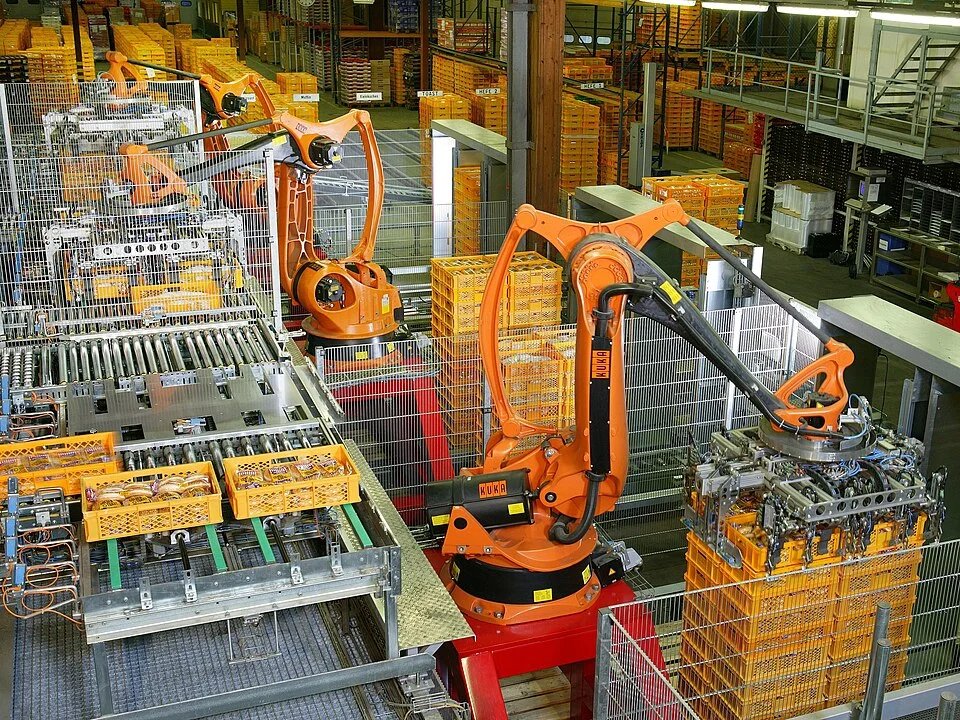
The round is being raised just months after the robot data startup exited from stealth. Last day to demo your breakthrough to 10,000+ tech leaders is on Oct 2 . Book Exhibit Table Now. Disrupt ticket savings of up to $200 + 50% off a second ends Sept 25, 11:59 p.m. PT. REGISTER HERE. Less than three months after emerging from stealth, XDOF , a startup that collects real-world teleoperation data for training general-purpose robots, is in late-stage talks to raise a Series B at a valuation of about $1.2 billion valuation led by 8VC, several people with knowledge of the deal said. XDOF was co-founded by UC Berkeley researchers Philipp Wu (CEO) and Fred Shentu (CTO) in 2024. Tech Crunch reported on the startup’s $70 million Series A in June, with participation from Thrive Capital, Andreessen Horowitz, Lux, and Spark Capital. XDOF wasn’t planning to raise again so soon after that round. But the company’s rapid growth — with annualized revenue approaching $50 million — prompted VCs to approach it about a new round, the people said. Tech Crunch was unable to learn the total capital being raised or whether the valuation includes the new funding.
The terms of the deal are not final and could still change. The startup aims to build the data pipelines, collection tools, and annotation systems that frontier AI labs and robotics companies can’t easily build themselves, essentially acting as an outsourced data-supply chain for the robotics industry. As a PhD student, Wu was studying how robots learn from large datasets. One big impediment to his research was the lack of “large-scale data to work with,” he told Tech Crunch in June. So he teamed up with Shentu on a project called GELLO, a low-cost teleoperation system that allows a human operator to control a robotic arm remotely in order to generate training data. Their work led to an influential paper in robotics. That research formed the foundation for XDOF, which investors now describe as the Scale AI or Mercor for physical robotics, a reference to the data-labeling giants that helped fuel the AI boom. Unlike LLMs, which initially trained on the entirety of the internet, physical robots don’t have an equivalent real-world dataset to draw from, making data collection a critical bottleneck to building general-purpose machines. XDOF is partnering with UC Berkeley’s AI Research lab to release what it believes is the largest collection of high-quality robot training data ever assembled, dubbed ABC . To capture this data, XDOF combines remote robot teleoperation with human collectors who wear sensors to record everyday tasks like folding clothes and flattening boxes. The startup plans to hire and train teams of data collectors worldwide, including teleoperators who steer robots remotely and egocentric operators who wear body sensors to capture movement data. XDOF previously told Tech Crunch that it is already working with 20 customers, including several frontier AI labs.
Other startups attempting to collect real-world data for robot training include Mecka AI, as well as human-data platforms expanding beyond LLMs, such as Scale AI and Micro1 . When you purchase through links in our articles, we may earn a small commission . This doesn’t affect our editorial independence. Marina Temkin is a venture capital and startups reporter at Tech Crunch. Prior to joining Tech Crunch, she wrote about VC for Pitch Book and Venture Capital Journal. Earlier in her career, Marina was a financial analyst and earned a CFA charterholder designation. You can contact or verify outreach from Marina by emailing marina.temkin@techcrunch.com or via encrypted message at +1 347-683-3909 on Signal. Get 50% off a second pass The Disrupt experience is meant to be shared. Get your pass and bring a colleague, partner, or peer at 50% off. Cover more ground by making connections, building momentum, and discovering what’s next in the startup ecosystem.
⚡ Effects Interpreter
🌍World Economymedium impact
What this means for you
- ▶International capital can shift direction faster than headlines suggest.
- ▶The ripples can spread across borders, nudging growth forecasts here and there.
🏙️Local Economylow impact
What this means for you
- ▶Family budgets close to home might absorb a modest, slow-moving effect.
- ▶Your local economy has a way of catching these currents eventually.
🏦Rates & Bankslow impact
What this means for you
- ▶Lenders typically hold their nerve until a clearer trend appears.
- ▶Savers might glance at their account rate — lenders adjust after big events.
❤️Healthlow impact
What this means for you
- ▶A little perspective usually helps once the initial shock fades.
- ▶Local health services could get busier depending on how things develop.
💷Wealthmedium impact
What this means for you
- ▶Portfolios built for the long haul rarely need a rethink over one headline.
- ▶Savings and portfolios can see short-lived ups and downs after a story like this.
🏠Housinglow impact
What this means for you
- ▶Local surveyors typically note that sentiment shifts before prices actually do.
- ▶First-time buyers might keep half an eye on mortgage rates after this.
🌍 Effects for your country
The U.S.'s central bank rate currently stands at 3.75%, so a global rates move like this could feed through to local borrowing costs. The U.S.'s economy is growing at 2.3% with inflation at 3.2%, the backdrop this story's effects play out against locally. Housing-market effects like this are usually felt most where mortgage rates track the U.S.'s own central bank rate closely. With the U.S.'s unemployment at 4.4%, personal-finance effects like this land on a labour market that is currently fairly stable. Health-system effects are harder to localise from economic indicators alone — the real impact in the U.S. depends more on local healthcare capacity than the figures above.
The UK's central bank rate currently stands at 3.75%, so a global rates move like this could feed through to local borrowing costs. The UK's economy is growing at 0.8% with inflation at 3.2%, the backdrop this story's effects play out against locally. Housing-market effects like this are usually felt most where mortgage rates track the UK's own central bank rate closely. With the UK's unemployment at 5.6%, personal-finance effects like this land on a labour market that is currently fairly stable. Health-system effects are harder to localise from economic indicators alone — the real impact in the UK depends more on local healthcare capacity than the figures above.
France's central bank rate currently stands at 2%, so a global rates move like this could feed through to local borrowing costs. France's economy is growing at 0.9% with inflation at 1.8%, the backdrop this story's effects play out against locally. Housing-market effects like this are usually felt most where mortgage rates track France's own central bank rate closely. With France's unemployment at 7.9%, personal-finance effects like this land on a labour market that is already under strain. Health-system effects are harder to localise from economic indicators alone — the real impact in France depends more on local healthcare capacity than the figures above.
Romania's central bank rate currently stands at 6.5%, so a global rates move like this could feed through to local borrowing costs. Romania's economy is growing at 0.7% with inflation at 7.8%, the backdrop this story's effects play out against locally. Housing-market effects like this are usually felt most where mortgage rates track Romania's own central bank rate closely. With Romania's unemployment at 6%, personal-finance effects like this land on a labour market that is currently fairly stable. Health-system effects are harder to localise from economic indicators alone — the real impact in Romania depends more on local healthcare capacity than the figures above.
The UAE's central bank rate currently stands at 3.65%, so a global rates move like this could feed through to local borrowing costs. The UAE's economy is growing at 3.1% with inflation at 2.5%, the backdrop this story's effects play out against locally. Housing-market effects like this are usually felt most where mortgage rates track the UAE's own central bank rate closely. Health-system effects are harder to localise from economic indicators alone — the real impact in the UAE depends more on local healthcare capacity than the figures above.