Families in the US are opting for earlier measles vaccinations amid outbreak
Source: Guardian Health ↗
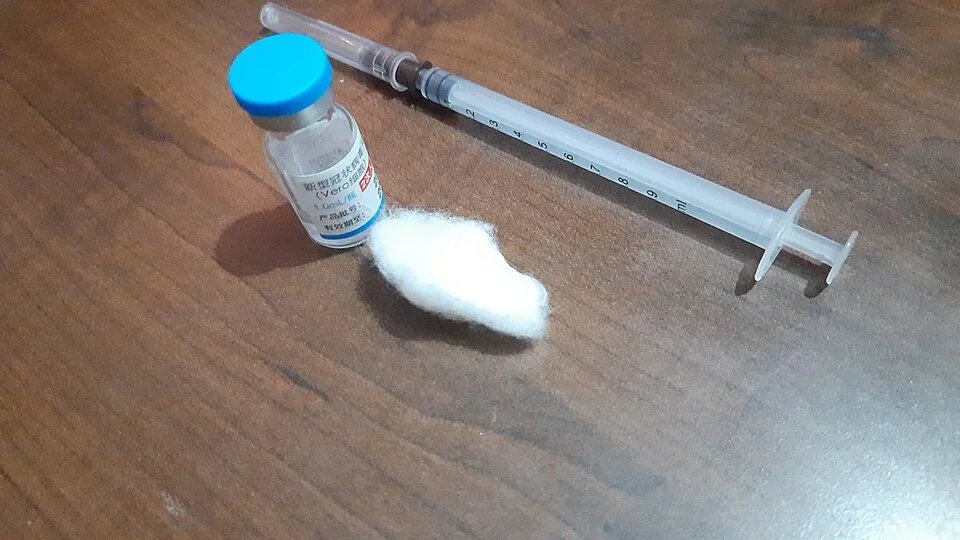
Parents across the United States are increasingly giving their children the second dose of the measles, mumps and rubella (MMR) vaccine earlier than the traditional schedule, with some administering it as soon as four weeks after the first shot. The shift comes as measles cases have surged to twice the number reported last year, prompting pediatricians and vaccine advocates to accelerate immunization. In Seattle, naturopathic physician and vaccine proponent Elias Kass now recommends the combined MMR‑varicella (MMRV) vaccine at 15 months, while Chicago mother Margot Taylor has had her three children receive the second dose at ages four, two and three months respectively, citing the heightened risk of infection during local outbreaks.
The move aligns with recommendations in Germany, the United Kingdom and France, where health authorities have long permitted a four‑week interval between doses, and the U.S. Centers for Disease Control and Prevention (CDC) also lists early administration as an option, especially in outbreak settings or after international travel. Evidence shows that the vaccine remains effective when given earlier; the conventional four‑to‑six‑year window for the second dose is largely logistical, intended to ensure children are fully protected before kindergarten and to consolidate doctor visits. German scientist Catherina Becker notes that no data indicate increased measles risk for children vaccinated on an accelerated schedule and urges the CDC to adopt a stronger recommendation for early second doses.
Early vaccination is also being considered for infants as young as six months in high‑risk areas, with the CDC advising a third dose later to counteract possible interference from maternal antibodies. Parents like Taylor, who once feared exposure after a one‑month‑old infant contracted a fever following a Texas airport encounter, now view the accelerated schedule as essential protection. The trend reflects broader public health concerns: past outbreaks, such as the 1998 Alaska school incident where nearly all 2,186 students were vaccinated and only 17 fell ill, underscore the vaccine’s efficacy, while the 2010 Waldorf school outbreak in Germany, which affected half of 300 students, illustrates the consequences of lower coverage. As measles continues to spread, the early‑dose approach may become a more prominent component of U.S. immunization strategy.
⚡ Effects Interpreter
🌍World Economylow impact
What this means for you
- ▶Multinational firms often adjust their playbooks when stories like this break.
- ▶Confidence among international firms may wobble until the picture clears.
🏙️Local Economylow impact
What this means for you
- ▶Family budgets close to home might absorb a modest, slow-moving effect.
- ▶Neighbourhood traders typically adjust quietly rather than all at once.
🏦Rates & Bankslow impact
What this means for you
- ▶Interest rates and mortgage bills are unlikely to jump straight away from this alone.
- ▶The next rate-setting meeting is a more likely trigger than this news alone.
❤️Healthlow impact
What this means for you
- ▶Community health workers may see extra questions in the days ahead.
- ▶Trusted medical advice usually beats speculation when health news breaks.
💷Wealthhigh impact
What this means for you
- ▶A modest emergency fund can cushion any health-related costs.
- ▶Private treatment costs, where relevant, might shift as demand changes.
🏠Housinglow impact
What this means for you
- ▶Renters may see costs drift a bit as landlords weigh their own bills.
- ▶A patient seller usually fares better than one rushing to react to headlines.
🌍 Effects for your country
The U.S.'s central bank rate currently stands at 3.75%, so a global rates move like this could feed through to local borrowing costs. The U.S.'s economy is growing at 2.3% with inflation at 3.2%, the backdrop this story's effects play out against locally. Housing-market effects like this are usually felt most where mortgage rates track the U.S.'s own central bank rate closely. With the U.S.'s unemployment at 4.4%, personal-finance effects like this land on a labour market that is currently fairly stable. Health-system effects are harder to localise from economic indicators alone — the real impact in the U.S. depends more on local healthcare capacity than the figures above.
The UK's central bank rate currently stands at 3.75%, so a global rates move like this could feed through to local borrowing costs. The UK's economy is growing at 0.8% with inflation at 3.2%, the backdrop this story's effects play out against locally. Housing-market effects like this are usually felt most where mortgage rates track the UK's own central bank rate closely. With the UK's unemployment at 5.6%, personal-finance effects like this land on a labour market that is currently fairly stable. Health-system effects are harder to localise from economic indicators alone — the real impact in the UK depends more on local healthcare capacity than the figures above.
France's central bank rate currently stands at 2%, so a global rates move like this could feed through to local borrowing costs. France's economy is growing at 0.9% with inflation at 1.8%, the backdrop this story's effects play out against locally. Housing-market effects like this are usually felt most where mortgage rates track France's own central bank rate closely. With France's unemployment at 7.9%, personal-finance effects like this land on a labour market that is already under strain. Health-system effects are harder to localise from economic indicators alone — the real impact in France depends more on local healthcare capacity than the figures above.
Romania's central bank rate currently stands at 6.5%, so a global rates move like this could feed through to local borrowing costs. Romania's economy is growing at 0.7% with inflation at 7.8%, the backdrop this story's effects play out against locally. Housing-market effects like this are usually felt most where mortgage rates track Romania's own central bank rate closely. With Romania's unemployment at 6%, personal-finance effects like this land on a labour market that is currently fairly stable. Health-system effects are harder to localise from economic indicators alone — the real impact in Romania depends more on local healthcare capacity than the figures above.
The UAE's central bank rate currently stands at 3.65%, so a global rates move like this could feed through to local borrowing costs. The UAE's economy is growing at 3.1% with inflation at 2.5%, the backdrop this story's effects play out against locally. Housing-market effects like this are usually felt most where mortgage rates track the UAE's own central bank rate closely. Health-system effects are harder to localise from economic indicators alone — the real impact in the UAE depends more on local healthcare capacity than the figures above.