Large language model and reinforcement learning based autonomous construction and progress updates
Source: ArXiv AI ↗ (cross-verified by 2 outlets — full list below)
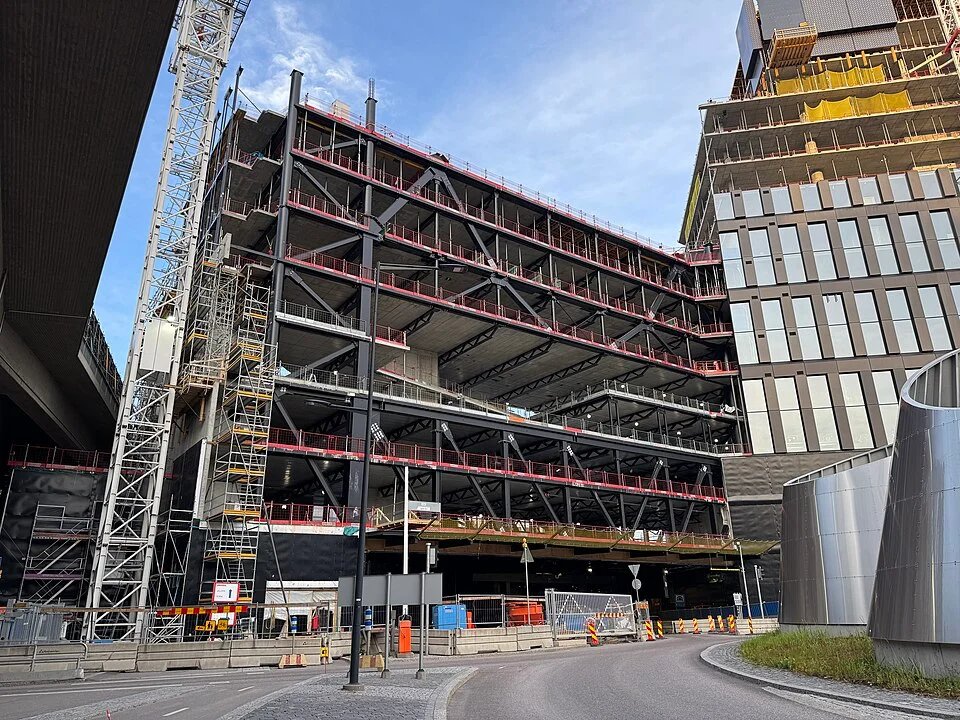
A new autonomous construction method that combines a large language model with reinforcement learning has been introduced to address the mounting housing shortage caused by rapid global population growth. The approach utilizes an enhanced soft actor‑critic reinforcement learning algorithm to plan the movements of a mobile crane for specific construction tasks, while robot kinematics and control algorithms translate those plans into executable actions. A customized embedding model extracts relevant information from the construction environment, and the large language model, identified as ChatGPT 5, is employed to update construction progress, deliver safety information to the control system, and generate detailed progress reports. The method’s feasibility was demonstrated through several full‑scale retaining‑wall construction experiments.
The integration of machine‑learning techniques aims to transform traditional building practices into smarter, more efficient processes. By leveraging the advanced reasoning capabilities of large language models, the system can interpret user‑specified interests and dynamically adjust construction plans, while reinforcement learning optimizes crane operations for speed and safety. This synergy addresses the limitations of conventional methods, which are increasingly unable to keep pace with housing demand, and showcases how artificial intelligence can directly influence on‑site decision‑making and workflow management in the construction sector.
The experimental results suggest that the combined framework can reliably execute complex construction sequences and produce accurate progress documentation, potentially reducing labor costs and enhancing safety compliance. If scaled, such autonomous systems could impact a wide range of stakeholders, from construction firms seeking productivity gains to policymakers concerned with housing shortages. The study also highlights the broader trend of embedding AI—particularly large language models—into physical infrastructure tasks, signaling a shift toward more data‑driven, responsive building environments.
⚡ Effects Interpreter
🌍World Economylow impact
What this means for you
- ▶Cross-border money flows can quietly change direction after events like this.
- ▶Trading partners on the other side of the world might feel a distant nudge.
🏙️Local Economylow impact
What this means for you
- ▶Local suppliers who import goods could pass on any change in costs.
- ▶High street footfall and spending can shift subtly after this kind of news.
🏦Rates & Bankslow impact
What this means for you
- ▶The cost of borrowing tends to shift gradually rather than in one leap.
- ▶Your loan or mortgage rate is more likely to drift than to lurch here.
❤️Healthlow impact
What this means for you
- ▶Neighbours and families may feel more anxious until the dust settles.
- ▶Public health messaging can go a long way toward easing collective worry.
💷Wealthmedium impact
What this means for you
- ▶Short-term wobbles like this tend to even out given enough time.
- ▶A brief dip in value is not the same as a permanent loss.
🏠Housinglow impact
What this means for you
- ▶House prices and rents are unlikely to shift the moment this news breaks.
- ▶The property ladder rarely wobbles much from a single piece of news.
🌍 Effects for your country
The U.S.'s central bank rate currently stands at 3.75%, so a global rates move like this could feed through to local borrowing costs. The U.S.'s economy is growing at 2.3% with inflation at 3.2%, the backdrop this story's effects play out against locally. Housing-market effects like this are usually felt most where mortgage rates track the U.S.'s own central bank rate closely. With the U.S.'s unemployment at 4.4%, personal-finance effects like this land on a labour market that is currently fairly stable. Health-system effects are harder to localise from economic indicators alone — the real impact in the U.S. depends more on local healthcare capacity than the figures above.
The UK's central bank rate currently stands at 3.75%, so a global rates move like this could feed through to local borrowing costs. The UK's economy is growing at 0.8% with inflation at 3.2%, the backdrop this story's effects play out against locally. Housing-market effects like this are usually felt most where mortgage rates track the UK's own central bank rate closely. With the UK's unemployment at 5.6%, personal-finance effects like this land on a labour market that is currently fairly stable. Health-system effects are harder to localise from economic indicators alone — the real impact in the UK depends more on local healthcare capacity than the figures above.
France's central bank rate currently stands at 2%, so a global rates move like this could feed through to local borrowing costs. France's economy is growing at 0.9% with inflation at 1.8%, the backdrop this story's effects play out against locally. Housing-market effects like this are usually felt most where mortgage rates track France's own central bank rate closely. With France's unemployment at 7.9%, personal-finance effects like this land on a labour market that is already under strain. Health-system effects are harder to localise from economic indicators alone — the real impact in France depends more on local healthcare capacity than the figures above.
Romania's central bank rate currently stands at 6.5%, so a global rates move like this could feed through to local borrowing costs. Romania's economy is growing at 0.7% with inflation at 7.8%, the backdrop this story's effects play out against locally. Housing-market effects like this are usually felt most where mortgage rates track Romania's own central bank rate closely. With Romania's unemployment at 6%, personal-finance effects like this land on a labour market that is currently fairly stable. Health-system effects are harder to localise from economic indicators alone — the real impact in Romania depends more on local healthcare capacity than the figures above.
The UAE's central bank rate currently stands at 3.65%, so a global rates move like this could feed through to local borrowing costs. The UAE's economy is growing at 3.1% with inflation at 2.5%, the backdrop this story's effects play out against locally. Housing-market effects like this are usually felt most where mortgage rates track the UAE's own central bank rate closely. Health-system effects are harder to localise from economic indicators alone — the real impact in the UAE depends more on local healthcare capacity than the figures above.