South Korea threatens legal action if fuel shipments to Russia found to have broken law
Source: Guardian World ↗
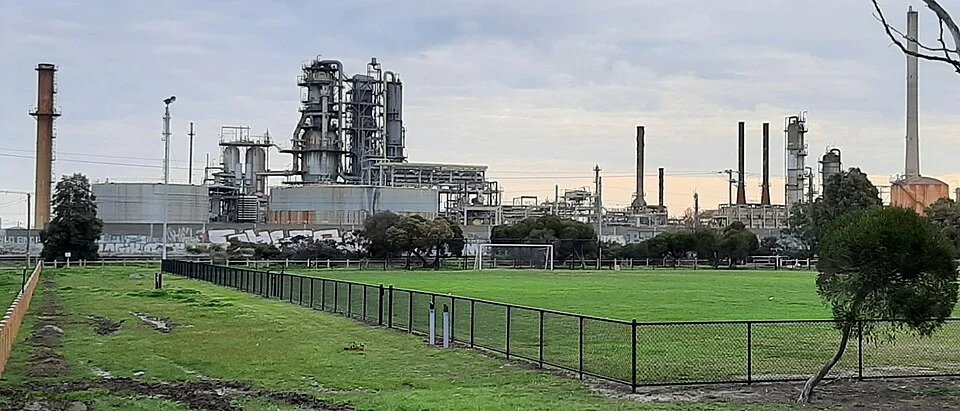
South Korean authorities announced they will pursue legal action if investigations confirm that fuel shipments from the nation’s ports to Russia violated domestic law, following a Guardian report that identified more than 176,000 tonnes of diesel and other refined petroleum products loaded onto seven tankers in July and August. The shipments, which made 14 voyages to Russia’s Far East, included three vessels subject to United Kingdom and European Union sanctions, and one transfer of roughly 26,000 tonnes occurred via a ship‑to‑ship operation off the southern port of Yeosu. The foreign and trade ministries, together with customs officials, said they are “checking additional information concerning the loading cases reported by the Guardian” and will act in accordance with the law if violations are proven.
The Guardian’s analysis, based on port records and ship‑tracking data, highlighted that the fuel trade undermines the sanctions regime and South Korea’s declared support for Ukraine, according to analyst Isaac Levi of the Centre for Research on Energy and Clean Air. Russia’s refining capacity has been severely curtailed by Ukrainian drone attacks, with diesel output falling nearly 30 % year‑on‑year and overall refinery throughput hitting a 20‑year low, according to the International Energy Agency. Seoul noted that refined petroleum products are not covered by its export controls on Russia, which focus on industrial machinery, electronics and vehicles, and that customs data show no confirmed export of diesel, aviation fuel or motor petrol to Russia.
Seoul’s statement also pointed out that ownership and sale details of the fuel remain unclear, as South Korean port records do not publicly disclose such information, and that a vessel’s deviation from its declared destination does not automatically imply a false declaration. The three sanctioned tankers reportedly listed destinations such as Japan or Singapore before proceeding to Vladivostok, while the non‑sanctioned Russian‑flagged Aram Khachaturian loaded at Ulsan three times, each time citing a destination other than Russia before sailing there. Ukrainian officials criticized the shipments as contradictory to South Korea’s sanctions policy, prompting a diplomatic rebuke from Seoul’s presidential office, which called the remarks “contrary to fact and inappropriate.” Ukraine’s foreign ministry said it had raised the issue through closed diplomatic channels and possessed its own data on the activity. In a related diplomatic spat, South Korea announced it will recall its ambassador to Kyiv, seeking an amicable resolution to the outstanding issues between the two countries.
⚡ Effects Interpreter
🌍World Economylow impact
What this means for you
- ▶Foreign direct investment decisions can hinge on how this plays out.
- ▶Export-heavy economies may see demand wobble as buyers wait and watch.
🏙️Local Economylow impact
What this means for you
- ▶High street footfall and spending can shift subtly after news like this.
- ▶Household budgets may notice a small ripple before long.
🏦Rates & Bankslow impact
What this means for you
- ▶Borrowing plans are usually safe from sudden shocks over something like this.
- ▶Your bank is unlikely to act on this alone, but it will be watching.
❤️Healthmedium impact
What this means for you
- ▶Taking a break from the headlines can do more good than scrolling on.
- ▶Some people feel this news more keenly than others, and that's worth acknowledging.
💷Wealthlow impact
What this means for you
- ▶Any hit to your money is more likely a ripple than a wave.
- ▶It might be worth a brief look at your ISA or pension in the coming days.
🏠Housinglow impact
What this means for you
- ▶Landlords and tenants alike rarely feel sudden shifts from news like this.
- ▶Regional differences mean this may be felt unevenly across the property market.
🌍 Effects for your country
The U.S.'s central bank rate currently stands at 3.75%, so a global rates move like this could feed through to local borrowing costs. The U.S.'s economy is growing at 2.3% with inflation at 3.2%, the backdrop this story's effects play out against locally. Housing-market effects like this are usually felt most where mortgage rates track the U.S.'s own central bank rate closely. With the U.S.'s unemployment at 4.4%, personal-finance effects like this land on a labour market that is currently fairly stable. Health-system effects are harder to localise from economic indicators alone — the real impact in the U.S. depends more on local healthcare capacity than the figures above.
The UK's central bank rate currently stands at 3.75%, so a global rates move like this could feed through to local borrowing costs. The UK's economy is growing at 0.8% with inflation at 3.2%, the backdrop this story's effects play out against locally. Housing-market effects like this are usually felt most where mortgage rates track the UK's own central bank rate closely. With the UK's unemployment at 5.6%, personal-finance effects like this land on a labour market that is currently fairly stable. Health-system effects are harder to localise from economic indicators alone — the real impact in the UK depends more on local healthcare capacity than the figures above.
France's central bank rate currently stands at 2%, so a global rates move like this could feed through to local borrowing costs. France's economy is growing at 0.9% with inflation at 1.8%, the backdrop this story's effects play out against locally. Housing-market effects like this are usually felt most where mortgage rates track France's own central bank rate closely. With France's unemployment at 7.9%, personal-finance effects like this land on a labour market that is already under strain. Health-system effects are harder to localise from economic indicators alone — the real impact in France depends more on local healthcare capacity than the figures above.
Romania's central bank rate currently stands at 6.5%, so a global rates move like this could feed through to local borrowing costs. Romania's economy is growing at 0.7% with inflation at 7.8%, the backdrop this story's effects play out against locally. Housing-market effects like this are usually felt most where mortgage rates track Romania's own central bank rate closely. With Romania's unemployment at 6%, personal-finance effects like this land on a labour market that is currently fairly stable. Health-system effects are harder to localise from economic indicators alone — the real impact in Romania depends more on local healthcare capacity than the figures above.
The UAE's central bank rate currently stands at 3.65%, so a global rates move like this could feed through to local borrowing costs. The UAE's economy is growing at 3.1% with inflation at 2.5%, the backdrop this story's effects play out against locally. Housing-market effects like this are usually felt most where mortgage rates track the UAE's own central bank rate closely. Health-system effects are harder to localise from economic indicators alone — the real impact in the UAE depends more on local healthcare capacity than the figures above.