The Guardian view on plague in Russia: what is most worrying is the lack of information | Editorial
Source: Guardian Health ↗
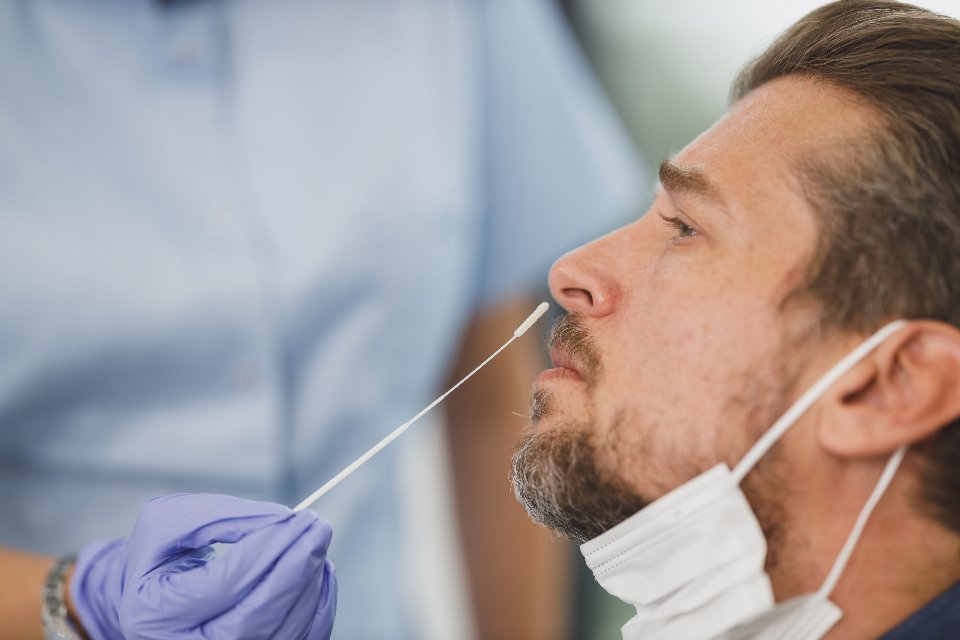
A health worker at a Siberian plague research facility died three weeks ago from a mysterious respiratory illness, prompting concerns that the case could involve plague, a disease that is treatable with prompt medical care but potentially dangerous if it spreads. Russian authorities quickly quarantined the hospital, traced roughly 200 contacts and held high‑level meetings, indicating they treated the incident as a possible plague case. Yet, under international law they failed to notify the World Health Organization (WHO), instead releasing only a vague statement that the worker succumbed to “pneumonia of unknown origin” and withholding any laboratory results or genetic sequencing data that might clarify the pathogen.
The lack of transparent reporting has alarmed the WHO and the broader international community because swift disclosure is essential for containing any outbreak and for coordinating a global response. Russia’s silence sets a troubling precedent, suggesting that future pandemic threats could be obscured by national secrecy, especially as geopolitical tensions strain multilateral cooperation. The United States, having withdrawn from the WHO earlier in the year, formally asked Russia on 7 October to share information, but the request appears to be part of an ad‑hoc diplomatic strategy rather than a renewed commitment to international health law. President Trump announced he would discuss the matter with President Vladimir Putin, yet no details of any conversation or subsequent information sharing have emerged.
The episode highlights a broader erosion of the mechanisms that underpin pandemic preparedness, with the WHO potentially needing to seek support from a more multipolar coalition of nations beyond its traditional reliance on U.S. backing. While the Siberian case may ultimately prove benign, the episode underscores how gaps in information flow can fuel speculation—ranging from a simple laboratory accident to a possible bioweapons leak—and weaken confidence in the global health architecture at a time when new threats are likely to arise.
⚡ Effects Interpreter
🌍World Economylow impact
What this means for you
- ▶Growth projections drawn up in distant capitals may need a rethink.
- ▶World markets have a habit of reading between the lines of stories like this.
🏙️Local Economymedium impact
What this means for you
- ▶Your town's economy tends to catch up with big headlines eventually.
- ▶High street footfall and spending can shift subtly after this kind of news.
🏦Rates & Bankslow impact
What this means for you
- ▶Lenders typically reserve big rate moves for clearer economic signals.
- ▶A modest drift in borrowing costs is more plausible than a sharp jump.
❤️Healthmedium impact
What this means for you
- ▶Trusted medical advice usually beats speculation when health news breaks.
- ▶A short chat with a pharmacist can clear up plenty of uncertainty.
💷Wealthhigh impact
What this means for you
- ▶A modest emergency fund can cushion any health-related costs.
- ▶Staying well is its own kind of saving.
🏠Housingmedium impact
What this means for you
- ▶A cooling or warming market usually takes months to fully show up in prices.
- ▶The property ladder rarely wobbles much from a single piece of news.
🌍 Effects for your country
The U.S.'s central bank rate currently stands at 3.75%, so a global rates move like this could feed through to local borrowing costs. The U.S.'s economy is growing at 2.3% with inflation at 3.2%, the backdrop this story's effects play out against locally. Housing-market effects like this are usually felt most where mortgage rates track the U.S.'s own central bank rate closely. With the U.S.'s unemployment at 4.4%, personal-finance effects like this land on a labour market that is currently fairly stable. Health-system effects are harder to localise from economic indicators alone — the real impact in the U.S. depends more on local healthcare capacity than the figures above.
The UK's central bank rate currently stands at 3.75%, so a global rates move like this could feed through to local borrowing costs. The UK's economy is growing at 0.8% with inflation at 3.2%, the backdrop this story's effects play out against locally. Housing-market effects like this are usually felt most where mortgage rates track the UK's own central bank rate closely. With the UK's unemployment at 5.6%, personal-finance effects like this land on a labour market that is currently fairly stable. Health-system effects are harder to localise from economic indicators alone — the real impact in the UK depends more on local healthcare capacity than the figures above.
France's central bank rate currently stands at 2%, so a global rates move like this could feed through to local borrowing costs. France's economy is growing at 0.9% with inflation at 1.8%, the backdrop this story's effects play out against locally. Housing-market effects like this are usually felt most where mortgage rates track France's own central bank rate closely. With France's unemployment at 7.9%, personal-finance effects like this land on a labour market that is already under strain. Health-system effects are harder to localise from economic indicators alone — the real impact in France depends more on local healthcare capacity than the figures above.
Romania's central bank rate currently stands at 6.5%, so a global rates move like this could feed through to local borrowing costs. Romania's economy is growing at 0.7% with inflation at 7.8%, the backdrop this story's effects play out against locally. Housing-market effects like this are usually felt most where mortgage rates track Romania's own central bank rate closely. With Romania's unemployment at 6%, personal-finance effects like this land on a labour market that is currently fairly stable. Health-system effects are harder to localise from economic indicators alone — the real impact in Romania depends more on local healthcare capacity than the figures above.
The UAE's central bank rate currently stands at 3.65%, so a global rates move like this could feed through to local borrowing costs. The UAE's economy is growing at 3.1% with inflation at 2.5%, the backdrop this story's effects play out against locally. Housing-market effects like this are usually felt most where mortgage rates track the UAE's own central bank rate closely. Health-system effects are harder to localise from economic indicators alone — the real impact in the UAE depends more on local healthcare capacity than the figures above.