China: Xi, Trump and Putin gather ahead of trilateral summit
Source: Euronews ↗ (cross-verified by 5 outlets — full list below)
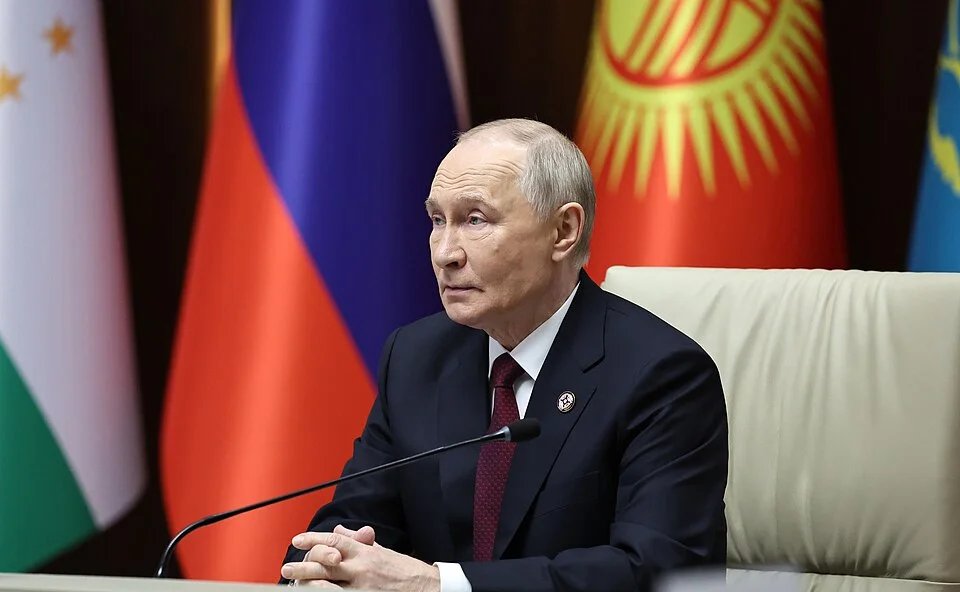
Chinese President Xi Jinping, US President Donald Trump and Russian President Vladimir Putin appeared together in Shenzhen, on Thursday 19 November 2026, posing for a group photograph alongside other world leaders ahead of a closely watched trilateral summit. The three presidents stood together for the official group shot ahead of the Asia-Pacific Economic Cooperation forum’s opening session.
The high-level assembly drew leaders from across the Pacific, featuring Japanese Prime Minister Sanae Takaichi, Canada’s Mark Carney, Australia’s Anthony Albanese and South Korean President Lee Jae Myung. All eyes, however, were fixed on Donald Trump and Vladimir Putin, who are slated to join Xi for separate trilateral talks .
⚡ Effects Interpreter
🌍World Economymedium impact
What this means for you
- ▶International capital can shift direction faster than headlines suggest.
- ▶Cross-border money flows can subtly change direction after events like this.
🏙️Local Economylow impact
What this means for you
- ▶Your weekly shop could get a touch dearer, or cheaper, down the line.
- ▶The high street usually mirrors big-picture shifts, just a touch later.
🏦Rates & Bankslow impact
What this means for you
- ▶Fixed and variable borrowers alike might want to keep half an eye on this.
- ▶Central banks watch moments like this closely, so keep an eye on savings rates.
❤️Healthlow impact
What this means for you
- ▶Local health services could get busier depending on how things develop.
- ▶Talking things through with family or friends can ease the load.
💷Wealthlow impact
What this means for you
- ▶Your pension or investments might sway a touch as markets digest this.
- ▶A brief dip in value is not the same as a permanent loss.
🏠Housinglow impact
What this means for you
- ▶Landlords and tenants alike rarely feel sudden shifts from a story like this.
- ▶Any effect on bricks and mortar is likely to be slow and modest.
📊 Country financial snapshot
China
United States
Source: IMF World Economic Outlook; each figure shows its year, and current-year values are IMF estimates. Policy rates and sovereign credit ratings are from the News Effects country dataset and show their own as-of date. Not investment advice.
🌍 Effects for your country
The U.S.'s central bank rate currently stands at 3.75%, so a global rates move like this could feed through to local borrowing costs. The U.S.'s economy is growing at 2.3% with inflation at 3.6%, the backdrop this story's effects play out against locally. Housing-market effects like this are usually felt most where mortgage rates track the U.S.'s own central bank rate closely. With the U.S.'s unemployment at 4.2%, personal-finance effects like this land on a labour market that is currently fairly stable. Health-system effects are harder to localise from economic indicators alone — the real impact in the U.S. depends more on local healthcare capacity than the figures above.
The UK's central bank rate currently stands at 3.75%, so a global rates move like this could feed through to local borrowing costs. The UK's economy is growing at 1.3% with inflation at 3.3%, the backdrop this story's effects play out against locally. Housing-market effects like this are usually felt most where mortgage rates track the UK's own central bank rate closely. With the UK's unemployment at 5.3%, personal-finance effects like this land on a labour market that is currently fairly stable. Health-system effects are harder to localise from economic indicators alone — the real impact in the UK depends more on local healthcare capacity than the figures above.
France's central bank rate currently stands at 2%, so a global rates move like this could feed through to local borrowing costs. France's economy is growing at 0.4% with inflation at 2.4%, the backdrop this story's effects play out against locally. Housing-market effects like this are usually felt most where mortgage rates track France's own central bank rate closely. With France's unemployment at 8.4%, personal-finance effects like this land on a labour market that is already under strain. Health-system effects are harder to localise from economic indicators alone — the real impact in France depends more on local healthcare capacity than the figures above.
Romania's central bank rate currently stands at 6.5%, so a global rates move like this could feed through to local borrowing costs. Romania's economy is growing at -0.5% with inflation at 8.2%, the backdrop this story's effects play out against locally. Housing-market effects like this are usually felt most where mortgage rates track Romania's own central bank rate closely. With Romania's unemployment at 6.5%, personal-finance effects like this land on a labour market that is currently fairly stable. Health-system effects are harder to localise from economic indicators alone — the real impact in Romania depends more on local healthcare capacity than the figures above.
The UAE's central bank rate currently stands at 3.65%, so a global rates move like this could feed through to local borrowing costs. The UAE's economy is growing at -3.9% with inflation at 4.5%, the backdrop this story's effects play out against locally. Housing-market effects like this are usually felt most where mortgage rates track the UAE's own central bank rate closely. Health-system effects are harder to localise from economic indicators alone — the real impact in the UAE depends more on local healthcare capacity than the figures above.