England cancel Windies Test in favour of home Ashes warm-ups
Source: BBC Sport ↗ (cross-verified by 2 outlets — full list below)
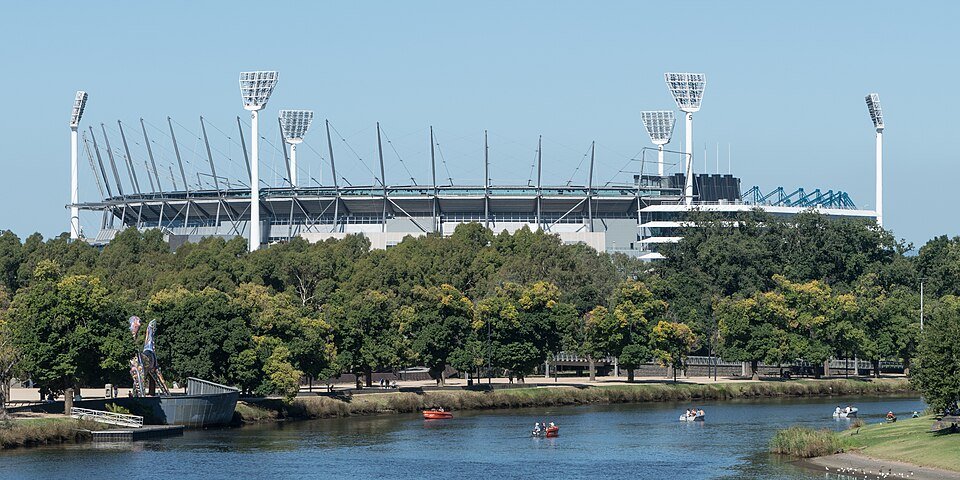
England have cancelled the Test match that was slated for April in the West Indies, opting instead to focus on a series of red‑ball warm‑up games in the United Kingdom ahead of the Women’s Ashes. The decision affects the England women’s side, led by captain Nat Sciver‑Brunt, who have only one recent Test to their name—a heavy defeat to India at Lord’s—since their last four‑day encounter with Australia in January 2025, which they lost by an innings in Melbourne. The upcoming Ashes Test, worth four points in the multi‑format series, will be played at Headingley from 24‑27 June, and England will prepare with four red‑ball fixtures, including a three‑day match against Australia A and two intra‑squad “best‑versus‑best” games, complemented by a dedicated training camp in Bangalore in January.
The schedule revision also trims England’s West Indies tour to three Twenty20 Internationals and three One‑Day Internationals, eliminating the Test entirely. While earlier reports suggested the England and Wales Cricket Board (ECB) might need to provide financial assistance to Cricket West Indies (CWI) to enable the Test, the ECB says the change is purely a performance‑based decision aimed at giving England the best chance of winning the Ashes. CWI chief executive Chris Dehring had previously told BBC Sport that hosting a Test in the Caribbean is very expensive and that the board would welcome support from wealthier member boards, but the ECB’s rationale is unrelated to those financial discussions.
ECB chief executive Richard Gould explained that a ten‑day warm‑weather red‑ball camp in India, followed by the four additional matches in English conditions, will give captain Charlotte Edwards and her squad the necessary game time to be ready for the Australian challenge. Gould added that the “best versus best” intra‑squad fixtures will provide valuable opportunities to assess depth, involve more players and extend competitive multi‑day cricket across a longer period for the wider group. The West Indies women’s team, which has not played a Test since 2004—their sole red‑ball match in 47 years—will miss the chance to host England for a Test, while England’s revised program aims to sharpen the side ahead of the crucial Ashes encounter.
⚡ Effects Interpreter
🌍World Economylow impact
What this means for you
- ▶Global supply chains might feel a slight tremor as businesses adjust.
- ▶Foreign direct investment decisions can hinge on how this plays out.
🏙️Local Economymedium impact
What this means for you
- ▶Fan zones and pop-up bars tend to spring up wherever the crowds go.
- ▶Local traders often cheer as fans fill the streets.
🏦Rates & Bankslow impact
What this means for you
- ▶Savings accounts may see their rates nudged only after a broader trend emerges.
- ▶Financial markets sometimes overreact to rate speculation before banks even respond.
❤️Healthlow impact
What this means for you
- ▶Fans occasionally overdo the celebrations, so a little moderation helps.
- ▶A nail-biting finish is memorable, but maybe not great for blood pressure.
💷Wealthmedium impact
What this means for you
- ▶Time in the market usually matters more than timing the market around news like this.
- ▶Nest eggs can wobble briefly before finding their footing again.
🏠Housinglow impact
What this means for you
- ▶Surveyors and valuers tend to factor in wider trends gradually, not overnight.
- ▶The property ladder rarely wobbles much from a single piece of news.
🌍 Effects for your country
The U.S.'s central bank rate currently stands at 3.75%, so a global rates move like this could feed through to local borrowing costs. The U.S.'s economy is growing at 2.3% with inflation at 3.6%, the backdrop this story's effects play out against locally. Housing-market effects like this are usually felt most where mortgage rates track the U.S.'s own central bank rate closely. With the U.S.'s unemployment at 4.2%, personal-finance effects like this land on a labour market that is currently fairly stable. Health-system effects are harder to localise from economic indicators alone — the real impact in the U.S. depends more on local healthcare capacity than the figures above.
The UK's central bank rate currently stands at 3.75%, so a global rates move like this could feed through to local borrowing costs. The UK's economy is growing at 1.3% with inflation at 3.3%, the backdrop this story's effects play out against locally. Housing-market effects like this are usually felt most where mortgage rates track the UK's own central bank rate closely. With the UK's unemployment at 5.3%, personal-finance effects like this land on a labour market that is currently fairly stable. Health-system effects are harder to localise from economic indicators alone — the real impact in the UK depends more on local healthcare capacity than the figures above.
France's central bank rate currently stands at 2%, so a global rates move like this could feed through to local borrowing costs. France's economy is growing at 0.4% with inflation at 2.4%, the backdrop this story's effects play out against locally. Housing-market effects like this are usually felt most where mortgage rates track France's own central bank rate closely. With France's unemployment at 8.4%, personal-finance effects like this land on a labour market that is already under strain. Health-system effects are harder to localise from economic indicators alone — the real impact in France depends more on local healthcare capacity than the figures above.
Romania's central bank rate currently stands at 6.5%, so a global rates move like this could feed through to local borrowing costs. Romania's economy is growing at -0.5% with inflation at 8.2%, the backdrop this story's effects play out against locally. Housing-market effects like this are usually felt most where mortgage rates track Romania's own central bank rate closely. With Romania's unemployment at 6.5%, personal-finance effects like this land on a labour market that is currently fairly stable. Health-system effects are harder to localise from economic indicators alone — the real impact in Romania depends more on local healthcare capacity than the figures above.
The UAE's central bank rate currently stands at 3.65%, so a global rates move like this could feed through to local borrowing costs. The UAE's economy is growing at -3.9% with inflation at 4.5%, the backdrop this story's effects play out against locally. Housing-market effects like this are usually felt most where mortgage rates track the UAE's own central bank rate closely. Health-system effects are harder to localise from economic indicators alone — the real impact in the UAE depends more on local healthcare capacity than the figures above.