It’s not too late to get it: what to know about getting the flu vaccine this year
Source: Guardian Health ↗ (cross-verified by 2 outlets — full list below)
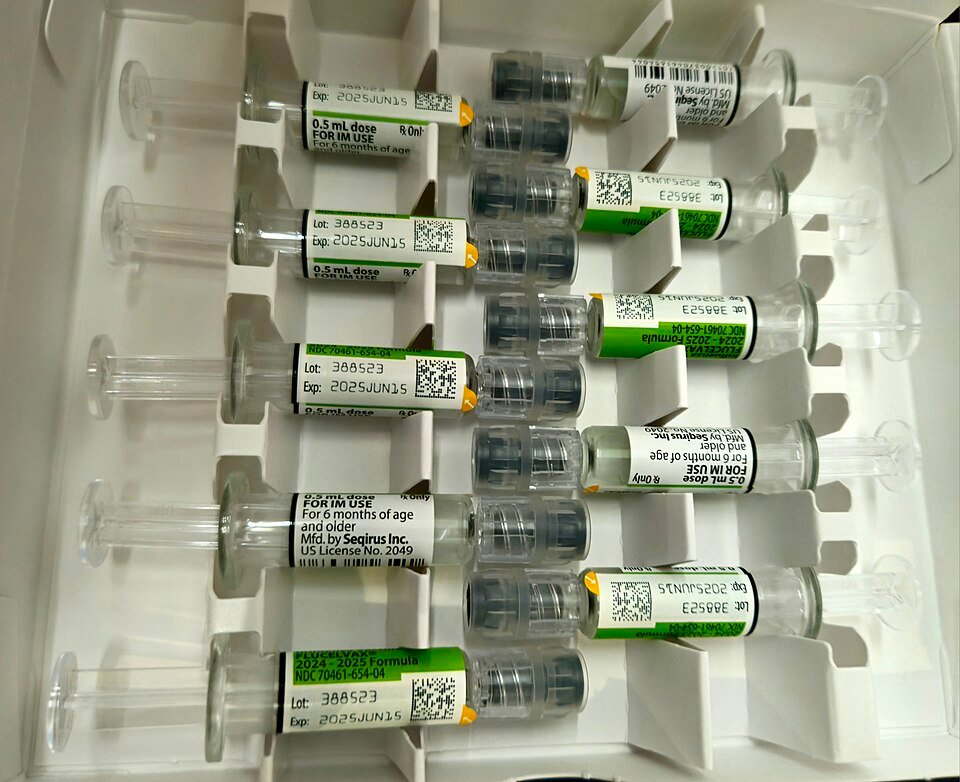
Influenza has arrived unusually early this season, first appearing on the West Coast about two and a half months ahead of the typical schedule, according to Dr Michael Osterholm, director of the Center for Infectious Disease Research and Policy at the University of Minnesota. The early onset, not seen since the 2010 season, has prompted the CDC to warn that while flu activity remains low overall—with 16,000 recorded flu‑related hospitalizations so far—cases are expected to rise as the virus moves through the Midwest and East Coast. The dominant strain this year is an H1N1 virus carrying the G155E mutation; although there is no evidence that this mutation increases severity, it may evade immunity in teens and young adults under 25, who appear to have less protection from prior infections and vaccinations. So far the season has seen one pediatric influenza‑associated death, an elementary‑aged child from outside the Denver metro area, and an estimated 24,000 flu‑related deaths, including 198 children, for the 2025‑26 season.
Experts attribute the early start to factors such as travel patterns, but acknowledge that a definitive cause remains unclear. Dr Amesh Adalja of the Johns Hopkins Center for Health Security notes that individual health status—particularly compromised cardiopulmonary capacity—plays a larger role in flu outcomes than viral characteristics alone. The World Health Organization’s annual strain selection, made in February, missed this year’s emergent variant, resulting in a vaccine that is a weaker match. Nonetheless, Dr Osterholm stresses that vaccination still offers critical protection against severe disease, hospitalization, and death, likening it to wearing a seatbelt. The CDC participated in the WHO’s selection process despite the United States’ recent departure from the organization, ensuring that the vaccine strains used in the U.S. match those in Canada and Mexico.
For the first time, an mRNA‑based flu vaccine, Moderna’s mFlusiva, is available to the public, targeting adults 50 and older and reportedly causing milder reactions than mRNA COVID‑19 shots. While developed before the current mutation, the mRNA platform holds promise for faster strain updates in future seasons. Health officials urge everyone—especially those under 25—to get vaccinated now, ideally alongside a COVID‑19 booster, as it takes about two weeks for antibodies to develop. At‑home antigen tests for influenza, flu A, flu B and RSV are recommended to guide antiviral treatment with drugs such as Tamiflu or Xofluza, and to help limit spread by keeping ill individuals at home.
⚡ Effects Interpreter
🌍World Economymedium impact
What this means for you
- ▶World markets have a habit of reading between the lines of stories like this.
- ▶Multinational firms usually adjust their playbooks when stories like this break.
🏙️Local Economylow impact
What this means for you
- ▶Your local economy has a way of catching these currents eventually.
- ▶Family budgets close to home might absorb a small, slow-moving effect.
🏦Rates & Banksmedium impact
What this means for you
- ▶Your loan or mortgage rate is more likely to drift than to lurch here.
- ▶Lenders typically reserve big rate moves for clearer economic signals.
❤️Healthmedium impact
What this means for you
- ▶Good information, shared kindly, can settle a lot of nerves.
- ▶Staying calm and informed tends to help more than worrying alone.
💷Wealthmedium impact
What this means for you
- ▶Checking what your health insurance actually covers is rarely wasted effort.
- ▶Sick pay and benefits are worth understanding before you need them.
🏠Housinglow impact
What this means for you
- ▶Asking prices in the area might firm up or soften only gradually.
- ▶A patient seller usually fares better than one rushing to react to headlines.
📊 Country financial snapshot
United States
Source: IMF World Economic Outlook; each figure shows its year, and current-year values are IMF estimates. Policy rates and sovereign credit ratings are from the News Effects country dataset and show their own as-of date. Not investment advice.
🌍 Effects for your country
The U.S.'s central bank rate currently stands at 3.75%, so a global rates move like this could feed through to local borrowing costs. The U.S.'s economy is growing at 2.3% with inflation at 3.6%, the backdrop this story's effects play out against locally. Housing-market effects like this are usually felt most where mortgage rates track the U.S.'s own central bank rate closely. With the U.S.'s unemployment at 4.2%, personal-finance effects like this land on a labour market that is currently fairly stable. Health-system effects are harder to localise from economic indicators alone — the real impact in the U.S. depends more on local healthcare capacity than the figures above.
The UK's central bank rate currently stands at 3.75%, so a global rates move like this could feed through to local borrowing costs. The UK's economy is growing at 1.3% with inflation at 3.3%, the backdrop this story's effects play out against locally. Housing-market effects like this are usually felt most where mortgage rates track the UK's own central bank rate closely. With the UK's unemployment at 5.3%, personal-finance effects like this land on a labour market that is currently fairly stable. Health-system effects are harder to localise from economic indicators alone — the real impact in the UK depends more on local healthcare capacity than the figures above.
France's central bank rate currently stands at 2%, so a global rates move like this could feed through to local borrowing costs. France's economy is growing at 0.4% with inflation at 2.4%, the backdrop this story's effects play out against locally. Housing-market effects like this are usually felt most where mortgage rates track France's own central bank rate closely. With France's unemployment at 8.4%, personal-finance effects like this land on a labour market that is already under strain. Health-system effects are harder to localise from economic indicators alone — the real impact in France depends more on local healthcare capacity than the figures above.
Romania's central bank rate currently stands at 6.5%, so a global rates move like this could feed through to local borrowing costs. Romania's economy is growing at -0.5% with inflation at 8.2%, the backdrop this story's effects play out against locally. Housing-market effects like this are usually felt most where mortgage rates track Romania's own central bank rate closely. With Romania's unemployment at 6.5%, personal-finance effects like this land on a labour market that is currently fairly stable. Health-system effects are harder to localise from economic indicators alone — the real impact in Romania depends more on local healthcare capacity than the figures above.
The UAE's central bank rate currently stands at 3.65%, so a global rates move like this could feed through to local borrowing costs. The UAE's economy is growing at -3.9% with inflation at 4.5%, the backdrop this story's effects play out against locally. Housing-market effects like this are usually felt most where mortgage rates track the UAE's own central bank rate closely. Health-system effects are harder to localise from economic indicators alone — the real impact in the UAE depends more on local healthcare capacity than the figures above.