NZ election 2026: New Zealand faces weeks of uncertainty with results ‘too close to call’
Source: Guardian World ↗ (cross-verified by 2 outlets — full list below)
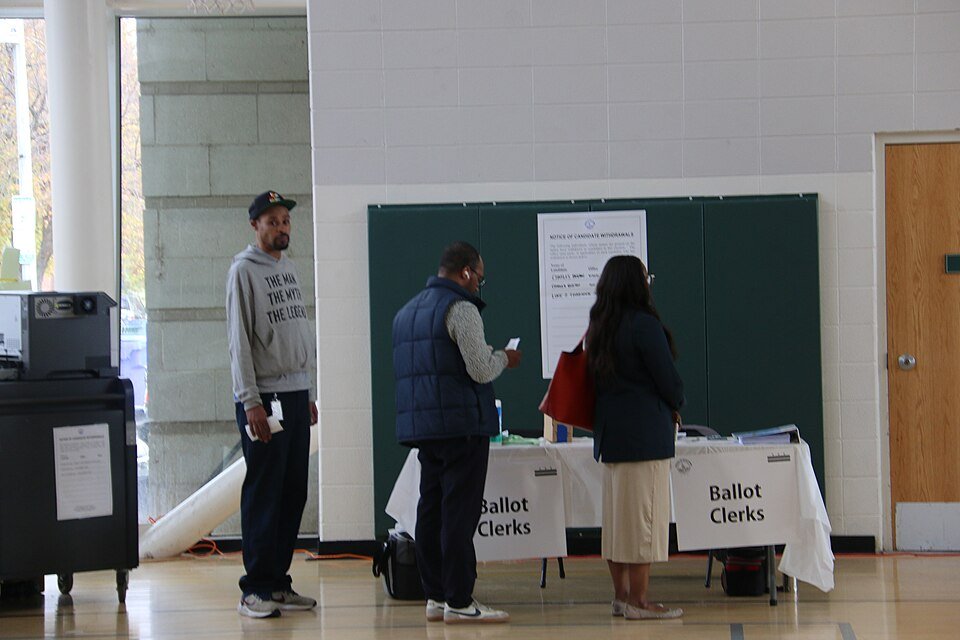
The centre‑right National Party emerged as the largest force in New Zealand’s 2026 election, but the final composition of government remains uncertain as special votes have yet to be counted. Led by Prime Minister Christopher Luxon, National secured 42 seats on the night, enough to form a coalition with its traditional partners, the libertarian Act Party (13 seats) and the populist New Zealand First (12 seats), creating a razor‑thin 67‑seat majority. The left‑leaning bloc, comprising Labour (35 seats), the Greens (16 seats) and Te Pāti Māori (5 seats), trails by just three seats, while the centrist newcomer Opportunity, which crossed the 5 % threshold for its first parliamentary entry, holds five seats that could tip the balance. Luxon told supporters at Auckland’s Viaduct events centre that the results were “too close to call” and that the pending special votes—overseas and out‑of‑electorate ballots that historically favour the left—must be tallied before any coalition talks can begin, with official results due on 27 November.
The decisive role of special votes underscores the fragility of National’s lead and highlights a broader shift in New Zealand’s political landscape, where smaller parties are gaining unprecedented support amid a sluggish economy and stubbornly high inflation. In 2023, special votes accounted for 21 % of the total and helped the Māori Party and the Greens win three seats; a similar impact this cycle could erode National’s slim majority. The election also produced a historic overhang: National won more electorate seats than its party vote would normally allow, potentially adding five extra seats, while Te Pāti Māori secured five overhang seats, raising the total parliament size to a possible 130 members—the largest under the mixed‑member proportional (MMP) system since its 1996 introduction. This overhang, combined with the loss of four senior National ministers—Nicola Willis, Paul Goldsmith, Chris Bishop and Gerry Brownlee—who failed to win electorate seats or be placed on the list, adds complexity to coalition calculations.
Looking ahead, New Zealand faces a protracted period of uncertainty that could extend for weeks once special votes are released and negotiations commence. Labour leader Chris Hipkins acknowledged the tight race, promising to “get straight to work” if the final count favours his bloc, while Opportunity’s leader Qiulae Wong expressed optimism, noting the party’s historic 5.9 % share. In the interim, Luxon affirmed that caretaker government conventions will govern daily operations, ensuring continuity while the nation awaits the definitive outcome. The eventual configuration of alliances will determine not only which parties hold power but also how the record‑size parliament navigates policy challenges in a climate of economic strain and rising influence from minor parties.
⚡ Effects Interpreter
🌍World Economylow impact
What this means for you
- ▶Trade and investment between countries could shift a bit if things escalate.
- ▶Multinational firms typically adjust their playbooks when stories like this break.
🏙️Local Economymedium impact
What this means for you
- ▶Your town's economy tends to catch up with big headlines eventually.
- ▶Your local economy has a way of catching these currents eventually.
🏦Rates & Bankslow impact
What this means for you
- ▶Savers might glance at their account rate — lenders adjust after big events.
- ▶Base rate decisions are usually made on data trends, not single headlines.
❤️Healthmedium impact
What this means for you
- ▶Talking things through with family or friends can ease the load.
- ▶Support networks, formal or informal, tend to matter most in moments like this.
💷Wealthlow impact
What this means for you
- ▶Your financial adviser, if you have one, may already be watching this.
- ▶Your pension or investments might sway a touch as markets digest this.
🏠Housinglow impact
What this means for you
- ▶Bricks and mortar tend to hold steady while other markets swing about.
- ▶Rental yields in the area may shift only slightly, if at all, from this.
📊 Country financial snapshot
New Zealand
Source: IMF World Economic Outlook; each figure shows its year, and current-year values are IMF estimates. Policy rates and sovereign credit ratings are from the News Effects country dataset and show their own as-of date. Not investment advice.
🌍 Effects for your country
The U.S.'s central bank rate currently stands at 3.75%, so a global rates move like this could feed through to local borrowing costs. The U.S.'s economy is growing at 2.3% with inflation at 3.6%, the backdrop this story's effects play out against locally. Housing-market effects like this are usually felt most where mortgage rates track the U.S.'s own central bank rate closely. With the U.S.'s unemployment at 4.2%, personal-finance effects like this land on a labour market that is currently fairly stable. Health-system effects are harder to localise from economic indicators alone — the real impact in the U.S. depends more on local healthcare capacity than the figures above.
The UK's central bank rate currently stands at 3.75%, so a global rates move like this could feed through to local borrowing costs. The UK's economy is growing at 1.3% with inflation at 3.3%, the backdrop this story's effects play out against locally. Housing-market effects like this are usually felt most where mortgage rates track the UK's own central bank rate closely. With the UK's unemployment at 5.3%, personal-finance effects like this land on a labour market that is currently fairly stable. Health-system effects are harder to localise from economic indicators alone — the real impact in the UK depends more on local healthcare capacity than the figures above.
France's central bank rate currently stands at 2%, so a global rates move like this could feed through to local borrowing costs. France's economy is growing at 0.4% with inflation at 2.4%, the backdrop this story's effects play out against locally. Housing-market effects like this are usually felt most where mortgage rates track France's own central bank rate closely. With France's unemployment at 8.4%, personal-finance effects like this land on a labour market that is already under strain. Health-system effects are harder to localise from economic indicators alone — the real impact in France depends more on local healthcare capacity than the figures above.
Romania's central bank rate currently stands at 6.5%, so a global rates move like this could feed through to local borrowing costs. Romania's economy is growing at -0.5% with inflation at 8.2%, the backdrop this story's effects play out against locally. Housing-market effects like this are usually felt most where mortgage rates track Romania's own central bank rate closely. With Romania's unemployment at 6.5%, personal-finance effects like this land on a labour market that is currently fairly stable. Health-system effects are harder to localise from economic indicators alone — the real impact in Romania depends more on local healthcare capacity than the figures above.
The UAE's central bank rate currently stands at 3.65%, so a global rates move like this could feed through to local borrowing costs. The UAE's economy is growing at -3.9% with inflation at 4.5%, the backdrop this story's effects play out against locally. Housing-market effects like this are usually felt most where mortgage rates track the UAE's own central bank rate closely. Health-system effects are harder to localise from economic indicators alone — the real impact in the UAE depends more on local healthcare capacity than the figures above.