The rise and rise of the family farm
Source: Guardian Econ ↗
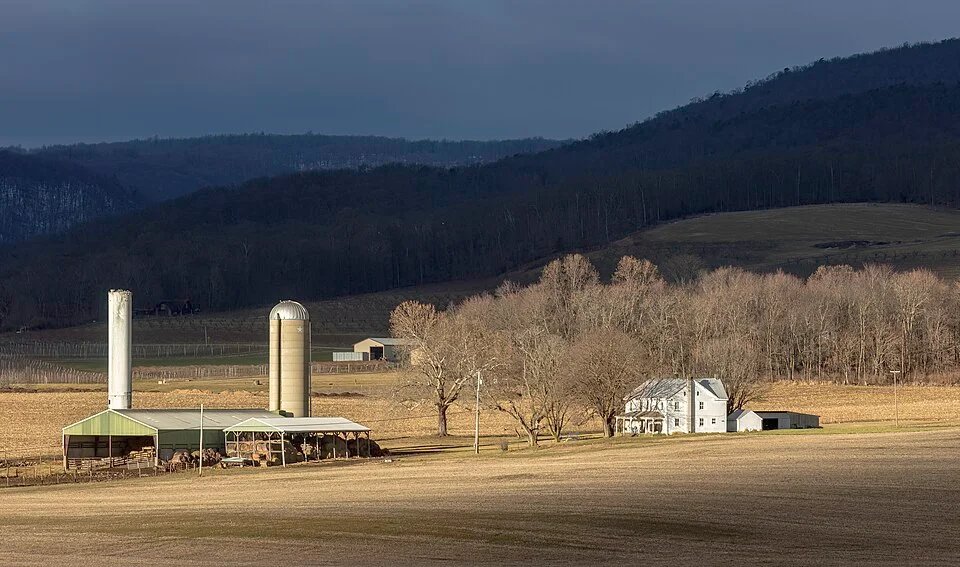
The Lucas brothers’ Fall Festival in south‑west Ohio has become a vital source of income for the family farm that also cultivates roughly 1,500 acres of corn, soybeans and wheat and raises 200 acres of produce. Susan Lucas explains that the barn, originally intended as a machine barn, was converted into a festival venue ten years ago, adding hayrides, an inflatable obstacle course, a go‑kart track, a corn maze linked to a mobile game, a barn store with jams and honey, and food and drink service. “Having extra income from the venue helps, the costs are going up, but the price of grain is not. We need that income to pay our bills and support two families,” she says, underscoring how agritainment now cushions the farm’s finances as net farming income is projected to fall 5.5% after inflation, fuel prices hit records and grain prices remain stagnant.
The surge in agritourism reflects a broader shift among family farms confronting a deepening financial crisis, with more than 140,000 farms disappearing between 2017 and 2022 and billionaire investors snapping up millions of acres. Farmland values have risen 44% since the pandemic, and agritourism—estimated at $1.3 billion in 2022, or $4.5 billion when off‑farm and non‑edible goods are included—offers a fast‑cash alternative to the months‑long lag of crop and cattle payments. In the Midwest, farm festivals are reporting record visitor numbers, prompting some to require online tickets and to expand facilities for stores, conferences and weddings; Ohio saw a 27% rise in farms operating agritourism businesses over the five years to 2022. A survey of 911 farmers found that in 2024, 24% earned $25,000‑$99,999 from agritourism, while 5% generated $1 million‑$5 million, illustrating the sector’s growing economic relevance.
Nevertheless, agritourism is not a universal remedy. A University of Vermont study revealed that 45% of participants earned less than $25,000 in 2024 from such ventures, and researchers like Claire Whitehouse note a lack of comprehensive data, as FDA figures omit sales of inedible items such as pumpkins and decorative gourds. Investment firms are also entering the space; Hidden Valley Orchards, a popular Ohio fall festival farm, is now run by Endurance Farm Partners, a California‑based investment entity, raising questions about local ownership. Meanwhile, farms like Nelson Produce Farm near Omaha, Nebraska, have leveraged agritourism to achieve rapid growth—expecting close to 100,000 visitors this year, employing 70‑100 seasonal staff, and selling out tickets for themed farm‑to‑table events within an hour—demonstrating both the opportunities and the uneven outcomes that define the rise of family‑farm agritainment.
⚡ Effects Interpreter
🌍World Economylow impact
What this means for you
- ▶A ripple in one major economy can nudge sentiment in several others.
- ▶International lenders might factor this into their next round of forecasts.
🏙️Local Economymedium impact
What this means for you
- ▶Wages and hiring nearby can bend with the wider economy.
- ▶Local firms typically watch national data before setting their own prices.
🏦Rates & Bankslow impact
What this means for you
- ▶Watching how currency markets react can hint at where rates head next.
- ▶Borrowing costs might hold steady for now, but they can turn on fresh news.
❤️Healthlow impact
What this means for you
- ▶Stress levels in affected communities may tick up before they settle.
- ▶News like this can nibble at everyday calm more than people expect.
💷Wealthmedium impact
What this means for you
- ▶Markets have a habit of overreacting first and settling down later.
- ▶Any hit to your money is more likely a ripple than a wave.
🏠Housingmedium impact
What this means for you
- ▶A slow-moving market like housing rarely reacts overnight.
- ▶Bricks and mortar tend to hold steady while other markets swing about.
🌍 Effects for your country
The U.S.'s central bank rate currently stands at 3.75%, so a global rates move like this could feed through to local borrowing costs. The U.S.'s economy is growing at 2.3% with inflation at 3.6%, the backdrop this story's effects play out against locally. Housing-market effects like this are usually felt most where mortgage rates track the U.S.'s own central bank rate closely. With the U.S.'s unemployment at 4.2%, personal-finance effects like this land on a labour market that is currently fairly stable. Health-system effects are harder to localise from economic indicators alone — the real impact in the U.S. depends more on local healthcare capacity than the figures above.
The UK's central bank rate currently stands at 3.75%, so a global rates move like this could feed through to local borrowing costs. The UK's economy is growing at 1.3% with inflation at 3.3%, the backdrop this story's effects play out against locally. Housing-market effects like this are usually felt most where mortgage rates track the UK's own central bank rate closely. With the UK's unemployment at 5.3%, personal-finance effects like this land on a labour market that is currently fairly stable. Health-system effects are harder to localise from economic indicators alone — the real impact in the UK depends more on local healthcare capacity than the figures above.
France's central bank rate currently stands at 2%, so a global rates move like this could feed through to local borrowing costs. France's economy is growing at 0.4% with inflation at 2.4%, the backdrop this story's effects play out against locally. Housing-market effects like this are usually felt most where mortgage rates track France's own central bank rate closely. With France's unemployment at 8.4%, personal-finance effects like this land on a labour market that is already under strain. Health-system effects are harder to localise from economic indicators alone — the real impact in France depends more on local healthcare capacity than the figures above.
Romania's central bank rate currently stands at 6.5%, so a global rates move like this could feed through to local borrowing costs. Romania's economy is growing at -0.5% with inflation at 8.2%, the backdrop this story's effects play out against locally. Housing-market effects like this are usually felt most where mortgage rates track Romania's own central bank rate closely. With Romania's unemployment at 6.5%, personal-finance effects like this land on a labour market that is currently fairly stable. Health-system effects are harder to localise from economic indicators alone — the real impact in Romania depends more on local healthcare capacity than the figures above.
The UAE's central bank rate currently stands at 3.65%, so a global rates move like this could feed through to local borrowing costs. The UAE's economy is growing at -3.9% with inflation at 4.5%, the backdrop this story's effects play out against locally. Housing-market effects like this are usually felt most where mortgage rates track the UAE's own central bank rate closely. Health-system effects are harder to localise from economic indicators alone — the real impact in the UAE depends more on local healthcare capacity than the figures above.