Trump's Recent Warning Is Sending Shockwaves Through Wall Street. Here's What It Could Mean for Your Retirement Savings.
Source: Motley Fool ↗ (cross-verified by 2 outlets — full list below)
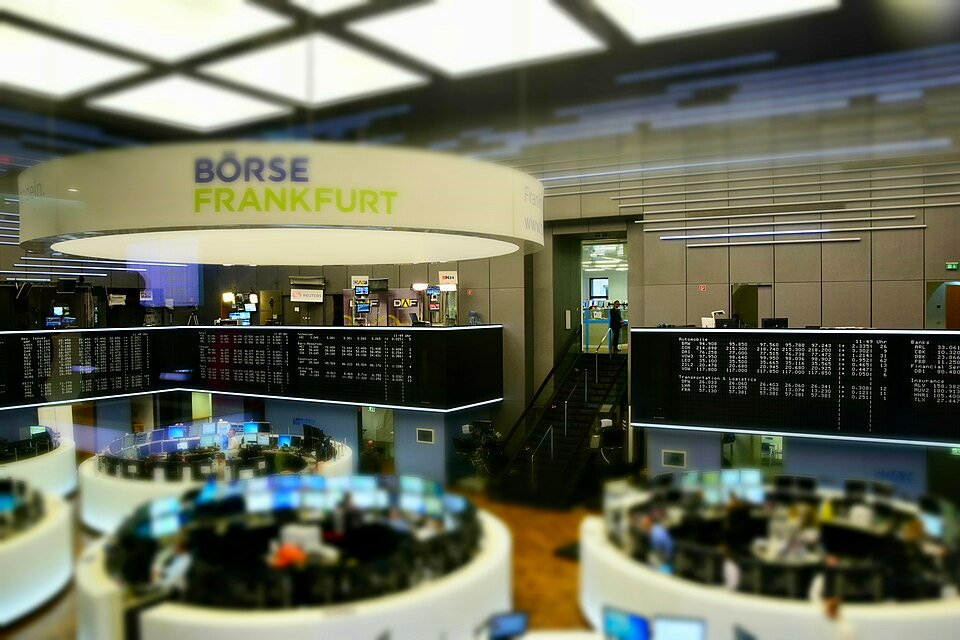
President Donald Trump’s administration has overseen a sharp rally in the S&P 500, which has risen more than 39% since his inauguration in late 2024, fueling optimism on Wall Street despite a backdrop of macro‑economic strain. The surge is tied to Trump’s “One Big Beautiful Bill Act,” delivering tax cuts, deregulation, and a pro‑business stance that has especially buoyed the information‑technology sector, now accounting for roughly 40% of the index’s market capitalization. At the same time, the dollar’s purchasing power continues to erode, inflation sits at 3.7%—well above the Federal Reserve’s 2% target—and Treasury yields are climbing as investors worry about the nation’s $40 trillion debt load.
The market’s reliance on tech growth masks deeper fiscal and geopolitical pressures, notably the administration’s tariffs that have lifted the average U.S. import levy to about 9.6% and the ongoing war in Iran, which has driven Brent crude up 55% since the start of the year. These factors have amplified inflation and forced the Fed to keep rates high, squeezing risk‑on assets and raising the cost of capital for expanding firms. In an October interview with Time Magazine, Trump suggested that higher inflation could “pay down the debt very rapidly” by devaluing the currency, a stance that signals a willingness to maintain inflationary fiscal policies despite their corrosive effect on retirement savings, where a 3.7% inflation rate cuts the S&P 500’s historical 10% nominal return to a real 6.3%.
Analysts caution that the recent midterm election results may introduce checks on the most aggressive spending proposals, such as a $1.5 trillion military budget, and could temper the Iran conflict, potentially easing bond‑market pressures and lowering inflation. While the outlook remains uncertain, the long‑term resilience of the U.S. economy offers some hope, and investors are urged to diversify across asset classes to mitigate exposure to a market overly concentrated in tech. Diversification and a focus on real‑rate returns are presented as the prudent path for protecting retirement portfolios amid the current fiscal and geopolitical turbulence.
⚡ Effects Interpreter
🌍World Economylow impact
What this means for you
- ▶The ripples can spread across borders, nudging growth forecasts here and there.
- ▶Confidence among international firms could wobble until the picture clears.
🏙️Local Economylow impact
What this means for you
- ▶Modest savers usually feel this far less than those with larger portfolios.
- ▶Higher earners and investors may feel the first, sharpest nudge here.
🏦Rates & Bankslow impact
What this means for you
- ▶Mortgage offers may firm up or soften as the picture becomes clearer.
- ▶Any move in rates would probably come later, not overnight.
❤️Healthmedium impact
What this means for you
- ▶Some people feel this news more keenly than others, and that's worth acknowledging.
- ▶A short walk or a chat with a friend can do wonders when headlines feel heavy.
💷Wealthmedium impact
What this means for you
- ▶This one lands close to home for savings, returns and pension pots.
- ▶Compound growth has a way of smoothing over short-term noise like this.
🏠Housinglow impact
What this means for you
- ▶First-time buyers might keep half an eye on mortgage rates after this.
- ▶Property values usually need more than one headline to really move.
📊 Country financial snapshot
United States
Iran
Source: IMF World Economic Outlook; each figure shows its year, and current-year values are IMF estimates. Policy rates and sovereign credit ratings are from the News Effects country dataset and show their own as-of date. Not investment advice.
🌍 Effects for your country
The U.S.'s central bank rate currently stands at 3.75%, so a global rates move like this could feed through to local borrowing costs. The U.S.'s economy is growing at 2.3% with inflation at 3.6%, the backdrop this story's effects play out against locally. Housing-market effects like this are usually felt most where mortgage rates track the U.S.'s own central bank rate closely. With the U.S.'s unemployment at 4.2%, personal-finance effects like this land on a labour market that is currently fairly stable. Health-system effects are harder to localise from economic indicators alone — the real impact in the U.S. depends more on local healthcare capacity than the figures above.
The UK's central bank rate currently stands at 3.75%, so a global rates move like this could feed through to local borrowing costs. The UK's economy is growing at 1.3% with inflation at 3.3%, the backdrop this story's effects play out against locally. Housing-market effects like this are usually felt most where mortgage rates track the UK's own central bank rate closely. With the UK's unemployment at 5.3%, personal-finance effects like this land on a labour market that is currently fairly stable. Health-system effects are harder to localise from economic indicators alone — the real impact in the UK depends more on local healthcare capacity than the figures above.
France's central bank rate currently stands at 2%, so a global rates move like this could feed through to local borrowing costs. France's economy is growing at 0.4% with inflation at 2.4%, the backdrop this story's effects play out against locally. Housing-market effects like this are usually felt most where mortgage rates track France's own central bank rate closely. With France's unemployment at 8.4%, personal-finance effects like this land on a labour market that is already under strain. Health-system effects are harder to localise from economic indicators alone — the real impact in France depends more on local healthcare capacity than the figures above.
Romania's central bank rate currently stands at 6.5%, so a global rates move like this could feed through to local borrowing costs. Romania's economy is growing at -0.5% with inflation at 8.2%, the backdrop this story's effects play out against locally. Housing-market effects like this are usually felt most where mortgage rates track Romania's own central bank rate closely. With Romania's unemployment at 6.5%, personal-finance effects like this land on a labour market that is currently fairly stable. Health-system effects are harder to localise from economic indicators alone — the real impact in Romania depends more on local healthcare capacity than the figures above.
The UAE's central bank rate currently stands at 3.65%, so a global rates move like this could feed through to local borrowing costs. The UAE's economy is growing at -3.9% with inflation at 4.5%, the backdrop this story's effects play out against locally. Housing-market effects like this are usually felt most where mortgage rates track the UAE's own central bank rate closely. Health-system effects are harder to localise from economic indicators alone — the real impact in the UAE depends more on local healthcare capacity than the figures above.